Interior design ideas: glad to be grey - in pictures
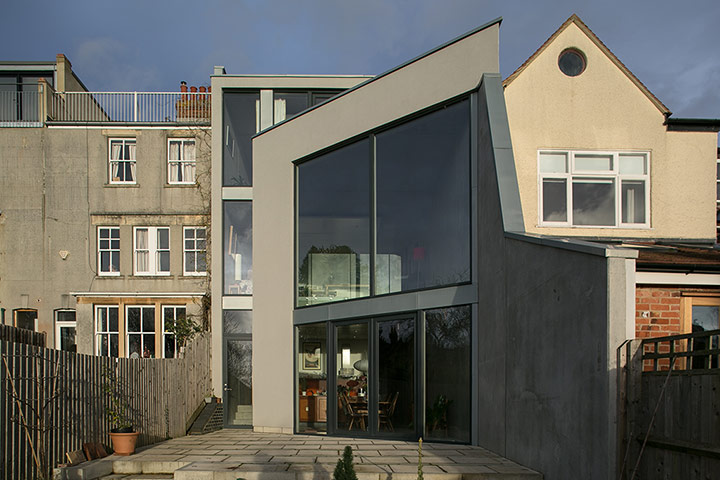
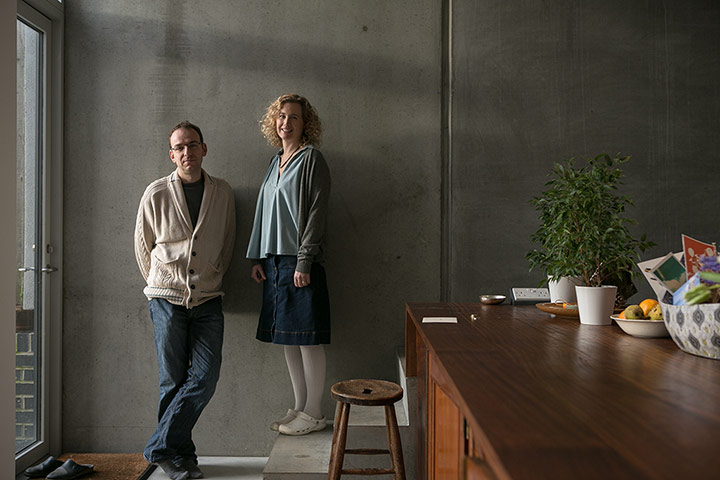
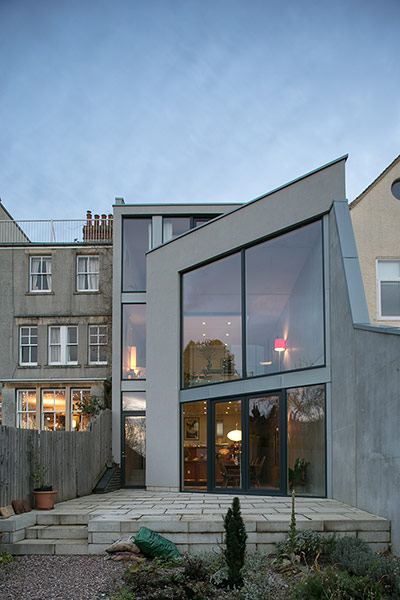
As you turn on to Chloe Evans and Anthony Waite’s street in Oxford, peering at house numbers in search of their home becomes a little futile: a striking concrete construction the colour of an overcast February sky, their house is impossible to miss amid the Edwardian and Victorian villas and postwar infills that line this leafy road. Photograph: Lee GarlandThe couple, 40 and 39 respectively, had always envisioned building their own house one day: it just happened sooner than expected. The plot, housing a garage, came up for sale for £200,000 while they were renting a “small, dark terrace” by the station; such plots are rare in densely packed central Oxford, so the pair jumped. They had decided on concrete as a material, so began the search for an architect and planning consent. Photograph: Lee Garland“I’m surprised the planners said yes,” says Evans, a GP. “It’s quite an uncompromising design. Almost everyone on the street objected to the application: most objections were that it wasn’t ‘in keeping’ with the rest of the road. In colour and material, it could have been more Oxford-y, but I’m averse to pastiche – it always feels slightly dead.” Photograph: Lee Garland
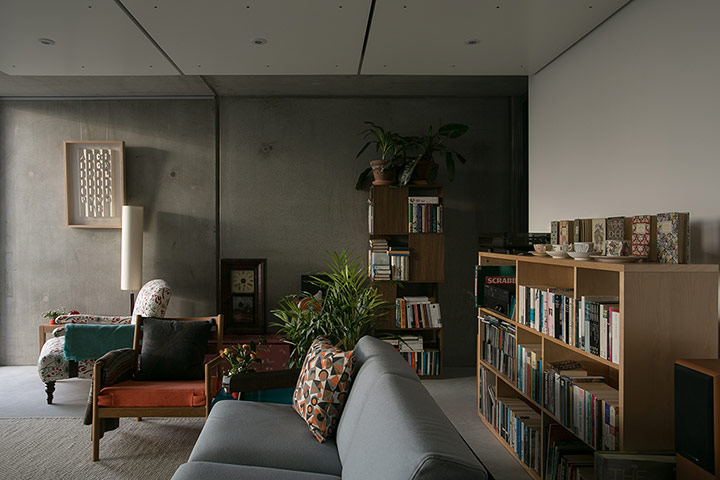
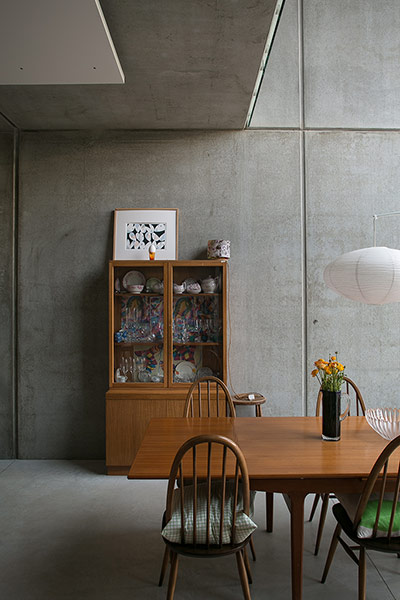
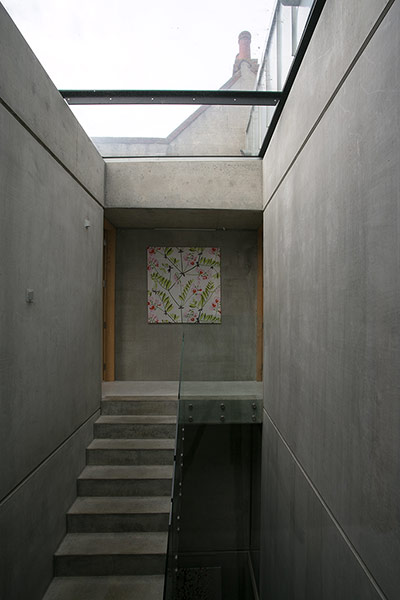
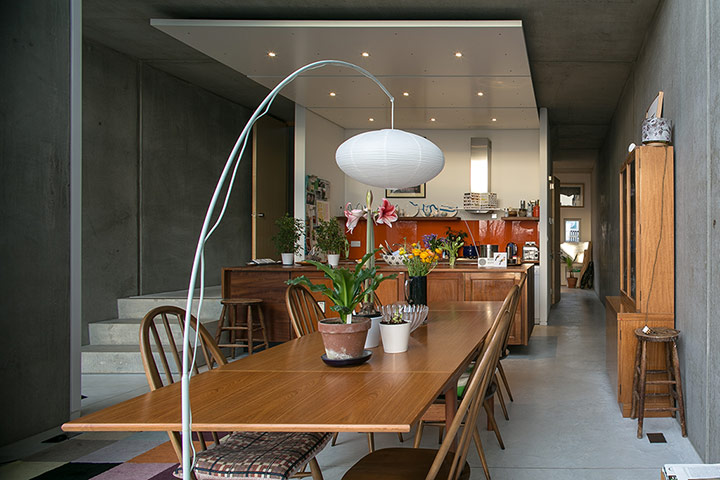
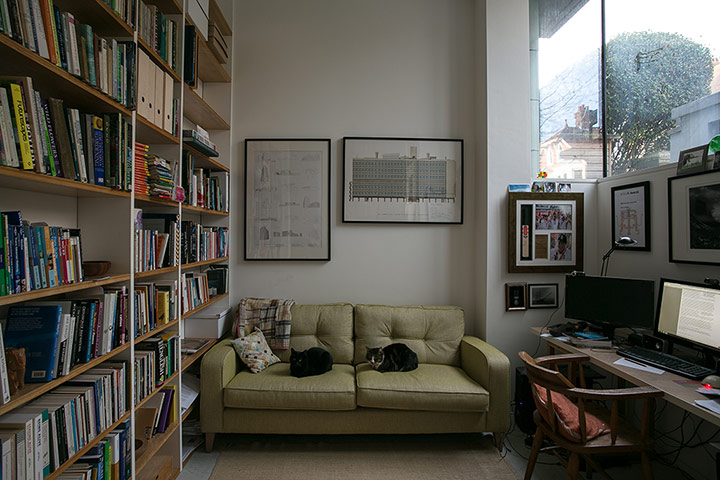
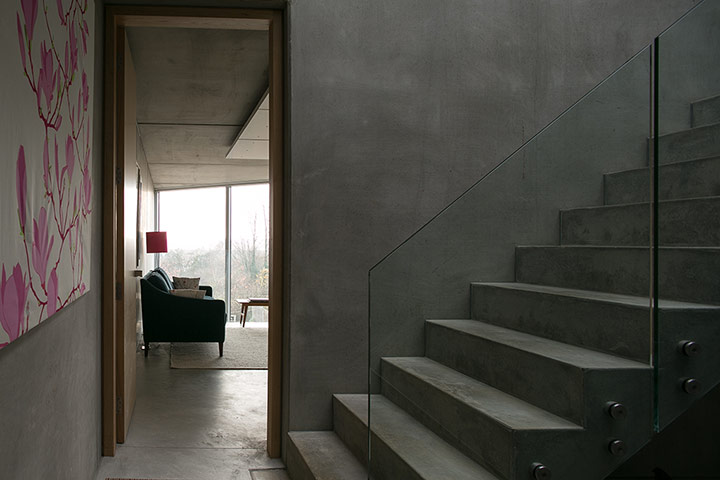
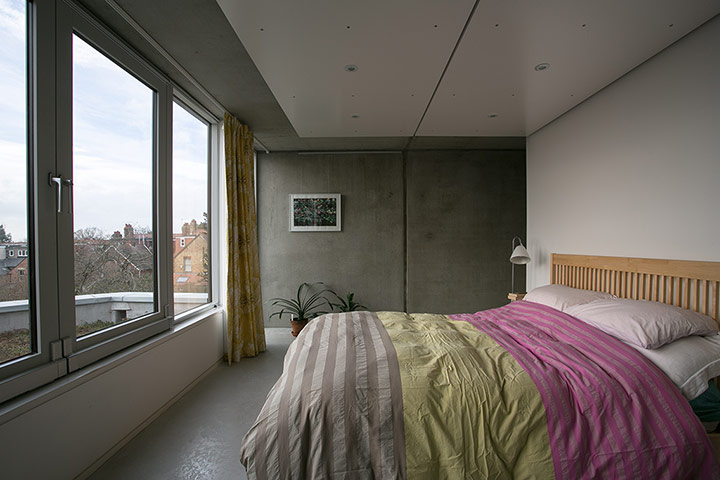
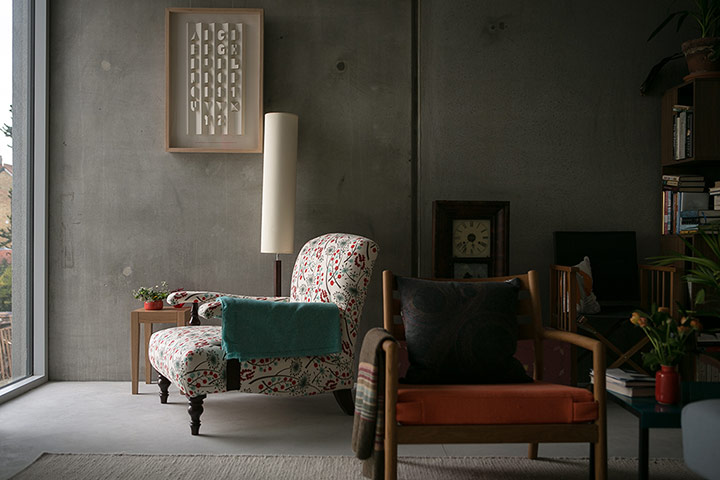
Entering the house is akin to stepping into a modern art gallery. Walls, ceilings, floors and stairs are precast concrete, great slabs assembled on site like a house of cards; and the central stairwell soars the full height of the house, and is topped with a glass roof. Down a few steps, the kitchen/dining room has a vast, double-height angled window. The footprint is no larger than the semis that neighbour it, but inside it feels large and expansive. Photograph: Lee GarlandWaite, an engineer by training, was the visionary, working closely with architect Adrian James. “At the start, I found it hard to imagine how this amount of exposed concrete would feel,” Evans says. Before the house was furnished, it was echoey. Wooden furniture, rugs and books have solved this, and Evans has hung fabric panels, all from Marimekko, to absorb more noise. Photograph: Lee GarlandIn sharp contrast to their contemporary setting, the kitchen units are warm, orangey wood that, in a previous life, were cabinets in the Natural History Museum (from Retrouvius). They still feature their original labels: “Papilionidae” reads one. “It was cheaper than an Ikea kitchen – a joiner sealed them together with a recycled worktop.” A dining table is surrounded by secondhand Ercol chairs from eBay. Photograph: Lee GarlandThe house’s most modern room is Waite’s sunken study, inspired by the architecture of Alvar Aalto. The result is a small but soaring space, one wall lined with books, and a window above head height at street level. “It meant digging down deep, so the builders weren’t happy. But Anthony insisted,” Evans says. Photograph: Lee GarlandThe living room, seen through the door, is furnished with mid-century-style sofas and chairs. It overlooks the kitchen from a mezzanine balcony, the vast picture window from below providing views across the south-west-facing garden, the city and Boars Hill beyond. Photograph: Lee GarlandThe view is more spectacular from the bedroom above. It leads on to a triangular sedum roof that, strictly speaking, isn’t a balcony. Their en suite has a skylight: “When the moon is large, it sends a shaft of light straight into the room,” Evans says. “It’s rather magical.” Photograph: Lee GarlandBy and large, those who objected to the plans have kept quiet since, even when the street was closed to allow a crane to lift the concrete panels into place. It helps that the street features a variety of architectural styles. “People are polite and kind,” Evans says. “It’s a close community, lots of retired people. But my stock phrase is: ‘It’s not everyone’s cup of tea.’ ” Photograph: Lee GarlandShe now has a stronger defence against objectors: in November, the house won best UK building in the Concrete Society’s annual awards. “We’re really flattered,” she says, “but find it quite comical to have been compared to an air traffic control tower, several sewage works and a multistorey car park in Ebbw Vale.”Photograph: Lee Garland
Sign up to read this article
Read news from 100’s of titles, curated specifically for you.