Interior design ideas: a glimpse inside a Victorian Peckham home - in pictures
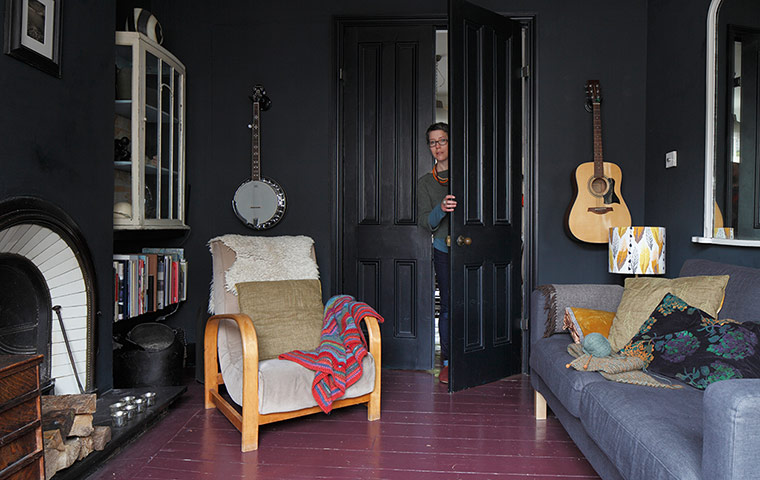
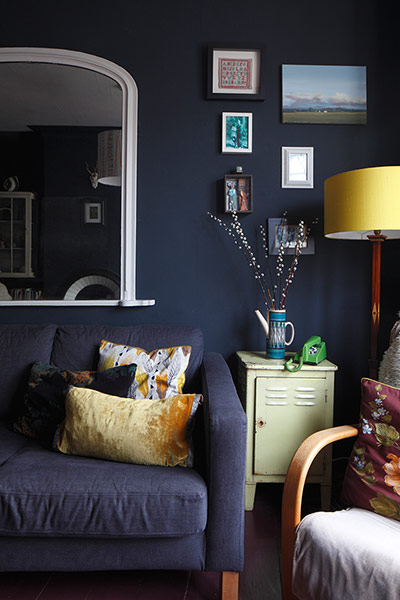
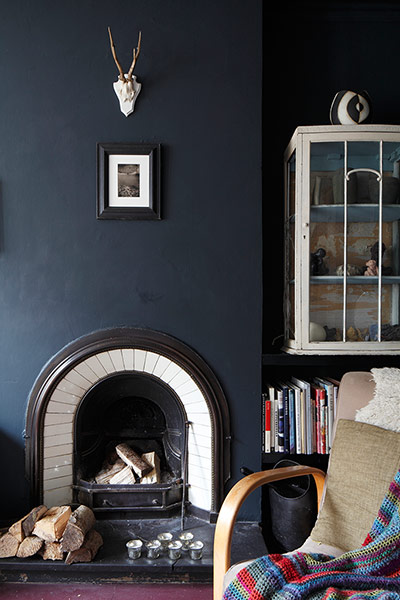
‘One of the advantages of living somewhere for a long time and never having enough money to do it up in one go,” says textile designer Rachael Causer, “is that you develop a real sense of how to make efficient use of what you have.” Over the past 18 years, Rachael and her husband, Henry Ward, head of education at the Southbank Centre, have made many changes to the south-east London home they share with their three daughters, Flo, 16, Letty, 14, and Dot, nine. With each change in their circumstances – taking in lodgers, the arrival of the children and the launch of Rachael’s design company, Moth & Co (mothandco.co.uk) – the couple have successfully adapted the house to suit their needs; often with improvements that could appear counterintuitive. Where convention dictates that walls be knocked through and spaces opened up, Rachael and Henry have not only reinstated walls, but thrown up new ones, too. Photograph: James BalstonThe east-facing sitting room always felt dark, despite attempts to make it appear larger and brighter with pale colours; last year the couple decided to embrace the room’s limitations and started experimenting with darker schemes. “We were worried the room would feel poky,” Rachael says, “but it quickly became clear that the colour needed to be really, really dark to work.” After using a “ludicrous” number of test pots, they chose Black Blue for the walls and Brinjal for the floor, both by Farrow & Ball. Their bold move paid off: the room is both elegant and cosy, and makes a dramatic contrast to the dining room beyond. The dark walls are also the perfect foil for the bright textiles that Rachael both designs and collects. Photograph: James BalstonWhen the couple bought the house, the ground floor was open-plan with only a partial hall wall, and the kitchen was through a door at the back with a bathroom beyond. “It was so titchy you burnt your bum on the radiator when you got out of the bath.” Gradually, they redefined the spaces, first reinstating the hall wall, then enclosing the sitting room with another wall and double doors from a reclamation yard. The bathroom was moved upstairs into one of the bedrooms. “Before separating the rooms, the space was much less flexible,” Henry says. “As the girls have grown up, it’s been brilliant having rooms with doors that close.” The current arrangement allows their youngest daughter to watch television while the older girls can do their homework undisturbed at the large table in the dining room.Photograph: James Balston
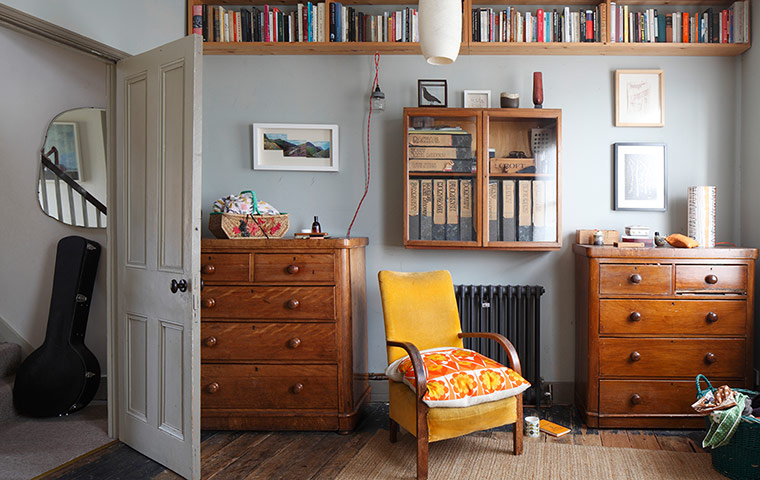
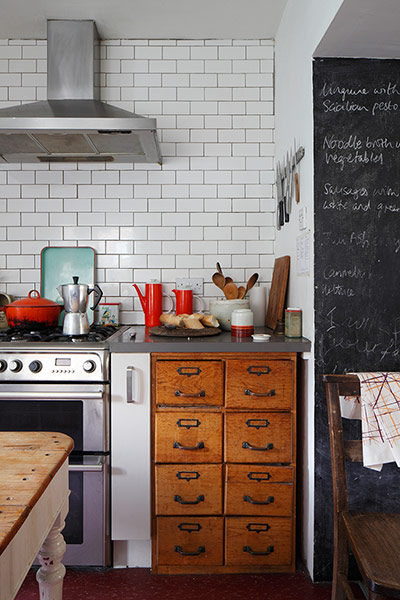
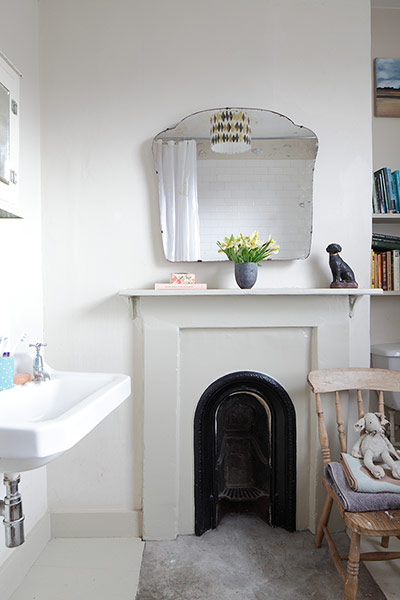
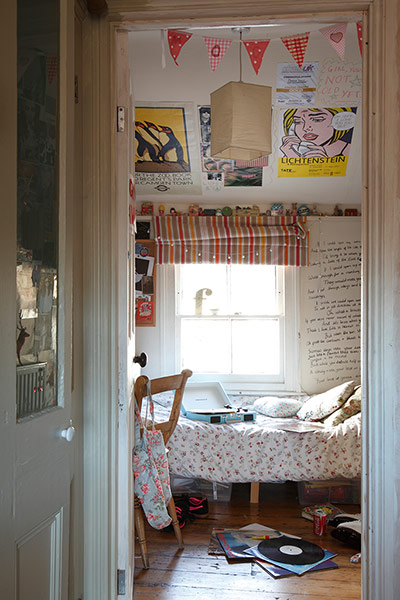
A palette of soft blues and browns in the master bedroom (Mouse’s Back and Light Blue, both by Farrow & Ball) makes the most of the room’s varied woodwork and the different textures on the walls. The exposed brickwork was not something the couple had planned, but was more a happy accident when the plaster came away during the removal of a gas fire. Rachael and Henry have furnished the room simply with not-quite-matching chests of drawers – one came from a relative, the other was a lucky street find – and two armchairs, both from junk shops.Photograph: James Balston“Most of our socialising centres around cooking for friends,” Henry says, and the flow between the kitchen and dining room was designed with this in mind. For large gatherings, the double doors are thrown open and all three spaces are united. The kitchen, dining room and stairwell are all painted the same clean, bright white, while the woodwork, including the doors on the kitchen units, is picked out in Skimming Stone by Farrow & Ball to unify the spaces. Mirrors collected from junk shops and boot fairs are arranged on the wall to throw light into the room from the landing window above. The kitchen, though compact, contains a lot of storage. In the far corner is a walk-in larder, which houses all food and some of the bulkier equipment. The worktops are slightly deeper than in standard kitchens to accommodate a set of deep haberdasher’s drawers. Floating shelves to one side of the sink house cookery books and Rachael’s collection of 1950s and 1960s ceramics. Photograph: James BalstonEight years ago, the couple took the unusual decision to make their spacious bathroom smaller. “It just wasn’t very cosy,” Rachael explains, “and we really needed somewhere to dry clothes and store bed linen.” They moved a wall by a couple of feet, creating a short passage at the end of which they built a cupboard large enough for airing laundry and providing storage. Reclaimed doors create the illusion that the cupboard and passageway were always there. A glazed cabinet from eBay houses books and a collection of Poole pottery. Frosted glass in the bathroom door lets in natural light. The bathroom, although small, has plenty of discreet storage at one end of the bath, and a vintage cabinet over the basin holds everyday toiletries.Photograph: James BalstonThe couple decided to reconfigure the top floor when their eldest daughter, Flo, started secondary school. “The girls wanted their own spaces, I needed a place to work on my textiles and Henry needed somewhere to paint,” Rachael says. A two-pronged plan saw the construction of a studio in the garden and the division of the largest top-floor bedroom to create two small, but cleverly designed, bedrooms. Built-in beds maximise floor space and conceal storage boxes. A large cupboard on the landing was split into three, giving the girls a section each. The family’s home is testament to the couple’s ingenuity and unflagging enthusiasm for DIY: over the years they have transformed their house into a home in which the clutter and chaos of family life are easily absorbed without the need to compromise on charm or style.Photograph: James Balston
Sign up to read this article
Read news from 100’s of titles, curated specifically for you.