
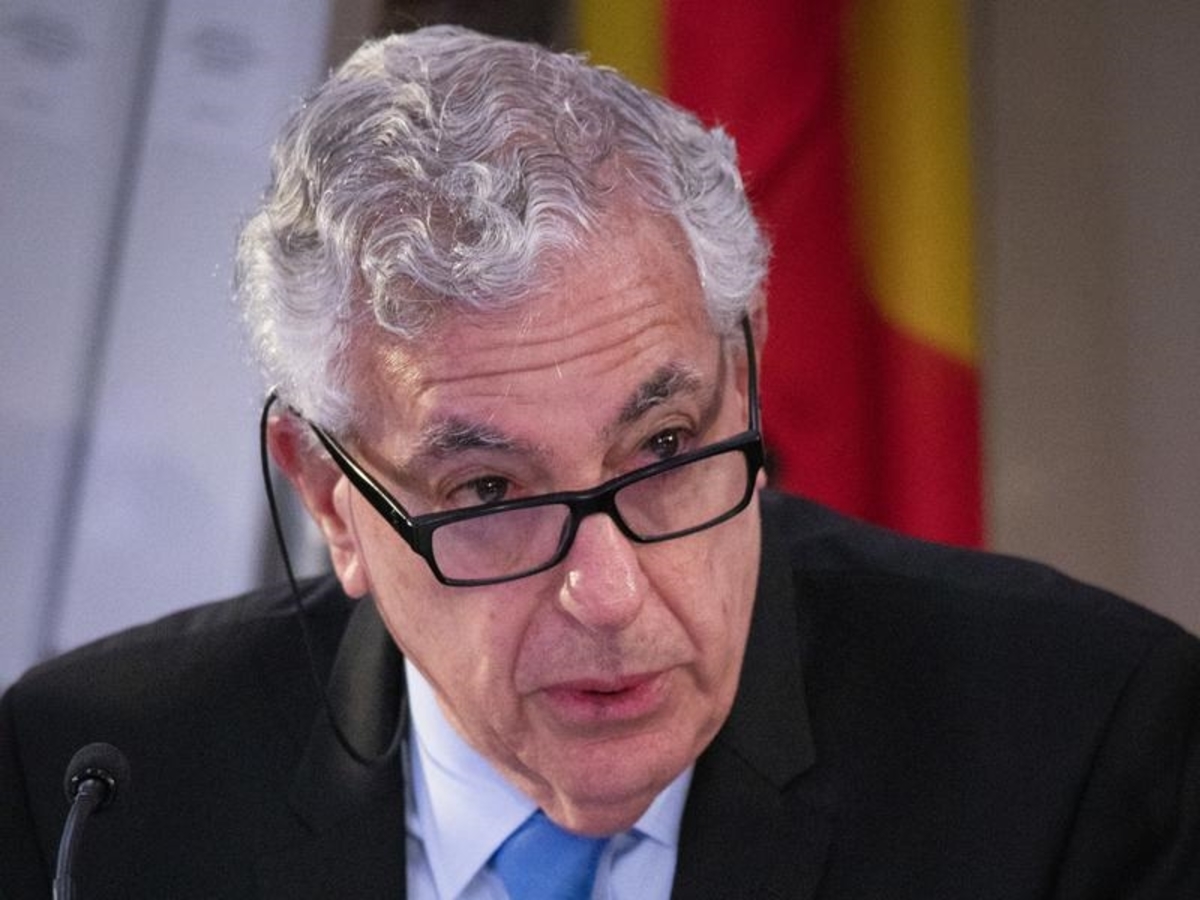
The chair of the disability royal commission says he will write to Prime Minister Scott Morrison requesting a 17-month extension for the inquiry's final report.
The $528 million commission, headed by Ronald Sackville QC and based in Brisbane, has examined the mistreatment of Australians with disability across the country's institutions, workplaces, schools, homes and communities.
The first public hearings were held in November 2019 and have gone on to examine the relationship of those with disability to group home care and health care, as well as the experiences of people with disability amid the COVID-19 pandemic.
Its interim report will be handed to Governor-General David Hurley on Friday and then tabled in federal parliament, at which point it will become publicly available.
The royal commission final report is due in April 2022 but Mr Sackville on Friday told reporters he would seek an extension for its completion to September 2023.
He would make the request via letter to Mr Morrison later on Friday.
"The terms of reference are extraordinary broad, much broader than any royal commission appointed in this country since well before the turn of the 21st century. That means the commission is not a sprint, it's a marathon," Mr Sackville said.
"This (September 2023 deadline) seems to be a realistic and reasonable timetable."
The most recent public hearing of the royal commission, held in mid-October, examined the barriers people with disability face in the education system.
The mother of Quaden Bayles, an Indigenous boy who made global headlines after being bullied, told the hearing she was snubbed by her son's school for months after the incident.
Yarraka Bayles also said her nine-year-old son requires the assistance of a specialist machine for respiratory problems but isn't allowed to bring it to school.
The commission late last month released a report into the experiences of people with disability in group home care, finding too many people are denied choices about their accommodation.
It found a shift from large housing complexes for people with disability to smaller group homes had not eliminated institutional forms of violence, abuse, neglect and exploitation.
The needs of individuals in group homes were seldom prioritised and routines were organised for the convenience of staff and management, the report said. The sector's largely casualised workforce also complicated the provision of adequate training.
Earlier public sittings also heard the federal government's initial COVID-19 emergency health plan in February failed to mention people with a disability, and heard eight National Disability Insurance Scheme participants had died from COVID-19 as of August 21.
There are 4.4 million people with disability in Australia - 365,000 of which are NDIS participants.













