Amid the spread of the new coronavirus, an increasing number of people are considering moving to rural areas. As the number of people infected with the virus has been increasing in major cities and teleworking has been encouraged, many people are now interested in rural life. Municipalities in rural areas and others are trying to come up with measures to receive people moving from urban areas while paying attention to preventing the spread of the virus.
--Low rent
"While the place is close to the Tokyo metropolitan area, it is rich in nature and the rent is low," an official at an immigration consulting seminar in Tokyo said. The event, titled, "Think about migration in the post COVID-19 era," was held in late June by the Yamanashi prefectural government. Fourteen people living in the Tokyo metropolitan area attended the event while eight others joined it via an online conference system. The participants received explanations about migration support measures from prefectural government officials and migration consulting staff.
Chiho Sakurada, 42, of Kawasaki who works for an information technology company in Tokyo, was interested in rural life and participated in the event. "My company allows its employees to do most of their work via telework, and I am now able to work from any place," she said. "So I started to think about moving to a rural area."
The prefecture's migration support center, based in Tokyo, received 142 inquiries about migration in June alone, 2.3 times as many as a year earlier. The prefectural government is accelerating discussions on a measure to receive people moving to the prefecture by utilizing vacant houses and abolished school buildings as residential buildings and satellite offices, using the city of Otsuki, which is within an hour from Tokyo, as a model case.
--35% show interest
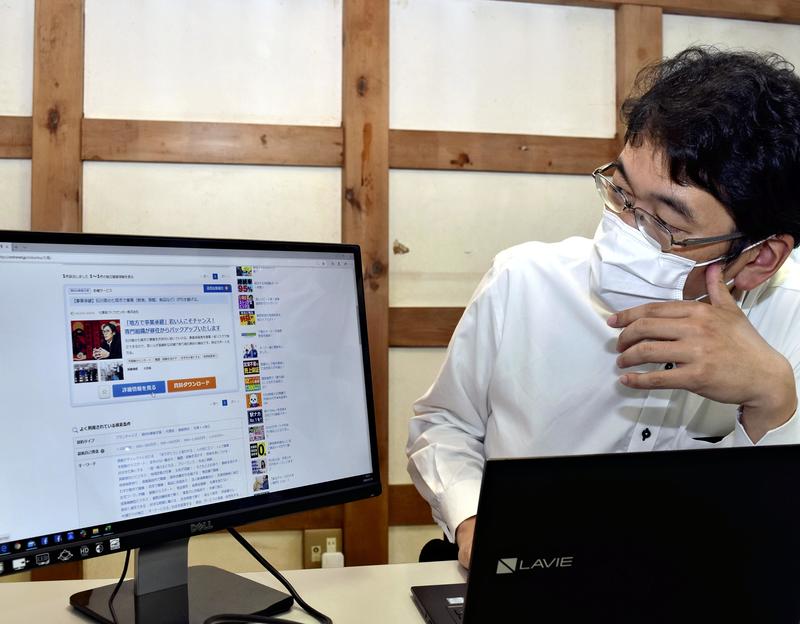
According to a survey released by the Cabinet Office in June, about 35% of people in their 20s living in Tokyo's 23 wards said they became more interested in moving to rural areas due to the coronavirus outbreak. The number of people registering to the migration support website "Smout" increased from 662 in March to a record high of 1,467 in June. According to a company operating the website, the rise of telework has a certain impact and many people say that they want to live in places where they can avoid close contact.
In Okayama Prefecture, the number of inquiries a migration-related department of the prefectural government received from January to June had surged 1.6 times from the same period a year earlier. The prefectural government opened a website for online counseling for migration in July and has stepped up efforts to promote the migration of young people by making use of big data such as search history.
--Migrating with employment
There is a growing interest in migration measures combined with employment support. The Nanao municipal government in Ishikawa Prefecture has a program that helps people hoping to move to the city take over running local small and medium-sized businesses.
Since April, the number of inquiries about the program has significantly increased to about 200 a month. So far, there has been only two or three inquiries per month. About 60% of the inquiries came from residents in the Tokyo metropolitan area and in the Kansai region, including people who lost their jobs or closed their businesses due to the virus. "We would like to attract people who are considering moving to rural areas amid the coronavirus crisis," Hirokatsu Hamada, 47, an official at a joint public-private venture for the development of the city, said.
The Annaka municipal government in Gunma Prefecture has eased farmland-related conditions under the program to help find vacant houses with farmland. Following that move, a couple living in the Tokyo metropolitan area decided to move to the city in July. "We would like to address the issue of unused agricultural land while emphasizing the attractiveness of rural life," Annaka Mayor Hideko Moteki said.
Read more from The Japan News at https://japannews.yomiuri.co.jp/