
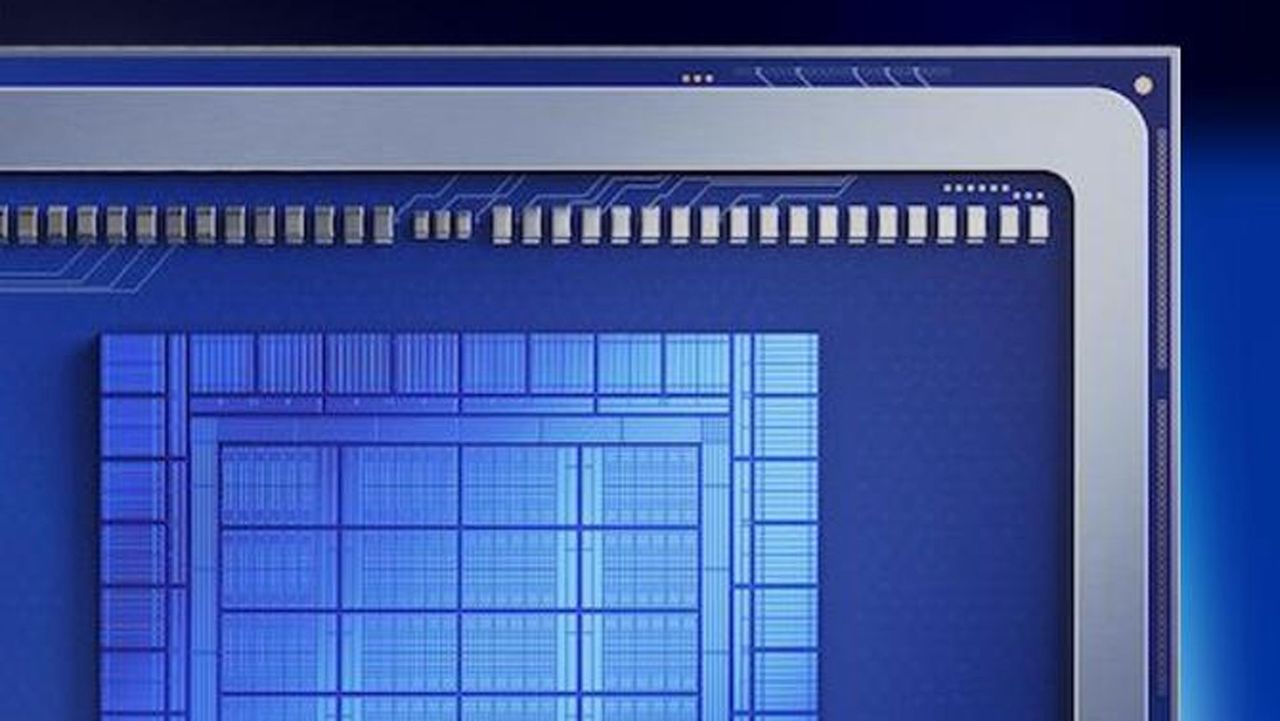
At Computex 2026, Intel is offering a few more details and updates for its next-generation Data Center GPU product, code-named Crescent Island. The Crescent Island GPU will be built on Intel's Xe3P GPU architecture. Intel says this architecture is "built for agentic AI," and it supports a broad range of potential data types, from FP4 for high-performance AI inference all the way up to FP64, potentially for scientific computing applications. Intel isn't providing any raw throughput specs at this stage of Crescent Island's development, so we can't make any guesses about its compute performance.
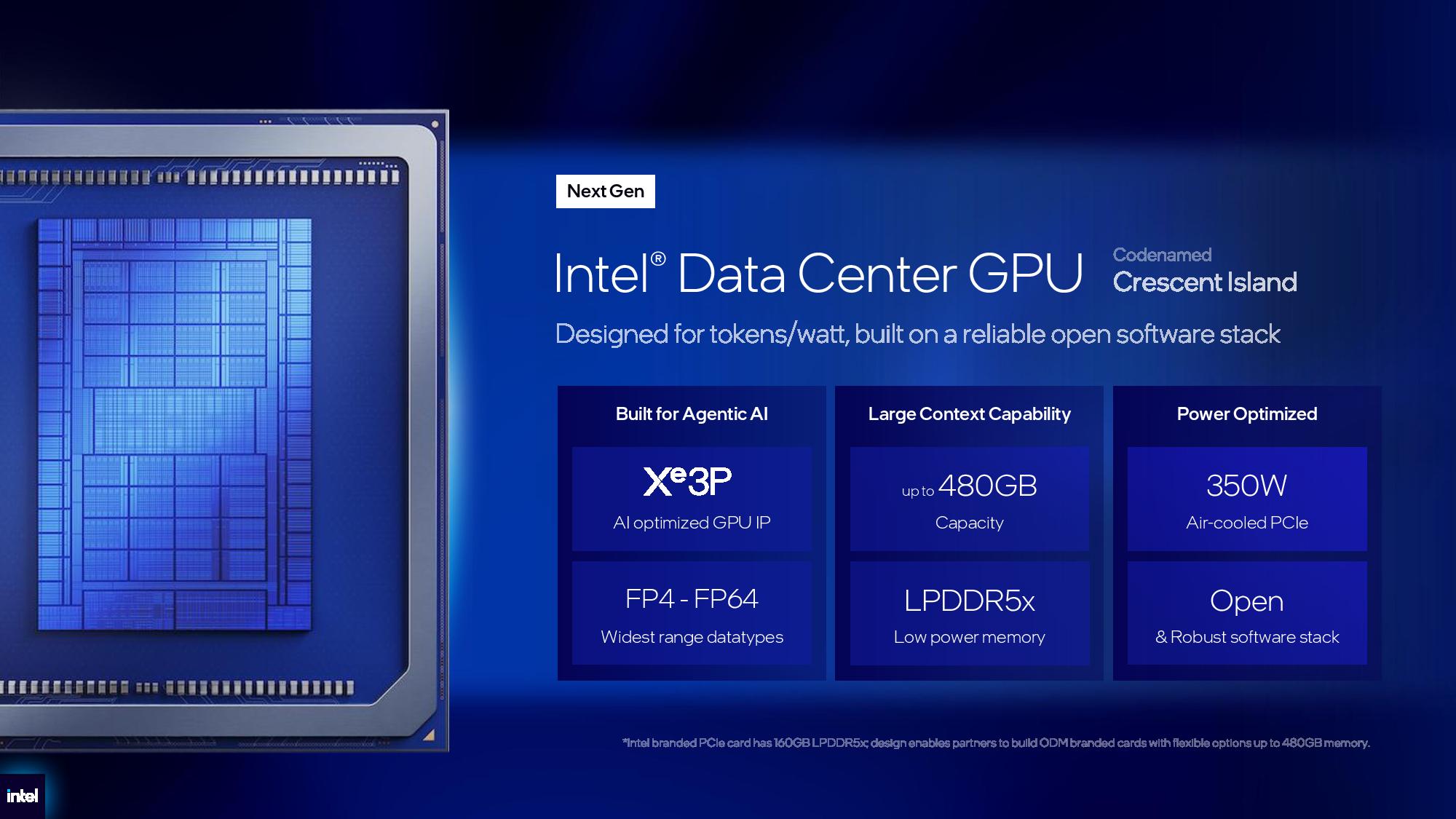
Crescent Island will be a PCI Express add-in card with a 350W power target, placing its power and thermal requirements close to products like Nvidia's RTX Pro 5000 Blackwell card. But Crescent Island's architecture is quite different from anything else on the market. It forgoes GDDR or HBM memory for LPDDR5X. Intel says its Crescent Island reference design will include 160GB of LPDDR5X, but that the chip is designed to allow partners the flexibility to build accelerators with up to 480GB of memory.
Recent leaks and past analysis have suggested that Crescent Island will take a wide-and-slow approach with LPDDR5X, potentially using a 640-bit bus connecting 20 LPDDR5X devices, to achieve these high capacities. Some basic math suggests that partners would need to employ 24GB LPDDR5X modules to fully realize that memory capacity, and those modules are already available from sources like Samsung. With 10.7 Gbps LPDDR5X, Crescent Island would offer 684 GB/s of memory bandwidth.
From a design standpoint, maximizing memory capacity while maintaining adequate bandwidth will help keep more AI data close to the GPU and require less data movement, potentially making Crescent Island a more efficient inference engine compared to GPUs built with lower-capacity GDDR devices.

Going with LPDDR5X also doesn't put pressure on valuable advanced packaging capacity or compete with higher-end accelerators for scarce HBM, making it potentially easier for Intel to produce these accelerators economically and in volume. There's no word on how or where the Crescent Island package itself will be fabricated, however.
Because Crescent Island is an air-cooled card with relatively modest power requirements, it's likely ready to drop into traditional 4U or 5U GPU servers, potentially making it appealing for companies trying to develop on-premise inferencing solutions. Eight of these accelerators with a full 480GB of RAM each would produce an impressively dense server with 3.8 TB of local GPU memory, allowing for massive models or swarms of smaller AI agents to reside within one box.
Of course, orchestrating AI work across multiple GPUs requires a capable software stack to manage the entire show, and Intel touts its oneAPI stack for use with Crescent Island. oneAPI is far less widely adopted than CUDA or ROCm, but those blazing the AI inference trail on Crescent Island will find software that the company calls "open, upstreamed, and Day 0 ready" for the product.
Intel describes Crescent Island as "coming soon" and has touted a second-half 2026 launch for the platform, so we'll presumably learn more about the product and the ecosystem building around it as we progress further into the year.