Over the course of the 30-year Heisei era (1989-2019), our perception of natural disasters changed from being that they would definitely strike "someday" to that they were striking "all the time." When the Great East Japan Earthquake of 2011 occurred, my intuition told me that the March 11 event was the very thing that could bring an end to the outdated postwar reconstruction regime and usher in a better postdisaster model of recovery. Since my introduction of what I called the postdisaster theory, nine years have passed.
As the country was about to fully embark on reconstruction from the devastating quake, I thought the time had finally come to end the reconstruction approach based on the postwar model and switch to one based on a postdisaster model. That was the essence of my theory. The pursuit of equality was the very pillar of postwar rehabilitation efforts, in which the government always took the initiative in applying a growth model with a view to equitably rebuilding every part of the country.
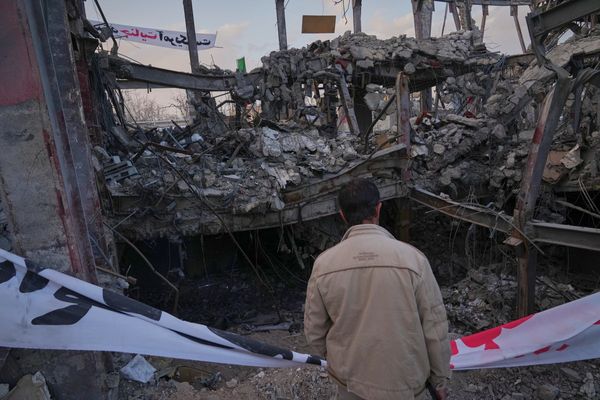
The 1995 Great Hanshin Earthquake painfully renewed people's awareness of the fact that advances in science and technology could never fully contain natural disasters. Nonetheless, a locally advocated approach to creative reconstruction became just an empty slogan as postquake construction work went little beyond the postwar model. Then came the 2011 Great East Japan Earthquake. Vast areas, including depopulated ones, were damaged, with residents stricken by grief over losing loved ones and neighbors, while encountering disaster-stricken landscapes at the same time.
About a month after the March 11 disaster, I was appointed vice chairman of the government's Reconstruction Design Council in Response to the Great East Japan Earthquake. I wanted to break with the unimaginative tradition of following the postwar model that presupposed population growth, and, instead, adopt a postdisaster downsizing model for rebuilding Tohoku in positive terms. The latter aimed to transform the region into one with trailblazing communities that would lead the whole of Japan with their bold initiatives for tackling challenges such as population aging and contraction, and with environmentally friendly living infrastructure.
However, the nine years since then have witnessed many scenes in which the postdisaster opportunities were almost overwhelmed by the postwar structure in society. People tend to readily take the easier way -- while putting aside the realities of their region, which could have been the cornerstone of the "downsizing model," they continued to bet on the "growth model," the traditional source of delusion.
Ever since 2011, Japan has suffered a host of natural disasters, including the 2016 Kumamoto Earthquake and various large-scale natural disasters in many places across the country. Consequently, reconstruction from disasters began having the nature of nationwide and year-round importance. Indeed, the postdisaster aspect has spread so widely across the country that it now serves as a diachronic cue to imagine what the whole of Japanese society looks like.
In the meantime, the Japanese economy had lost steam long before and stopped expanding year after year, a development that has already made it impossible for the entire population in Japan to live in society free of income inequality. Against this backdrop, it has become clear that the problems of population aging and shrinkage will go unabated. This situation requires Japan to make fine adjustments by applying the postdisaster model.
For example, even though the much-touted initiatives to rectify the overly centralized system of government and relocate government functions have failed to materialize, new lifestyles, such as people migrating to rural areas or dividing their time between urban and rural areas, have gathered momentum, albeit less visibly, as part of the postdisaster model, mostly among younger people who value acting on their own will. As in such cases, postdisaster wisdom has emerged little by little from various individuals.
COVID-19 pandemic
Coincidentally, the postdisaster developments I have just described occurred around the time of the Imperial era name transition from "Heisei" to "Reiwa." As a prelude to his decision to become the first monarch to abdicate in the more than 150 years of modern Japanese history, the Emperor of the Heisei era carried out his duty as "the symbol of the State and of the unity of the People." He did so by traveling to various areas hard hit by the unusually frequent large-scale natural disasters in the era and, together with survivors, offered silent prayers for the victims at each disaster spot. He thus contributed to definitely strengthening the bonds between the Imperial family and the people.
On May 1, 2019, the Imperial era name changed from "Heisei" to "Reiwa." The former emperor, now the Emperor Emeritus, expected the new Emperor to always pray together and stand with the people. The new Emperor expressed his resolution to comply with the wish of his father. The Reiwa era's first year, filled with a festive atmosphere following the new Emperor's enthronement, went smoothly.
However, the second year of the Heisei era has seen the country running into a situation that is fundamentally uprooting the way modern Japan has existed. The situation has been triggered by an infectious disease disaster -- the new coronavirus (COVID-19) outbreak -- that has swept across the entire world at a bewildering speed. While the world has reeled in shock, the COVID-19 pandemic has raged on with the number of confirmed infection cases skyrocketing and more and more deaths reported globally every day.
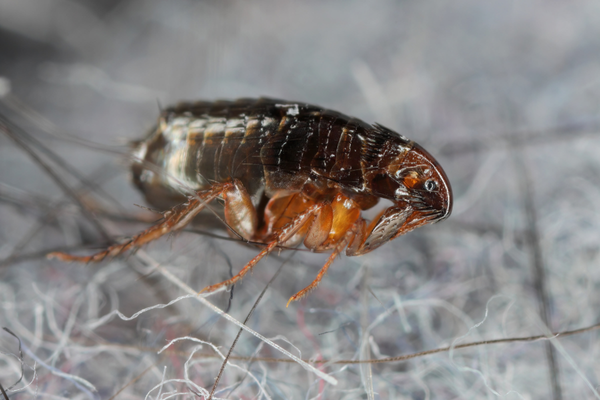
Whereas the primary impact of a natural disaster is the physical destruction of buildings and the natural environment, sometimes at the direct or indirect cost of human lives, an infectious disease disaster directs the full brunt of its assault directly at human beings. Moreover, a virus does its destructive work invisibly, entering the body and, depending on the time and circumstances, eventually killing its victim. At present, it is more difficult to predict an infectious disease outbreak than natural disasters.
Once a natural disaster begins, it is possible to foretell what will happen during and after it, and people tend to become increasingly united, a situation that can be effective in fostering new bonds among them. As symbolized in a surge in the number of volunteers, such moves can culminate in an ad hoc system leading to the "mobilization of human resources throughout the Japanese archipelago" with volunteers coming from within and outside of the borders of Japan.
In contrast, an infectious disaster begins causing people to alienate one another in the process of its spread, compelling infected people to face social isolation and restrictions on movements. Even those who are not infected with the virus are deprived of opportunities to connect with other people as a sense of confinement settles over their minds. In many cases, even families have to remain separated. This then leads to the emergence of a system for "confinement throughout the Japanese archipelago" -- a scene that is opposite to national mobilization in response to past major natural disasters. The infectious disaster does not physically destroy buildings and the natural environment as in the case of a natural disaster, but the effort to prevent the outbreak or spread of infection forces the closure of buildings, facilities and organizations that otherwise exist to facilitate people getting together and coming into contact with one another. In other words, the things that are the fruits of modernization and the connectivity that has emerged between and among them are all denied.
COVID-19, sometimes appearing to be as emotional as a human being, is really mean. In the wake of a natural disaster, we will be able to draw lines to precisely distinguish a collapsed building from a chemically contaminated one, for instance. Such distinguishing is impossible in the case of coronavirus infection. Behaving like a naughty child playing hide and seek, the virus sneakily infects a person one day and yet goes unnoticed until much later. In contrast, once a natural disaster is over, people stop worrying about it and, when a natural disaster affects some other area, they regard it as "a fire on the other side of the river," and they go about their business feeling reassured that they are in no danger themselves.
As for an infectious disease disaster, as no one knows how soon it will be over, it is hard to expect the outbreak to end anytime soon. What is worse, infection may occur in the vicinity of anyone at any time. Therefore, in such a case, people feel pain as if seeing a fire engulfing a relative's house. When people learn of the deaths of well-known people, for example actress Kumiko Okae, who recently died of pneumonia caused by the coronavirus, the virus hits closer to home and they only become more alarmed about the outbreak.
Social media gains unstoppable momentum
Amid the viral pandemic, I still see a hope -- actually the only hope -- in the greater use and application of social media. The ongoing crisis keeps us from meeting people in person to promote human bonds, but virtual contact with people is overwhelmingly on the rise. More and more people are saying they have found it surprisingly fun to get connected to others via Skype, Zoom and other real-time video platforms. Users of those applications are likely to have opportunities to talk directly face-to-face with other people for the first time in a while, feel more comfortable with the circumstance surrounding them now, discover new features of friends having days or weeks of COVID-19 confinement or find better ways of living in their existing places.
The longer the infectious disease disaster goes on, the more postdisaster propulsion will be inevitably accumulated. So the postwar model for reconstruction in Japan is at long last set to fall with a resounding crash. Instead, the postdisaster model has finally begun to materialize little by little in the country. That said, we still need to see what will happen to the level of direct face-to-face connectivity -- the particular aspect of human activities that has to be severely restricted due to the COVID-19 social distancing measures -- in the postdisaster sphere.
Face-to-face interaction in the real world and socializing opportunities at izakaya casual restaurants are an essential part of life for people in their 60s or older -- including me. This is because we believe that a merry-making ambience is the very source of connecting people and creating new ideas. In the postdisaster period, the real-world merry-making culture is expected to be recovered to some extent. But the increased momentum for virtual person-to-person connectivity is unlikely to be reversed.
The way people develop person-to-person relationships with others may change drastically. In this connection, I recall "Shin Godzilla," a highly popular monster film released four years ago. In retrospect, Godzilla was not a metaphor symbolizing a natural disaster -- it actually emerged as a weird "giant unknown creature" and grew up as something with spiteful thoughts. Yes, that was Godzilla.
The film portrays a politician having evolved step by step like Godzilla. He devises a system to enable mankind and Godzilla to "coexist" while preventing the monster from being reactivated. Needless to say, his purpose to "coexist" with Godzilla is neither friendly nor favorable to the creature -- the politician plots to put Godzilla off its guard when attacked by Japanese troops. If we replace Godzilla with COVID-19, our analogy may be applicable to our efforts to contain the ongoing infectious disaster. What is more, the politician gives an impressive line in the film: "There is still hope for this country, really." Does what has been done and what will be done to fight COVID-19 deserve to be described with the same quote?
Special to The Yomiuri Shimbun
Mikuriya is a professor emeritus at the University of Tokyo specializing in Japanese political history and a fellow at the university's Research Center for Advanced Science and Technology. He served as acting chair of the Advisory Council on Easing the Burden of the Official Duties and Public Activities of His Majesty the Emperor, which submitted a final report to the prime minister in April 2017.
Read more from The Japan News at https://japannews.yomiuri.co.jp/