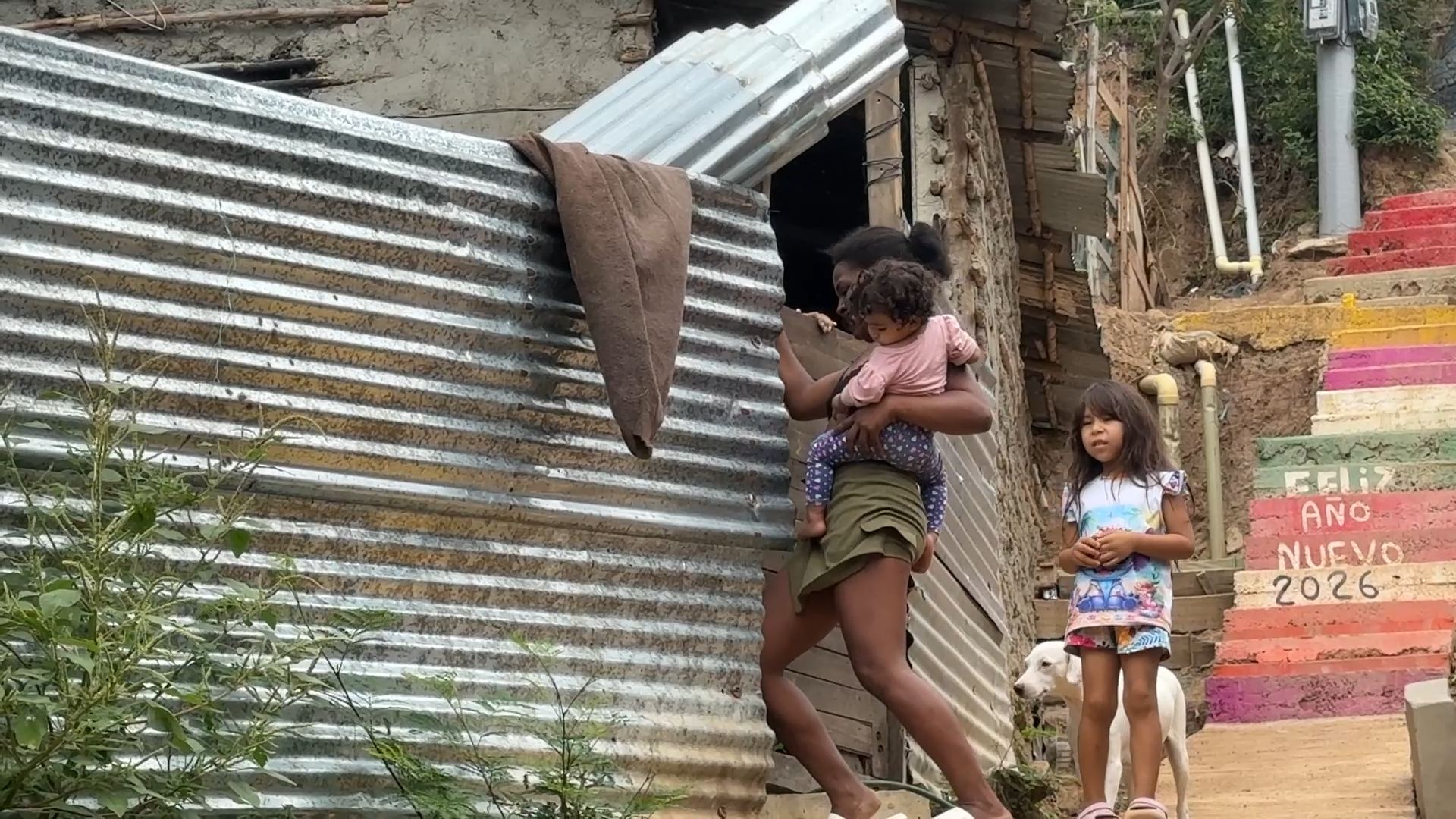
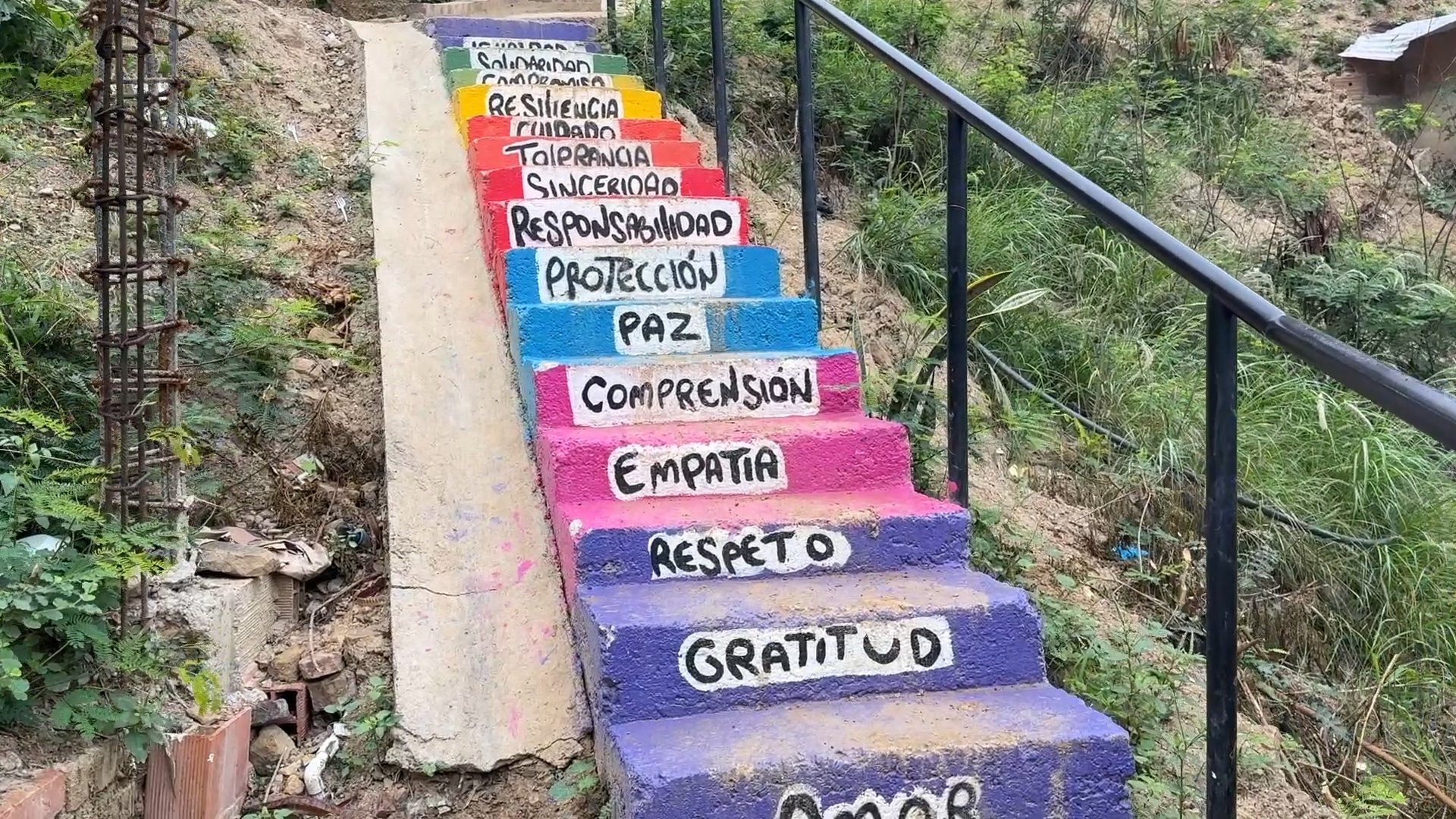
Steep rainbow-coloured steps lead us up through the shanty town known as “Venezuela”. Each riser is painted with a slogan: love, gratitude, respect, empathy, understanding, peace, protection and so on – each uphill heave, a sign of hope over experience.
This is a staircase in a Colombian favela entirely populated by Venezuelans. And run entirely by Tren de Aragua – the region’s biggest transnational narco-gang. Its residents are safe here. They are among the 8 million Venezuelans who have fled their homeland during the dozen years of Nicolas Maduro’s presidency.
His rule was marked by repression and economic collapse under US sanctions, and a mass exodus of the kind seen only at times of war. Yet after he was removed at the weekend, no one here is in a hurry to return home.
Donald Trump’s capture last Saturday of Venezuela’s president, in a clinical but violent raid on his compound at the heart of Caracas, and Trump’s subsequent boasts that the US would now run the country, have been greeted with some enthusiasm.
Despite having targeted North American democracy, eroded the powers of the US judiciary and attacked any aspect of the constitution that limits presidential power, Trump is seen here as a glowing ember of hope.
He says Venezuela will be run by America remotely. The government that Maduro controlled until last Saturday is still in place.
Trump also says that through US rule, Venezuela will see a return of American oil companies, and that it must open its economy to US businesses.
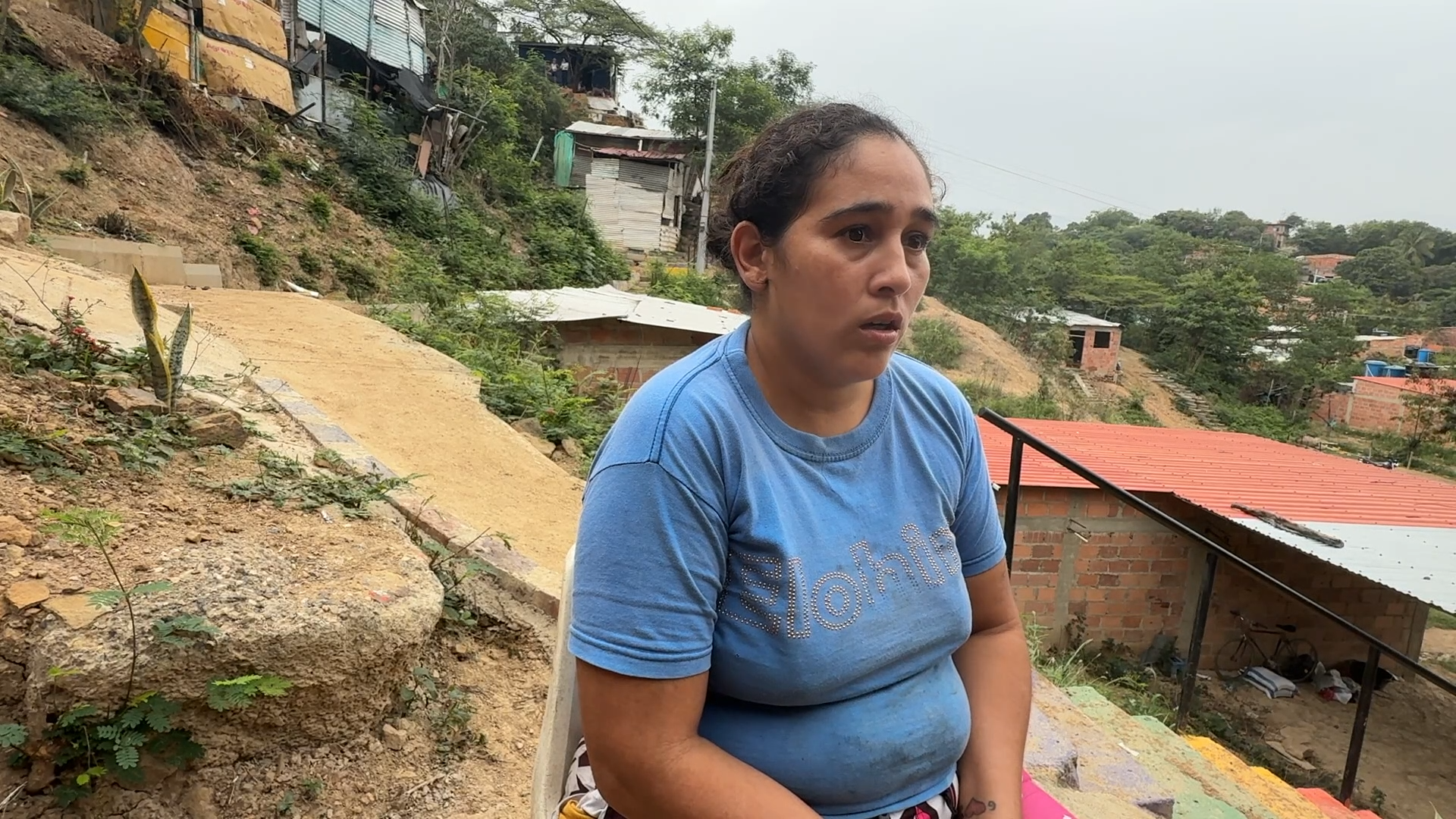
That’s fine as far as Cilinia Suarez, a 34-year-old mother-of-two living in the favela, is concerned.
“We have to wait and see what will happen in the future,” she says. “I don’t know what kind of reconstruction there will be. I would like the companies that President Chavez [Maduro’s hardline socialist mentor] blocked and dispossessed to return to Venezuela.
“When the companies return to Venezuela it will be a little more comfortable. When the medicines, food, and wellbeing of Venezuela arrive – the good doctors – we will return home.”
Suarez was a butcher in her previous life. She fled to Colombia in 2020 because her children, she says, were close to starvation and her husband could not find work.
While governments and commentators around the world have been outraged by Trump’s violation of Venezuela’s sovereignty and of international law – and while he has now turned his attention to a possible takeover of Greenland – Suarez is pleased about his invasion of her homeland.
“What Trump wants is that they no longer do what Maduro did,” she says. “He ordered people to kill others. In Venezuela, you can’t talk about the government, because they send you to jail. Trump says leave the people alone.
“They have to listen to what Trump says,” she insists.
A muscular youth with a torso clothed only in tattoos stands nearby. He is the only evidence that, although Suarez can say what she wants about Maduro, she can say nothing bad about the Tren de Aragua, the people-smuggling drug thugs that rule this patch of Venezuela in Colombia.
But the gangs have grown out of Maduro’s misrule. Many of his top henchmen are still in power and still in business with the “megabandas”, as the transnational organised criminals are known.
Suarez hails her neighbour, Weinnifer Sojo, 30, a mother-of-two, by whistling and tossing pebbles onto her roof nearby.
Sojo, a former opposition party activist and soldier in Venezuela, agrees that Maduro’s kidnapping by the US is to be celebrated. But not with a return to her home – not yet, at least.
Both women say the greatest threat to their country now is from the “collectivos”. These are armed gangs of pro-government loyalists. Having been formed to protect neighbourhoods, they have since evolved into a lawless network running protection rackets and other crimes, which gives them financial autonomy. They’re most often described as being under the control of Venezuela’s interior minister, Diosdado Cabello.
Sanctioned by the EU and the US, Cabello is often seen as more powerful and repressive than former president Maduro. Along with defence minister Vladimir Padrino Lopez, he has been accused of being at the centre of the country’s most repressive actions and alleged criminal activities.
Both men remain in office under the recently sworn-in former vice-president Delcy Rodriguez. Her brother, Jorge, presided over her inauguration in the National Assembly, proving that Maduro’s system of government is entirely intact.
From the US perspective, this may be sensible. It shows no regard for the democratic ambitions of Venezuela’s population, but it does not risk the mistakes of the US-led occupation of Iraq, when the power structures built by Saddam Hussein were swept away, and thousands were driven into the arms of terror groups.
The “Venezuela” favela sits within the Esperanza (Hope) neighbourhood. It is close to the Simon Bolivar Bridge, which straddles the border with Venezuela proper.
Juan Giraldo is demonstrating for the release of his father, Javier, who was detained in Venezuela four years ago, or “kidnapped”, as he puts it. Javier, he says, is accused of terrorism and other acts of sedition.
Venezuelan human rights group Foro Penal says that there are 863 political prisoners in the country as of December last year, and about 10,000 others who are out of prison but subject to restrictions on their behaviour.
For Giraldo, Trump’s intervention and removal of Maduro offer hope that he may see his father again.
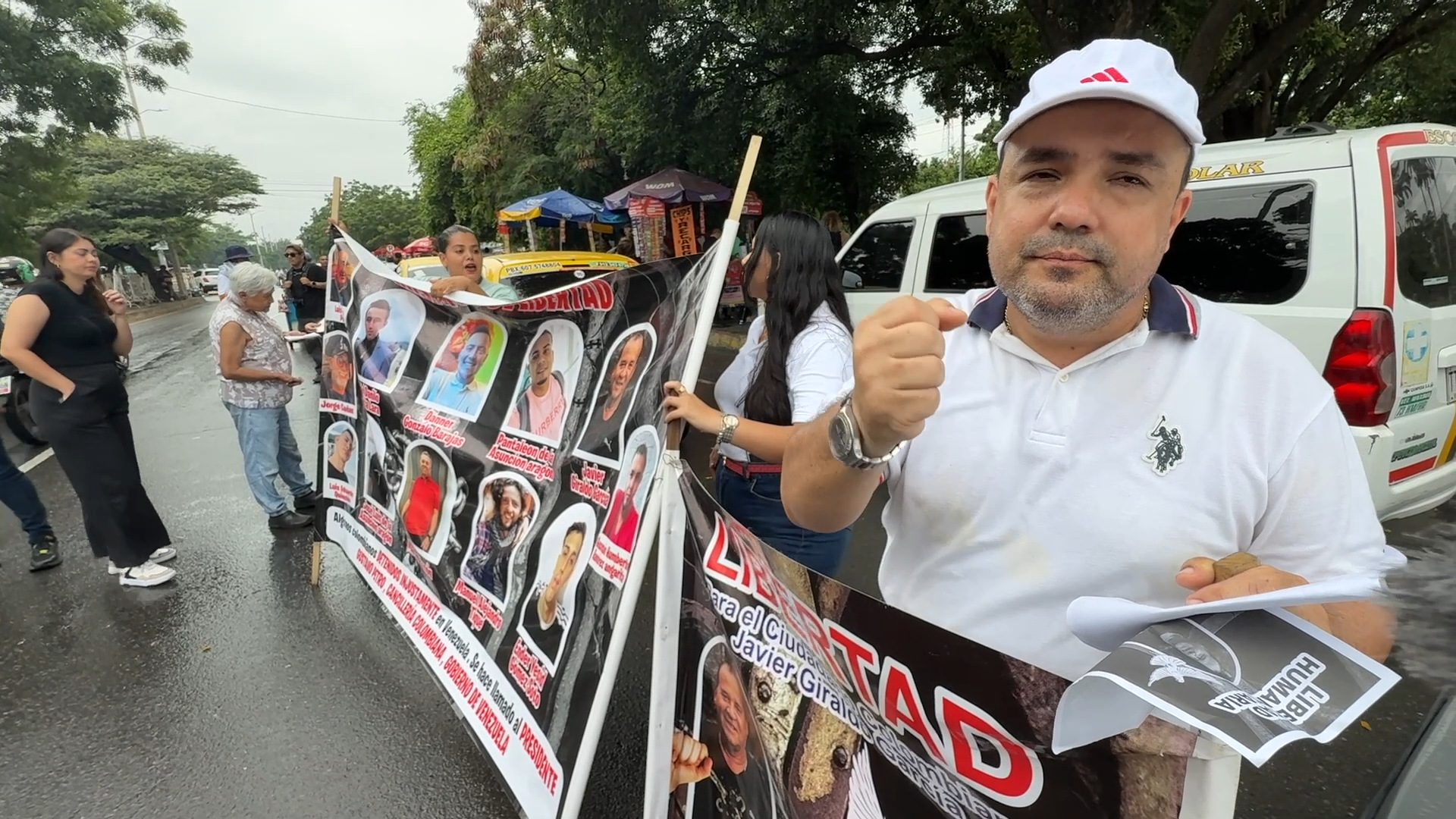
“I am sure, because Delcy Rodriguez is smarter than Maduro. Delcy Rodriguez will release [my father] this week. Political prisoners will be free this week,” he insists.
“Be smart, Marco Rubio,” he adds. “Be smart, Trump. Maybe we need new elections in Venezuela, overseen by the United States. We need real democracy.”
But democracy is not on Trump’s agenda for Venezuela. And on the stairs inside the shanty town of the same name, the painted steps do not show the most dangerous word of all, “esperanza”– hope.
Russian tanker sanctioned by US sailing through English Channel
Trump doubles down on defense of ICE shooting in Minneapolis
Britain says tanker seizure is a win for trans-Atlantic security but tensions loom over Greenland
Megyn Kelly accuses Minneapolis mayor Jacob Frey of trying to light ‘city on fire’
Wisconsin man accused of killing parents to fund Trump assassination plot pleads guilty to homicide
The ‘amazing’ poet mother of three shot dead by ICE agents in ‘public execution’