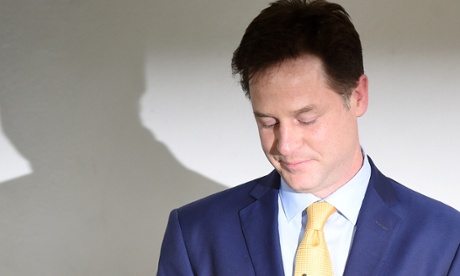
In a democracy, the voters can never be wrong, and railing against an election result is folly. But as the Lib Dems survey the wreckage after Thursday night, it will be no small challenge to correctly interpret what the electorate were saying when they reduced the party’s presence in the House of Commons from 57 MPs to just eight. I will leave it for others to bang on about the words tuition fees being written on the Lib Dem gravestone. Here are some things for the party to ponder about the disaster.

Some is collateral damage. Since the nations of the UK rushed headlong into the arms of the SNP north of the border and towards a self-consciously English Tory embrace in the south, spurning both Labour and Lib Dem offers as they went, this must be partly true. And liberalism is the polar opposite of nationalism, as Nick Clegg’s resignation speech argued. Very heartening for the Lib Dems, therefore, that since polls closed more than 7,000 people have joined the party, boosting numbers higher than 50,000 for the first time in years – many on Twitter said they worried that the UK needs a liberal voice to promote tolerance, openness and internationalism.
Another factor, long feared, is Tory kryptonite – anyone sharing a platform with the Conservative party sees its own power sapped by toxic contact (consider the bitterness in Scotland over Labour and Tory politicians cooperating in the Better Together campaign). One of the saddest side effects of this result is to kill off any future cooperation in government unless the voting system changes – without it, the smaller partner gets pulverised, as we know from other EU nations and from Angela Merkel’s personal warning to Clegg about the fate of Germany’s FDP. To expect a different outcome in the UK was probably too close to trying to defy gravity.
This is more controversial. Over the lifetime of the last parliament the Lib Dems were ambivalent about being in government and how to communicate their role: first thick-as-thieves, then pulling away, falling out with other ministers and all the while trying to sell the ideal of cooperative politics. Towards the end, Clegg seemed liberated to talk about what he and his ministers had achieved, but it was too late and the public were already confused. In the end, the decision to promise stability drove wavering voters towards the Tories..
But any election is won or lost on the fundamentals. Details of the campaign are not worth obsessing over. For the Lib Dems, the problem has been moving from a clear reputation as an anti-establishment party empowering the underdog – romantic Cavaliers” – to pragmatic partners in government – dowdy “Roundheads”.
Making compromises to get a proportion of mainstream policies enacted may be honourable and in the national interest (personally I believe it is). But when translated into an electoral sales pitch it sounds like managerialism. Focus group findings from BritainThinks for the Guardian revealed a catastrophic loss of identity when floating voters were asked to consider the Lib Dem brand. A total brain fade set in when they were asked about what the party did in government or what it proposed to do in any future coalition.
Neither the attempts to sell Lib Dem policies nor the Tory ideas the party had vetoed resonated. As a brilliantly insightful young journalist asked during the last party conference in Glasgow: “So I don’t get it? The Lib Dems are like the other two parties but smaller?”
The greatest task facing the Lib Dems as they rebuild in all areas of the UK – their tiny tally of held constituencies at least represents a good geographic spread – is to rediscover a unique identity, possibly with a bit of the old radical appeal. This was probably impossible to do in government even if it had been attempted. The centre ground turned into a killing field and the idea that a ground war can ensure success when the national message is confused has been tested to destruction.
Important lessons from Labour’s recent experience will need to be heeded – to disavow your own record in government is disastrous. But don’t get fixated on retrospective self-justification. And never say die, even as your enemies prematurely read the funeral rites.
- Miranda Green is former press secretary to Paddy Ashdown.