History shows one should never underestimate the significance of a humble handshake. Richard Nixon and Mao Zedong did it in 1972. Then there was Ronald Reagan and Mikhail Gorbachev in 1985. Perhaps most memorably of all came Nelson Mandela and FW de Klerk in 1990.
How will history judge the brisk but firm grip between the presidents of Cuba and the US, Raúl Castro and Barack Obama, in Panama City last week? There’s no doubting the political will for rapprochement between the two former foes. But as our cover reporting from Jonathan Watts and analysis from the Washington Post’s Nick Miroff and Karen DeYoung explain, both countries still need to tread carefully if they are to overcome the obstacles that remain.
In the US, Hillary Clinton ended months of speculation by confirming her intention to run for president in 2016. Meanwhile, footage of the shocking death of Walter Scott, an unarmed black man, at the hands of a white police officer in South Carolina has reignited anger over state violence against African Americans.
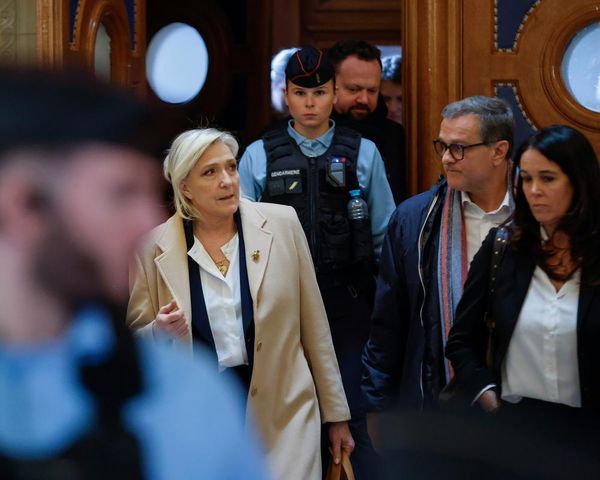
In Europe, Pope Francis described the massacre of 1.5 million Armenians by Turkey after the fall of the Ottoman empire as a “genocide”, a statement that caused outrage in Ankara. In France, the Front National founder and holocaust-denier Jean-Marie Le Pen may finally have departed mainstream politics after coming off worse in a bitter family feud with his daughter (and current FN leader) Marine Le Pen.
It’s not often we have cheery news from Iran, but the triumphant return of the Tehran Symphony Orchestra after a long absence certainly falls into that category. The wider Middle Eastern picture remains less rosy, however, as reports from Syria and Yemen starkly illustrate.
In South Africa, defaced colonial-era statues across the country are serving as focal points for anger and debate about lingering racial inequality. In Nigeria, a year after the kidnapping of hundreds of schoolgirls by Boko Haram, the extent of the horror left behind by the retreating Islamist militants is just becoming clear to the outside world.
One of our favourite stories this week concerned China’s slightly wild-sounding plans for rail expansion across Asia, which include a tunnel to Kathmandu beneath Mount Everest. (If nothing else, it puts the furore in Britain over a proposed high-speed line from London to Birmingham into perspective.)
Ahead of next month’s UK general election, we take a longer look at whether the key political battleground is no longer a question of left v right, but of young v old, thanks to widening income disparities between the generations.
The Weekly Review section takes us to Thailand, where the country’s military ruler turned prime minister, General Prayuth Chan-ocha, has a dubious plan to make people happier that involves throttling their civil liberties.
From the Chinese province of Inner Mongolia there’s a terrific Washington Post feature exposing how the country’s relentless drive for mineral extraction is wreaking havoc on the old ways of life. From Nepal, Le Monde reports on how political inertia is leading to dangerous levels of pollution in Kathmandu. There’s also a fascinating Le Monde piece from Greece, where for historical political reasons, a branch of sharia law still holds sway in the region of Thrace.
Discovery looks at how long-disputed presumptions about the proportion of gay people in society may turn out to have been right after all. Books considers efforts to bridge the language gap in scientific research. Culture profiles the artist Glenn Ligon, and weighs up an extraordinary new collection of Vietnamese folk songs revisiting the country’s war with the US.
Notes & Queries considers whether progress is better in leaps and bounds, or fits and starts? Good to meet you hears from a globetrotting teacher, now enjoying retirement (and the Weekly) in Canada.
In Sport you can read about golf’s new 21-year-old sensation Jordan Spieth, and there’s also a poignant tribute to Richie Benaud, the doyen of cricket commentators, who passed away last week.
Thanks for reading, enjoy the edition, and let me know what you think of it.
Would you like to change your delivery address? Your email address? Suspend delivery? You can manage your account online here.
Are you a subscriber looking for our digital edition? Click here. This edition can be viewed by subscribers on desktops, laptops, iPads, iPhones, some Kindles, Android tablets and smartphones. Log in on the device to the digital edition and the technology should take you to the correct format.