Once the new coronavirus pandemic subsides, the government intends to conduct large-scale sales promotions to realize a V-shaped recovery in the number of foreign visitors to Japan -- which saw a record year-on-year plunge in March due to the spread of infections -- but the decline has already cast a shadow over local economies, which had become heavily dependent on the surging number of tourists from overseas.
Local ryokans and restaurants are going bankrupt one after another.
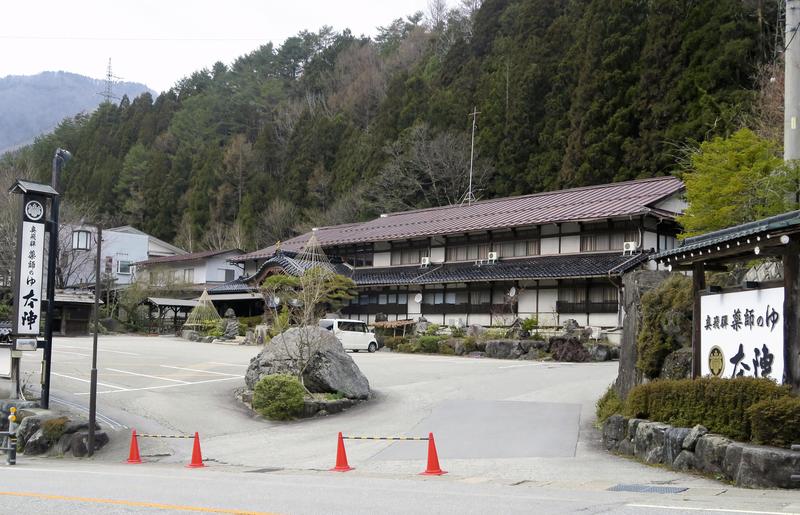
Okuhida Onsengo Shin-hirayu Onsen in Takayama, Gifu Prefecture, is a resort area clustered with ryokans with hot springs at the foot of the Hida Mountains. A long-established ryokan here named Okuhida Yakushi No Yu Honjin, which boasted of being one of the largest in the area, went bankrupt in early April, with liabilities totaling about 200 million yen.
The tourist route starting from Nagoya, passing through Takayama and other sightseeing spots, and going to Kanazawa, was quite popular among foreign visitors. According to the Okuhida Onsengo tourist association, the number of guests, including Japanese visitors, staying at its member ryokans is expected to fall by 80 to 90 percent from a year earlier in the February-April period.
"If ryokans continue closing down one after another, the vitality of our hot spring town will be lost," said the association director.
In the city center of Takayama, a number of souvenir shops and restaurants have temporarily closed. The 60-year-old proprietor of a local souvenir shop, which saw its sales in March fall by 80 percent from last year, said, "We managed to keep our store open till now, but we're throwing away a growing amount of merchandise. We can't go on any more."
According to Tokyo Shoko Research, Ltd., the number of bankruptcies stemming from the impact of the coronavirus has been rising since February, with the number this month reaching 36 as of April 15. This has already surpassed the 23 cases recorded in March. Ryokan and hotel businesses accounted for one-third of the total.
Some hotel operators have launched new projects amid the crisis. For example, Tochigi Grand Hotel in Tochigi, Tochigi Prefecture, started providing people doing remote work with rooms for daytime use for 2,500 yen a day.
Some hotels are utilizing so-called crowdfunding, raising money via the internet and giving donors a hotel voucher that can be used once the coronavirus epidemic is brought under control.
The government will secure about 1.7 trillion yen for campaigns to boost the demand for domestic travel, and about 9.6 billion yen for attracting foreign visitors, in a supplementary budget for fiscal 2020. Yet these measures are to be implemented only after the coronavirus epidemic ends, and it is unknown whether business operators can survive till then.
Takayuki Miyajima, a senior economist at Mizuho Research Institute Ltd., said, "If this situation continues for as long as half a year, bankruptcies among small and medium-sized business operators will increase further before the coronavirus epidemic dies down."
Read more from The Japan News at https://japannews.yomiuri.co.jp/