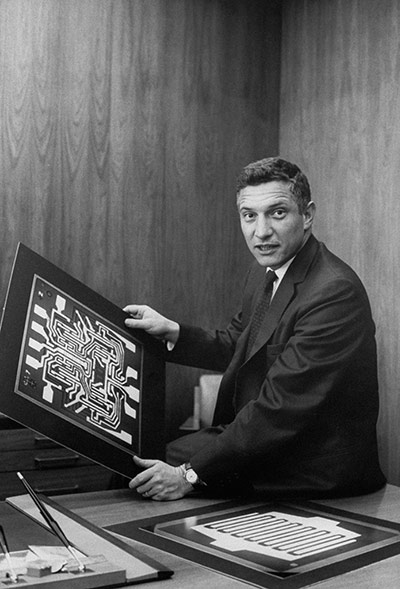
Before the silicon – or “micro” – chip, computers were huge machines that took up whole rooms: the connecting elements, valves and wires needed plenty of space. The silicon chip allowed computers to become small and portable, and, by doing so, changed the way we live, work and socialise. An integrated circuit made on a small piece of board was first built by Jack Kilby, working for Texas Instruments, in 1958. His board was made of germanium, a semi-metal, but a year later, in a valley in California, Robert Noyce created his own integrated circuit board using silicon. The technology developed in “Silicon Valley” would later lead to Microsoft and Apple. Not only did the silicon chip enable the device on which you're reading this article, it led to the internet itself. Photograph: Ted Streshinsky/TIME & LIFE Images
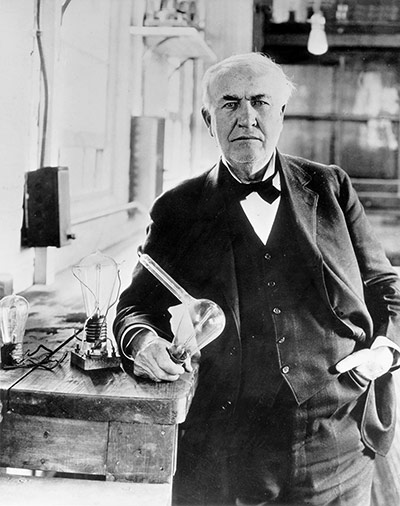
Before the lightbulb, fire was our only controllable light source. Gas may later have fuelled it – or it may have been caged in a glass lamp – but it was still essentially a flame producing light. Many people attempted an electric source in the 19th century, but it was Thomas Edison who patented the most popular system in 1878. His first bulb used a carbon filament and lasted – if used continuously – for just more than half a day. Its first sales came with a certificate for the user to display: "This room is equipped with Edison Electric Light. Do not attempt to light with match." Edison's was the ultimate lightbulb moment. Photograph: Mondadori/Archivio AME

Alexander Graham Bell brought us the telephone, a contender for this list on its own merits. But it wasn't until his invention went mobile, and then added smart technology such as apps and GPS, that it truly changed our world. The Motorola DynaTAC 8000X, launched in 1983, lays claim to being the first practically portable mobile phone – and the rest is history. It took 20 years for the first billion mobile phones to be sold: the second billion took just four years. By the end of 2010, three quarters of the Earth's population had one. Nokia launched the first mobile phone with internet access in 1996 and RIM's Blackberry 850 launched in 1999 with full qwerty keyboard buttons. But it was Apple's iPhone that really shook up the market in 2007 and changed our relationship with phones forever. Photograph: Ted Soqui/Corbis
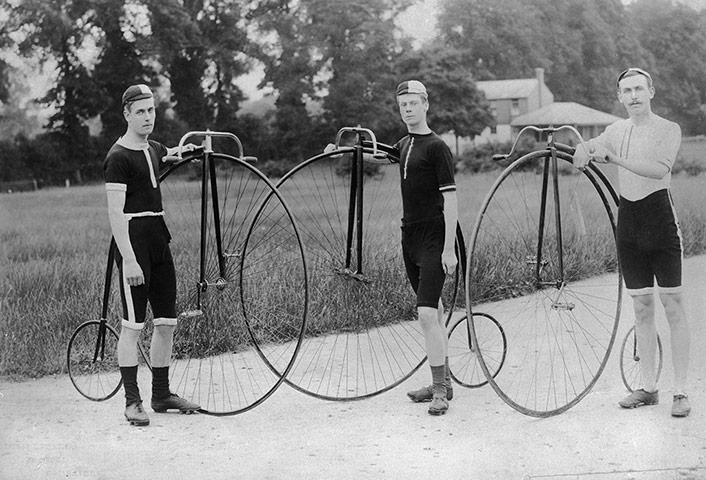
For a mode of transport without an internal combustion engine (or wings) to appear on this list is controversial. But not only did the bicycle arrive before the motor car, it may well outlast it. When the bicycle was invented in the 1860s, it effectively democratised transport. Early models – such as the “boneshaker” and Penny-farthing – may have been impractical, but when an inventive Irishman named Dunlop added a pneumatic tyre to it in the 1890s, it truly became the first individual mechanical mode of transport. In 1896, the suffragette Susan B Anthony said "the bicycle has done more for the emancipation of women than anything else in the world... It gives woman a feeling of freedom and self-reliance”. And now, when pollution and obesity challenge human existence, the humble bicycle may again be our saviour. Photograph: Hulton Archive
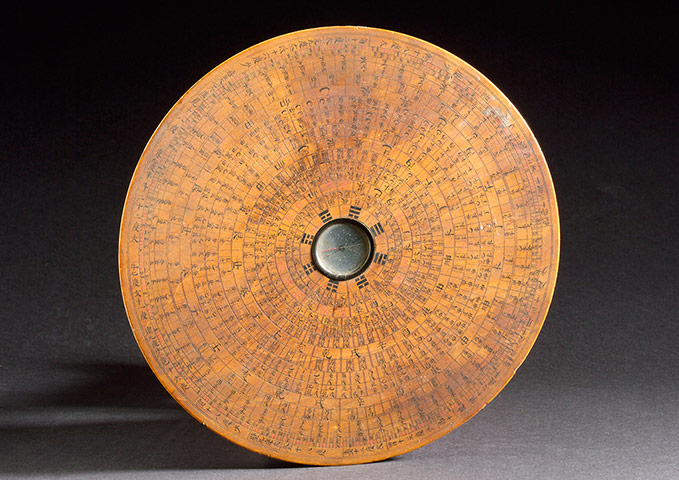
As much as the ships on which it was carried, the compass allowed humans to navigate the globe. The first compasses date back as far as the Chinese Qin Dynasty (221-206BC), when a magnetised stone spoon on a bronze plate was thought to be used for fortune telling. It wasn't until the middle ages that it was used for maritime navigation. There is some dispute as to whether the Chinese, European or Arabic sea-going explorers used it first, but a new age of travel dawned from the 1100s – one that no longer relied on landmarks or the heavens, but on a magnetised needle pointing towards the pole. Photograph: Science & Society Picture Librar
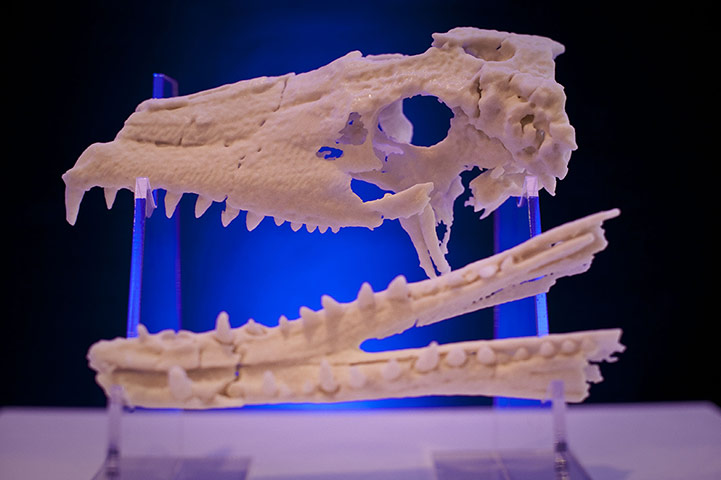
3D printing has quickly moved from a quirky research and development gimmick to a common manufacturing tool. Working in much the same way as an ink-jet printer, the 3D version 'prints' an object layer by layer from a digital image, using a plastic polymer. Charles Hull invented the process in 1984 and, in the 1990s, working mechanical parts started to be made. But 3D printing has really taken off in the 21st century: in 2006, a printer able to use multiple materials, such as metals and elastomers; in 2008, one that can print its own component parts; in 2011, the first printed robotic aircraft and full car body. And what about 3D printers in the home? It's almost inevitable. 3D printing of human organs? Why not? In 2002, a miniature, functional kidney was produced that could filter blood and urine in an animal. Photograph: Rex Features
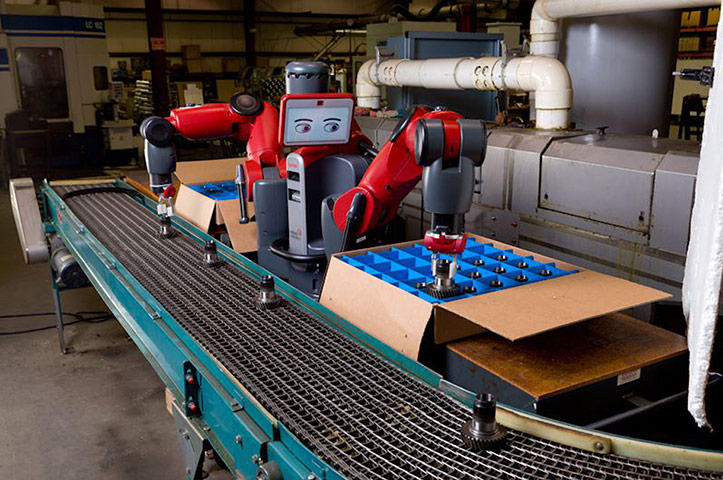
The 1950s vision of the future may yet arrive. Robots are fast-replacing non-skilled labour within manufacturing and are beginning to be used as assistants in the care, healthcare and education sectors. Baxter, built by American firm Rethink Robotics, is a humanoid robot, with a face, that can be taught tasks simply by moving its arms and showing it what to do, rather than by weeks of complicated programming. It can do many production-line roles and can be shown how to by an ordinary worker. Baxter may free people from tedious and dangerous labour, but others fear robots will replace more manned jobs than they create. Teaching robots have been trialled in Birmingham, UK, and self-driving cars could replace taxis. For better or worse, this disruptive technology will change the jobs of the future. Photograph: Sipa USA / Rex Features/SUA
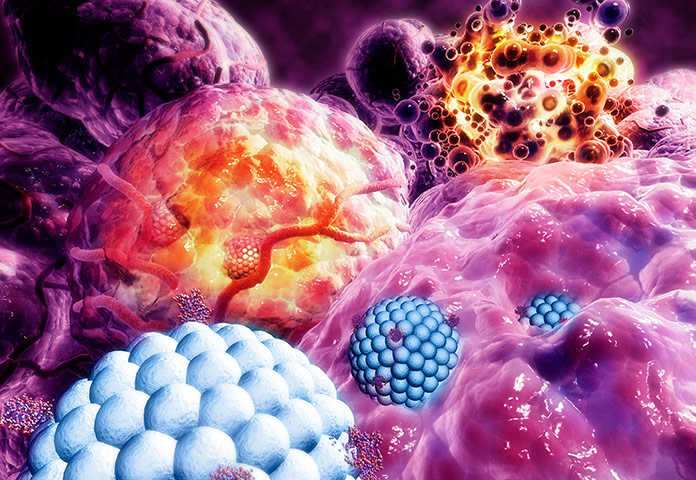
Nanotechnologies work at a scale comparable to individual molecules. This is the world of quantum mechanics, which hopes to produce smaller, faster computers. Nanoparticles could be used to deliver drugs to specific parts of the body. In agriculture, they offer pesticides that only become active upon contact with the desired plant, while smart sensors remain to detect early signs of disease. In medicine, electroactive polymers have been used to make artificial muscle. Perhaps most exciting of all are nanobots, robots the size of cells that may one day swim around our bodies acting as artificial immune systems. Photograph: Medi-Mation/Science Photo
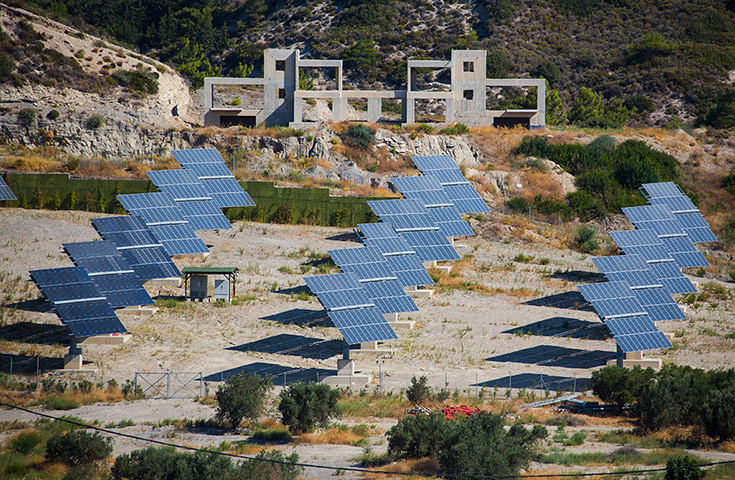
We're all aware of the debate around energy production: should we frack, or return to coal or nuclear? Are wind farms ugly? With the passage of time, these arguments will be academic. The world will run out of fossil fuels, so a transition to renewable and sustainable energy is inevitable and urgent. The ones that will really transform our future are likely to be in the early development stages at the moment. Microgeneration technologies – such as solar photovoltaics (PV), hydrogen fuel cells, micro-wind turbines and biomass boilers – may move energy production into the home. On a larger scale, innovations are emerging in solar, offshore wind, bio-energy, wave and tidal. The ways in which we produce and consume energy will soon change forever. Photograph: Getty Images Europe
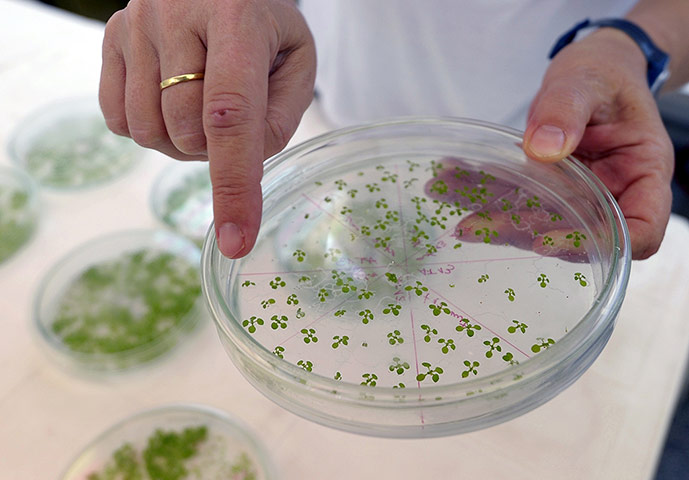
Biotechnology is the application of engineering principles to biological systems, from tailoring our genomes for personalised medicine to biomaterials, such as synthetic polymers, used for construction. And yes, it does include GM crops. Already widespread in the agri-food industry, biotechnology can improve crop durability and extend the shelf life of vegetables. Biotechnology can also improve traceability across the food chain (preventing any further horse-meat scandals). Advances in genetic science are producing enzymes that can create energy from non-edible plant waste without competing with food crops. According to the government office for science, a biofactory could one day exist that would require only sunlight, CO2 and inorganic nutrients to produce industrial chemicals. Photograph: AFP