LOS ANGELES _ Inglewood has come a long way since Dr. Dre proclaimed in the '90s that it was "always up to no good."
A surge of economic development is wiping away the city's reputation as a battle zone for rival gangs and promises to remake it not only into a sports and entertainment mecca but also a cultural destination.
But now that Inglewood is on the come up, longtime residents and city officials face a different challenge: Many who have weathered decades of hardship no longer can afford to live there and are being left out of the economic renaissance.
Donald Martin, 67, lost the roof over his head after a new landlord evicted him with just 60 days' notice from the building he had lived in for almost a decade.
Tomisha Pinson, who lives next door to the new L.A. Rams and Chargers stadium and entertainment complex, received a notice that the monthly rent on her two-bedroom Inglewood apartment would spike from $1,145 to $2,725.
"It makes you feel pushed out, like, 'We don't need you guys no more, the upper class is going to be moving in,'" said Pinson, 43, a mother of two who takes in foster children.
As home prices soar and rents rise, Inglewood is struggling to meet its goal of encouraging more investment while trying to preserve one of California's last remaining African American enclaves.
"Inglewood is the 'City of Champions' and like all good champions, Inglewood is rising again," said Daniel Tabor, a former mayor and councilman. "But it has been a missed opportunity for economic participation by the residents and local businesses."
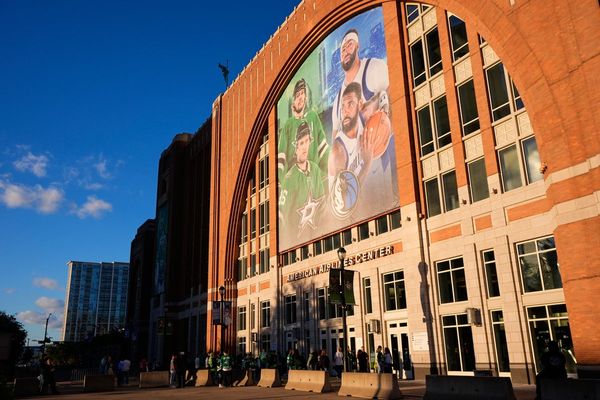
Not long ago, the city was struggling with decades of decline exacerbated by the loss of two economic engines, the Lakers and Hollywood Park racetrack. Now, the white skeleton of the $2.6 billion NFL stadium and entertainment district is rising along Century Boulevard. Plans for a new L.A. Clippers arena are crystallizing. A $14.5 million Frank Gehry-designed home for the L.A. Philharmonic's youth orchestra is underway, and the Girl Scouts of Greater Los Angeles moved its regional headquarters to Inglewood last February.
"We all know when the Girl Scouts come, it's all over," Mayor James T. Butts Jr. joked to a group of homeowners last year. In his view, the Scouts' arrival pins a badge of safety on his city, in turn luring still more investment.
All these attractions will become easier to visit with next year's scheduled opening of the $2 billion, 8.5-mile Crenshaw light rail line.
But activists are pressing City Hall, demanding officials do more to protect residents against ballooning rents. In March, the city adopted a temporary cap on increases and evictions. But some say the measure is too little, too late.
Uplift Inglewood, a tenants' rights group, is suing the city and a developer to halt construction of the Clippers arena, a project that would allow the city to use eminent domain to confiscate property at the southwest corner of Century Boulevard and Prairie Avenue. The lawsuit alleges that the city's proposed sale of public land to build the Clippers project violates state law that requires prioritizing the use of such land for affordable housing.
D'Artagnan Scorza, 38, who sits on the city's school board, said he helped create Uplift Inglewood to give a voice to vulnerable renters. He knows their plight. When he was a grade-schooler, his family was evicted from their Inglewood townhouse; they couldn't afford the rent.
Although he supports the football stadium project, he wants to use it to leverage development and investment to benefit blacks and Latinos, who account for an estimated 42% and 51%, respectively, of Inglewood residents.
"We wanted to be a model for investment without displacement," Scorza said. "We didn't want that capital to come in and flood out the folk who live here."