The Great East Japan Earthquake, which left more than 22,000 people dead or missing, occurred 10 years ago Thursday.
The mass relocation to higher ground in tsunami-hit Fukushima, Iwate and Miyagi prefectures was a major project that encompassed about 12,500 households. With the development of residential areas, however, new infrastructure had to be built, and the annual cost of maintaining water supply and sewerage systems and roads has increased by 13.1 billion yen, or 50%, from before the disaster. Covering the costs will be a challenge in those areas where the population continues to decline.
The Yomiuri Shimbun went to 37 municipalities along the Pacific coast of the three prefectures in January and February to compare the expansion and maintenance costs of the water supply system, sewerage and roads, before and after the 2011 disaster. The results showed that the water supply system increased by 1,081 kilometers, or 8%, the sewerage system by 997 kilometers, or 10%, and the roads managed by municipalities by 613 kilometers, or 3%. The total of 2,691 kilometers is greater than the distance between Tokyo and Guam.
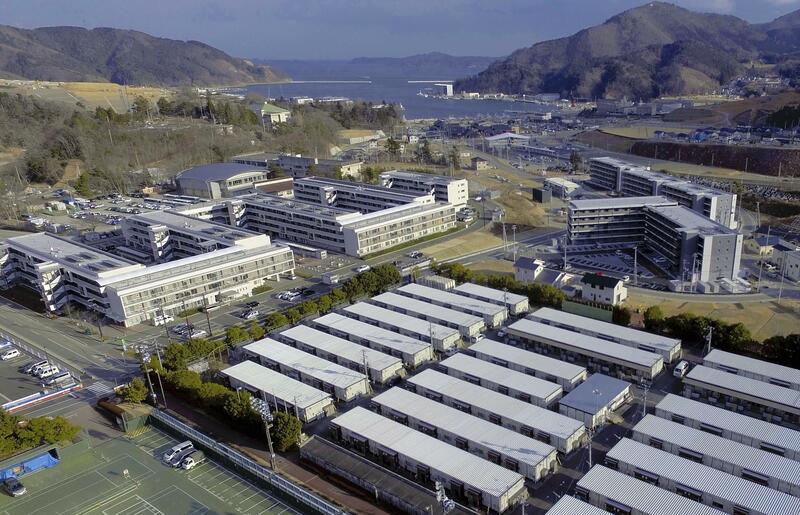
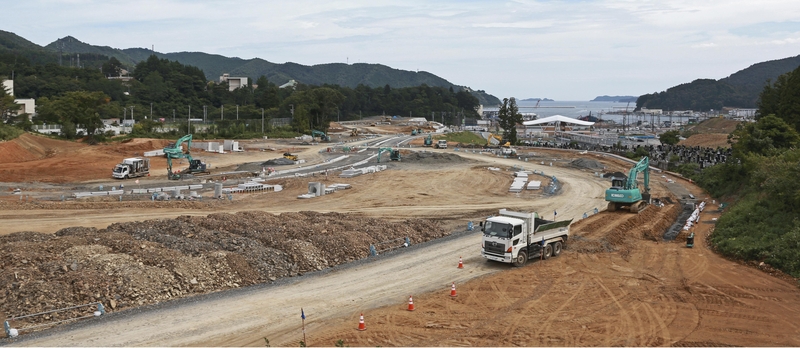
Reconstruction projects were carried out to elevate the ground and rebuild the areas. The relocation to higher ground increased the distance because it was necessary to connect water pipes and roads to the created residential areas.
Costs to restore damaged water and sewage pipes and roads, as well as to construct new such infrastructure, were covered by central government funds, including reconstruction subsidies. On the other hand, maintenance and management costs are borne by local governments.
There are 34 municipalities that have calculated the cost of renewing water supply systems, sewerage and roads after 40 years, and the total comes to 2.2305 trillion yen, more than the combined 1.9084 trillion yen of revenue in the fiscal 2018 budget of these 34 municipalities. Some municipalities, whose populations continue to decline, have experienced difficulty securing funds.
"It is difficult to secure new budgets because the revenue from residential and property taxes have decreased," said an official at the Ofunato city government in Iwate Prefecture.
The decline in the population is accelerating at a rapid pace in the disaster-hit areas, except in Sendai and its surrounding areas, due to the prolonged reconstruction projects.
By 2020, the population of the 37 coastal municipalities had decreased by about 124,000. Of them, 47,000 are in 12 municipalities in Iwate Prefecture, which has the highest decline of the three prefectures at 16.9%. The total amount of estimated municipal taxes for fiscal 2021 in the 12 municipalities is about 1 billion yen less than the current fiscal year.
"During the past 10 years, it was necessary to revive the functions of daily life in the city," said Masaaki Minami, a professor of urban planning at Iwate University and an expert on the maintenance and management of municipal facilities. "From now on, local governments will be required to make efforts to lower the cost of maintaining infrastructure. We should also think about consolidating the functions of cities in the medium to long term."
Read more from The Japan News at https://japannews.yomiuri.co.jp/