Infections with the novel coronavirus are on the rise again among elderly people age 65 and over, a group that has a vaccination rate of more than 80%.
The highly contagious delta variant is believed to be responsible for this trend. Infection clusters are also occurring in facilities for the elderly where residents have received two doses of vaccine, and authorities are urging caution.
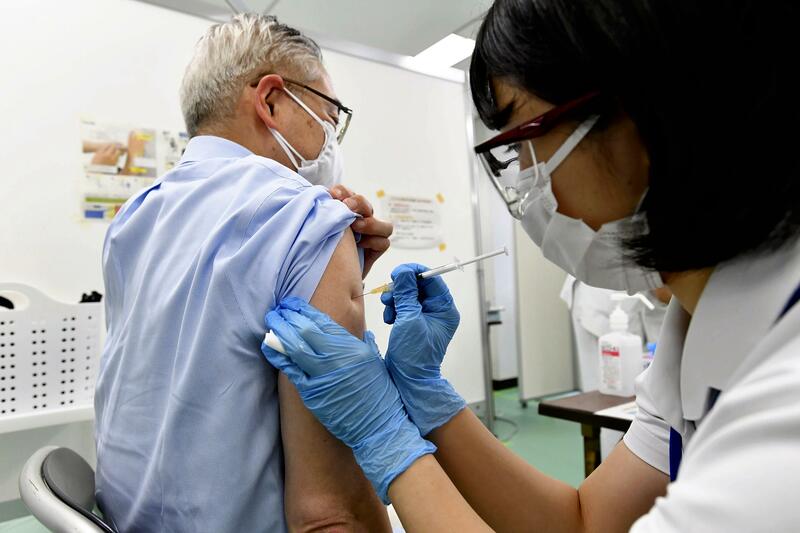
Vaccinations for the elderly started in April, and about 30.9 million people had received a second dose as of Friday, or about 87% of the total elderly population.
Inoculations have proved effective -- in Tokyo, where 2.61 million elderly people, or about 84%, have been vaccinated twice, elderly people accounted for only 2.7%, or 602, of the newly infected between July 27 and Aug. 2. This was down from about 10% in April and May.
However, the percentage of the elderly among the newly infected in Tokyo began to increase in August, reaching 4.3%, or 1,394, in late August.
"As long as there are 10 to 20% of the elderly who have never been vaccinated, the possibility of infections spreading remains," said Hideo Maeda, director of the Kita Ward Public Health Center in Tokyo. The Health, Labor and Welfare Ministry's advisory body is also concerned about the nationwide increase in infections among the elderly.
So-called breakthrough infections that occur after two doses of vaccination have also been confirmed in many places. According to a survey by the Osaka prefectural government, of the 85,325 newly infected people between March and August, 317, or 0.4%, were infected 14 days or more after their second dose, when antibodies are supposed to be fully developed. Of this number, half were over 60 years old. There were no deaths or seriously ill patients.
According to the health ministry's count, 34 infection clusters occurred in elderly care facilities in the week through Aug. 23. At a facility for the elderly in Tochigi Prefecture, 36 people in their 60s to 90s, out of 68 residents, were infected by mid-August. The 36 infected people were 14 days past their second dose, and no one became seriously ill.
Koji Wada, a professor of public health at International University of Health and Welfare, said: "Vaccination can prevent people from becoming seriously ill, but it does not protect us completely. Basic infection control measures are essential, and facilities for elderly people should continue to take such steps as using simple test kits to check people with symptoms."
Read more from The Japan News at https://japannews.yomiuri.co.jp/