At least three hikers were killed and five injured after a group of climbers were caught up in a volcano eruption on Indonesia’s Mount Dukono.
Authorities launched an urgent mission to rescue a group of 20 hikers who were believed to be on the mountain, in defiance of safety restrictions, at the time of the eruption.
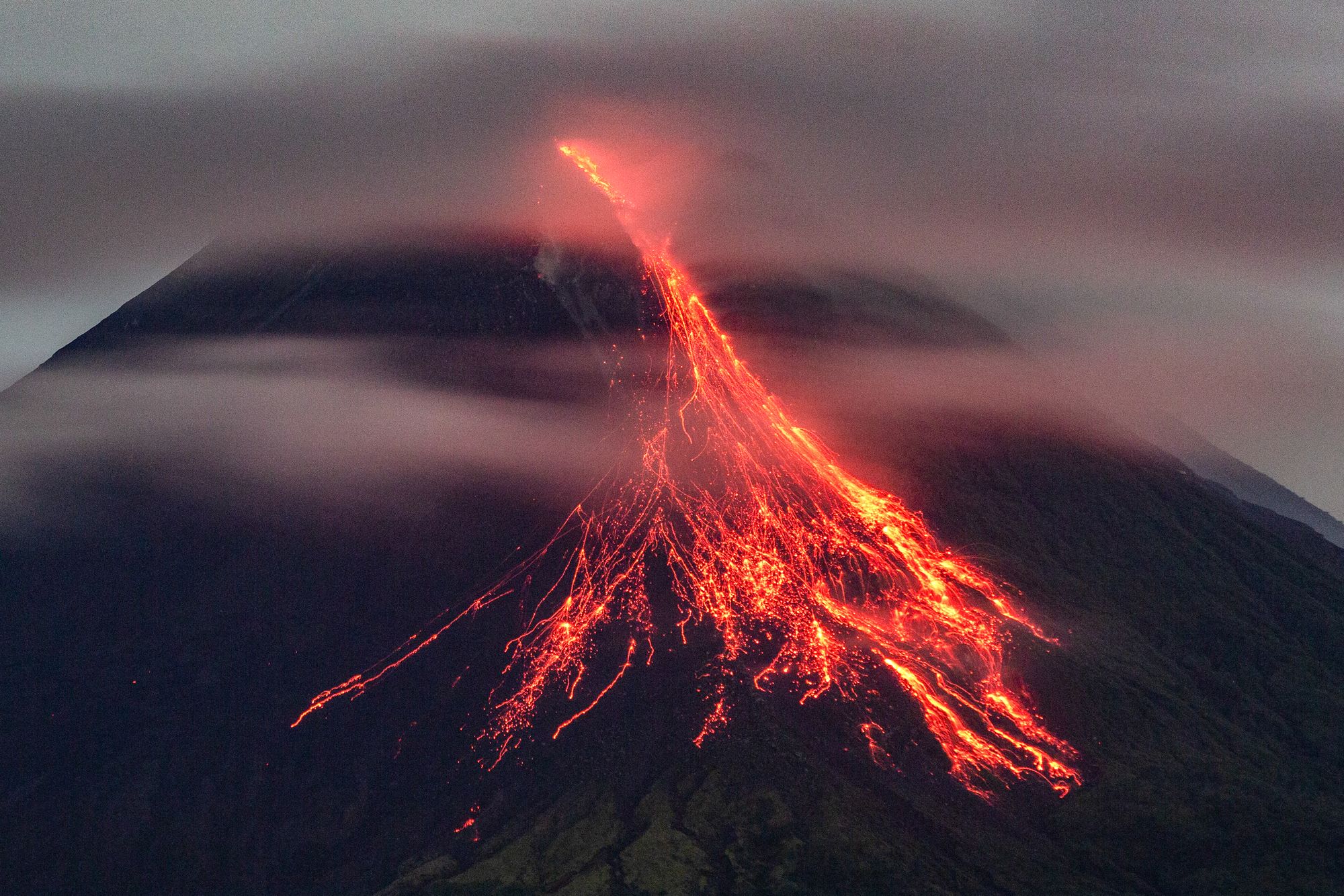
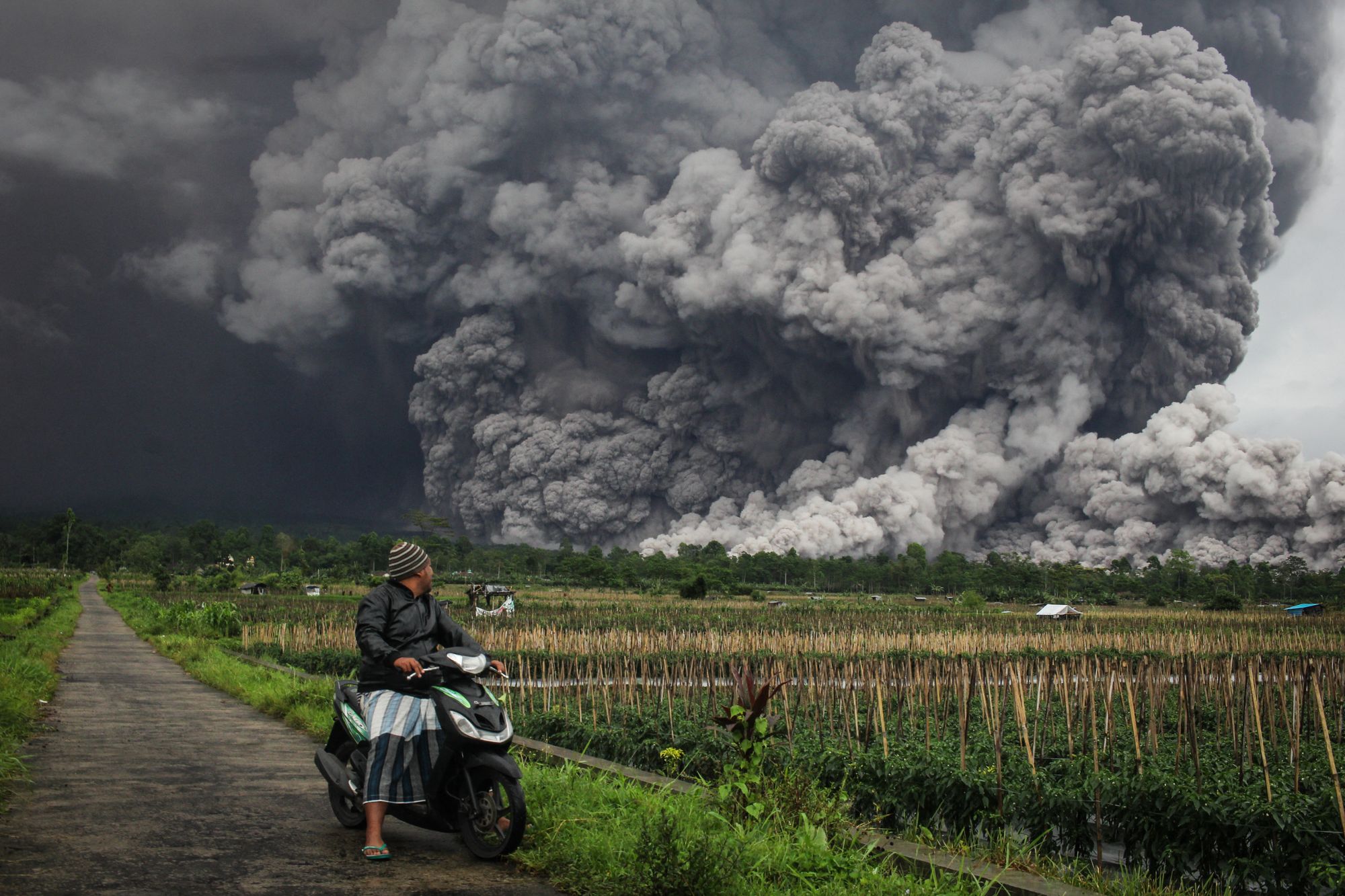
The volcano, located on Halmahera Island, erupted at 7.41am on Friday, spewing volcanic ash as high as 10km above the crater, said the country's volcanology agency.
The eruption was recorded on seismographs for more than 16 minutes, Indonesia’s Geological Agency said.
As of Friday afternoon, 14 climbers including seven foreign nationals were safely evacuated, with five among those were reported injured.
Rescue teams continued to search for other climbers believed to be attempting to descend.
Two of those killed were foreign nationals, officials said. Earlier, it was reported that nine Singaporean citizens were among the stranded hikers.
"There are three dead, two foreigners and one resident of Ternate" island in east Indonesia, police chief Erlichson Pasaribu of North Halmahera province told Kompas TV.
Among the deceased, two are Singaporean nationals, while another is Indonesian, said the police officer.
The bodies had not yet been recovered because continued eruptions and dangerous conditions prevented rescue teams from reaching the location.
“They were aware that climbing was prohibited as the mountain is the restricted zone due to its high alert status, but insisted on going ahead,” Mr Pasaribu said in a television interview, referring to climbers who set out on Thursday to ascend the 1,355m volcano on the island of Halmahera.
Officials also urged residents and tourists to avoid going within 4km of the crater while the agency also warned of the risks of rains causing volcanic mudflows.
Officials believe the hikers were inside the restricted zone at the time of the eruption.
Volcanic activity at Dukono remains high, and authorities said it was at the second-highest alert level.
Despite warnings on social media and signs at the site, “many people remain determined to climb, driven by the desire to create online content,” Mr Pasaribu said.
There are not yet any reports of flight disruptions caused by the eruption.
Iwan Ramdani, the head of the local rescue agency, earlier said they have deployed dozens of personnel, including police, to search for the hikers trapped by the eruption.
Authorities also warned of possible secondary hazards, including volcanic mudflows, especially during heavy rain, which could travel along rivers flowing from the volcano’s slopes.
Officials said the volcano has shown an increase in explosive magmatic eruptions since late March, with nearly 200 eruptions recorded since March 30 and an average of about 95 eruptions a day.
“Friday’s eruption was among the strongest during this period,” said Lana Saria, who heads Indonesia's Geology Agency at the Energy and Mineral Resources Ministry.
She added that ash clouds ranging from white to gray and black in color were being blown northward.
She warned that ashfall could affect nearby settlements, including the town of Tobelo, raising health risks and disrupting transportation and daily life.
Officials urged residents, tourists and climbers to remain calm, follow official guidance and avoid restricted areas as monitoring of Mount Dukono continues.
This is not the first time that hikers have been left stranded due to a sudden eruption at Mount Dukono, one of the country’s most active volcanoes.
On 6 April a group of trekkers suddenly found themselves in the middle of an eruption with a towering column of ash and debris shooting into the sky, with dramatic video footage of the episode aired on Channel News Asia.
As panic set in some hikers instinctively rushed downhill, before a local guide intervened and instructed everyone to stay put. "Don't go down, come up! Up, up, up," the guide can be heard screaming in the video.
Descending during an active eruption can actually be more dangerous, as ash clouds, fast-moving debris and volcanic gases often travel downhill.
Indonesia is an archipelago of more than 280 million people with frequent seismic activity. It has 120 active volcanoes and sits along the “Ring of Fire”, a horseshoe-shaped series of seismic fault lines encircling the Pacific Basin.
In November last year, civilians had to run for safety after the country’s Mount Semeru volcano erupted, sending a 2km cloud of ash into the air. Months earlier, Mount Lewotobi Laki Laki in south-central Indonesia erupted in July, blanketing villages in thick volcanic ash.
That was one of the largest eruptions since 2010, when Mount Merapi, the country’s most volatile volcano, erupted on the densely populated island of Java killing 353 people and forcing over 350,000 people to evacuate.
At least 16 killed in collision between passenger bus and truck in Indonesia
Garbage piles up in Bali after landfill restrictions disrupt collection
Why a Southeast Asian shipping route could be the next Strait of Hormuz
Indonesian officers charged over acid attack that left activist with burns
Malaysia unveils Picasso and Miró works recovered from 1MDB scandal
Singapore schools to cane boys for bullying others under new rules