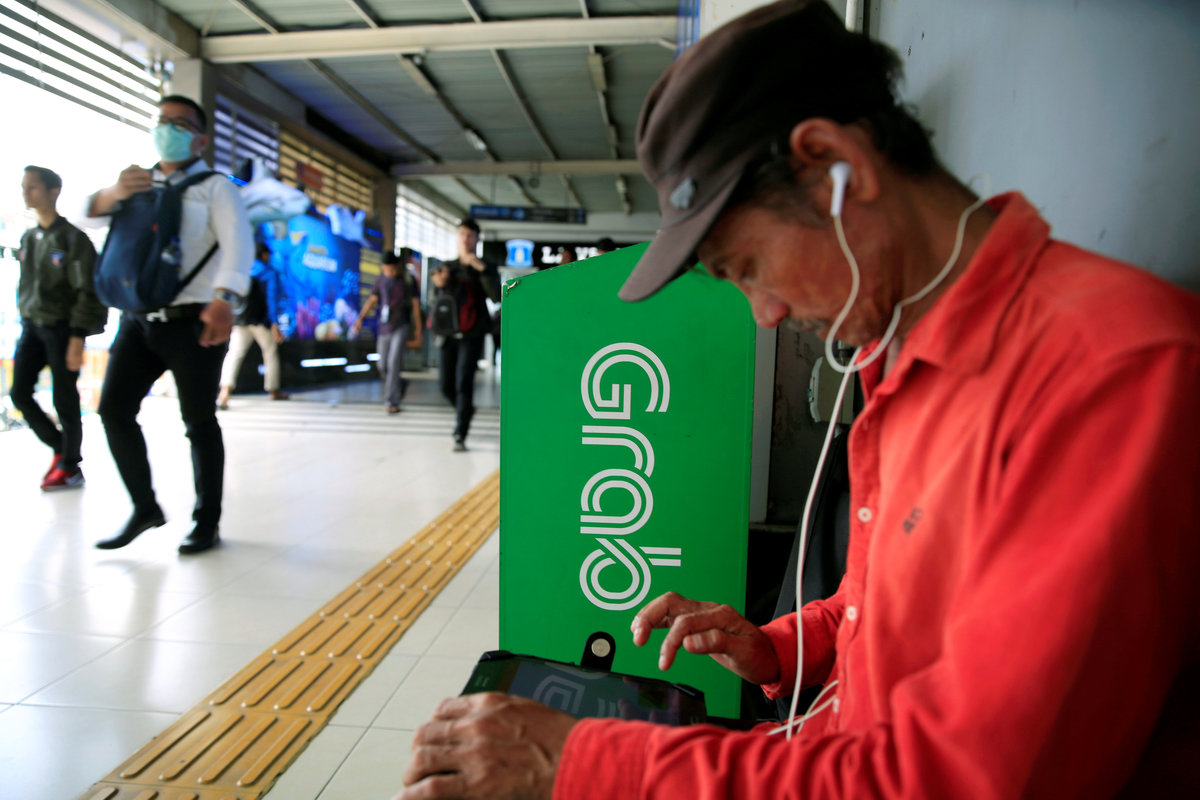
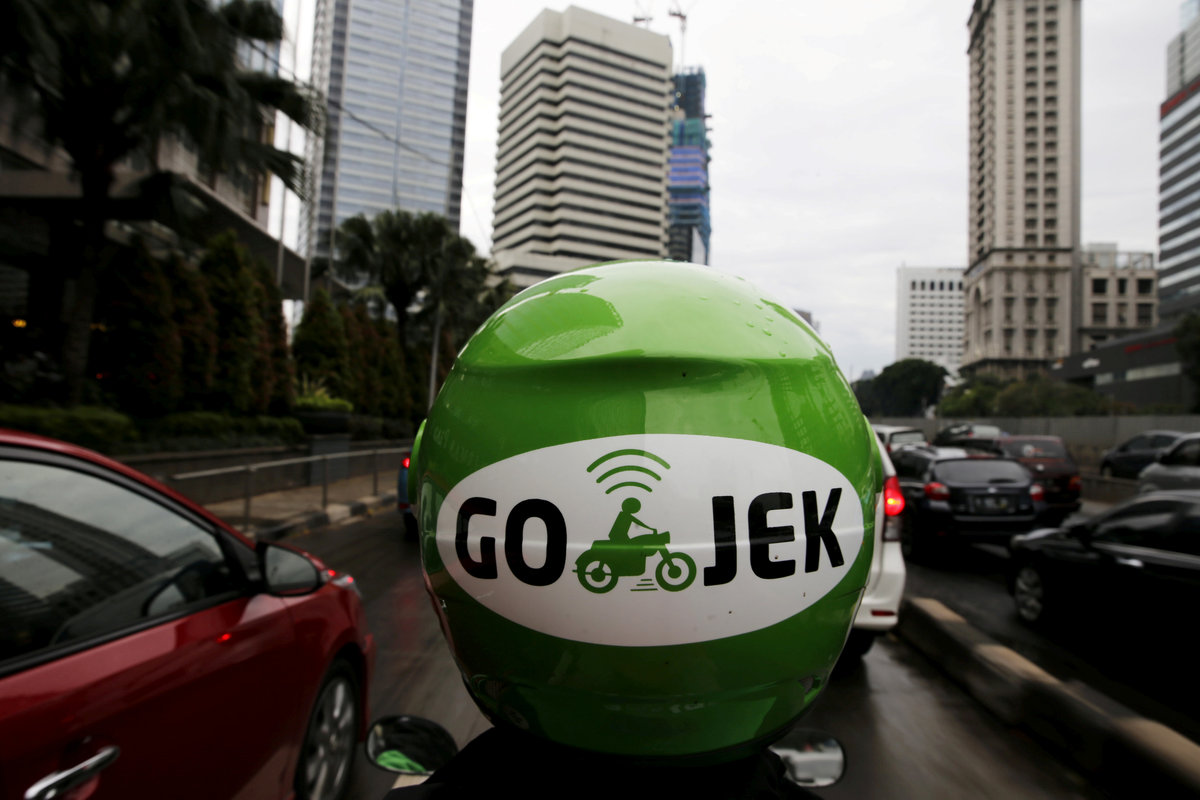
JAKARTA (Reuters) - Indonesia is making it mandatory for Go-Jek and Grab to register as transport companies within two months to ensure they meet safety requirements as a public transport provider, potentially increasing costs and scrutiny of the ride-hailing firms.
The Southeast Asian nation and some other countries have been grappling with how to regulate ride-hailing companies. The App-based companies say they should not be treated as a public transport provider since they do not own cars or employ drivers.
But Transport Minister Budi Karya Sumadi said on Monday the Indonesian government has finalised a new regulation to require ride-hailing companies to get a licence from his ministry for providing public transport. The new rules would be discussed with all stakeholders "within one or two days", he told a news conference.
Go-Jek and Grab are the dominant ride-hailing providers in the country.
Budi Setyadi, director general of land transportation, said at the conference that once a ride-hailing company obtained a licence it would need to follow the rules of a public transport provider.
A licensed public transport provider, among other things, must ensure that its vehicles regularly pass a safety test and its drivers have a special licence for driving a public transport vehicle. These rules would only apply for car transport and not for motorcycles.
Grab Indonesia declined to comment.
Go-Jek's head of corporate affairs, Nila Marita, said in a text message that the plan needed a thorough review, "mainly to assess the impact on our capability as a tech company to give access to work for millions of people" and to "help optimize growth in the digital economy".
The transport ministry issued a decree in 2016 to try to pressure companies to follow safety requirements, but faced resistance from ride-hailing companies which often say they only offer transportation services in partnership with drivers.
Several points in the decree were annulled by the Supreme Court last year.
The minister also pledged that the government would ensure competition in the ride-hailing sector after Uber Technologies Inc's [UBER.UL] deal to sell its operations in Southeast Asia to Grab.
Separately, Taufik Aryanto, a spokesman for Indonesia's monopoly regulator (KPPU), said once it had received notification and full information on the deal it would assess in 30 days whether any investigation was required.
The Competition Commission of Singapore (CCS) said last week it has commenced an investigation into the deal and proposed interim measures that will require Uber and Grab to maintain their pre-transaction independent pricing.
(Additional reporting by Tabita Diela; Writing by Gayatri Suroyo; Editing by Ed Davies and Muralikumar Anantharaman)