Traditional owners in the Pilbara have passed a motion of no-confidence in the Western Australian Aboriginal affairs minister, Peter Collier, after he declined to attend an on-country bush meeting for the third year in a row.
“Everyone is so disgusted in minister Collier, in his lack of attendance or really any effort at all to come and speak to traditional owners about [proposed changes to the Aboriginal Heritage Act],” said Simon Hawkins, chief executive of meeting organisers, the Yamatji Marlpa Aboriginal Corporation.
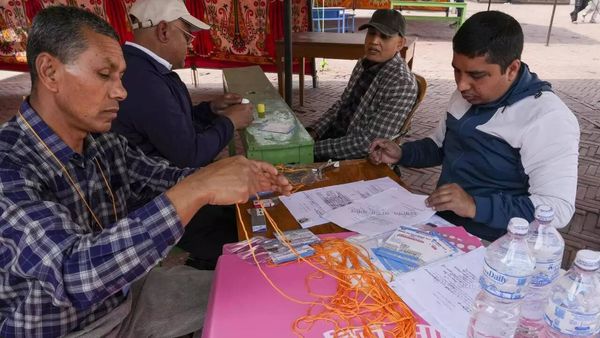
About 350 traditional owners attended the meeting, representing almost every family group in the Pilbara and a number of groups from the Kimberley and the South West. Hawkins said they demanded Collier be replaced.
“He has been elected by the people, he is not doing anything for the people, he won’t even consult the people. The people want that to change,” he said.
Collier was invited to attend the Yule River meeting, which takes place at the Yule River meeting ground, 60km south of Port Hedland and 1,580km north of Perth, immediately after last year’s meeting.
He was also formally invited two months ago.
Collier did not respond to questions from Guardian Australia but his office said he was unable to attend because the meeting clashed with the national education ministers’ meeting in Adelaide. It’s understood he’s aware of the no-confidence motion.
Hawkins said there was “considerable anger” among traditional owners at Collier’s non-attendance, which prompted a unanimous motion of no-confidence on the first day of the two-day meeting on Wednesday.
A second unanimous motion called for an independent inquiry into the decision to deregister a number of Aboriginal heritage sites using what the supreme court has since found was a flawed interpretation of the Aboriginal Heritage Act. A third motion called for Indigenous people to be front and centre in designing and implementing services to remote communities.
All motions were handed to the regional development minister, Terry Redman, who attended the meeting for the second time.
“There’s a lot more respect for Terry Redman because he said he would turn up, and he did turn up,” Hawkins said.
Only traditional owners are allowed to address the meeting on the first day and politicians are given an opportunity to respond on the second day. Redman was joined by the Labor senator for Western Australia and Yawuru man, Pat Dodson, the state Labor Aboriginal affairs spokesman and Yamatji man, Ben Wyatt, and the state Greens MP Robin Chapple.
Redman spent an hour answering questions about the Barnett government’s remote services reform but was not able to speak about Aboriginal heritage concerns, which are solely Collier’s remit.
The remote services reform roadmap explicitly rules out forced closures but does anticipate Indigenous people will move away from some smaller communities into larger communities, which it proposes will be “normalised” into towns.
It’s technically controlled by the Aboriginal affairs cabinet subcommittee, which Collier chairs, but Redman and the child protection minister, Andrea Mitchell, have been charged with delivering the project.
Redman told Guardian Australia he was happy to be able to attend the meeting and that keeping his promise to attend again this year had created a “measure of trust” that gave him a warmer reception to discuss the difficult topic of remote community reform.
“Not having it booed down was good, but it is important that you go out and you face that, and you front that, and you hear those concerns,” he said.
“It’s really important, it’s very powerful when you go to a meeting at the Yule River riverbed today, listen to a welcome to country in language, and you have got groups there … that travelled considerable distance.”
Redman said he understood concerns raised about Collier’s absence.
“Nevertheless they had today a senior minister that attended, that was there last year, that said he would be there again this year,” he said. “I’m the regional development minister so I think it’s a very important portfolio.”
Wyatt said Collier’s failure to attend the meeting was “woeful” and showed a lack of respect for Indigenous elders, some of whom had driven thousands of kilometres to attend. However he said it was unlikely the contentious amendments to the Aboriginal Heritage Act, which remove traditional owners’ right of reply, would pass the lower house in the four weeks before parliament was prorogued.
Dodson promised to work with the Barnett government to implement the proposed changes and promised traditional owners that he would track every dollar the federal government promised to Indigenous people in WA through estimates.
“Now the critical thing here is how are we going to see these changes that we have good intentions about from the government?” he said.
“That’s where our leadership as people is critical to this to give solutions and directions.”
Dodson said he was “very impressed” by the meeting, which was chaired with a strict adherence to the running sheet by YMAC co-chair Doris Eaton and Kariyarra elder Alfred Barker, who swiftly called Dodson to time when he threatened to talk beyond his allotted five minutes.