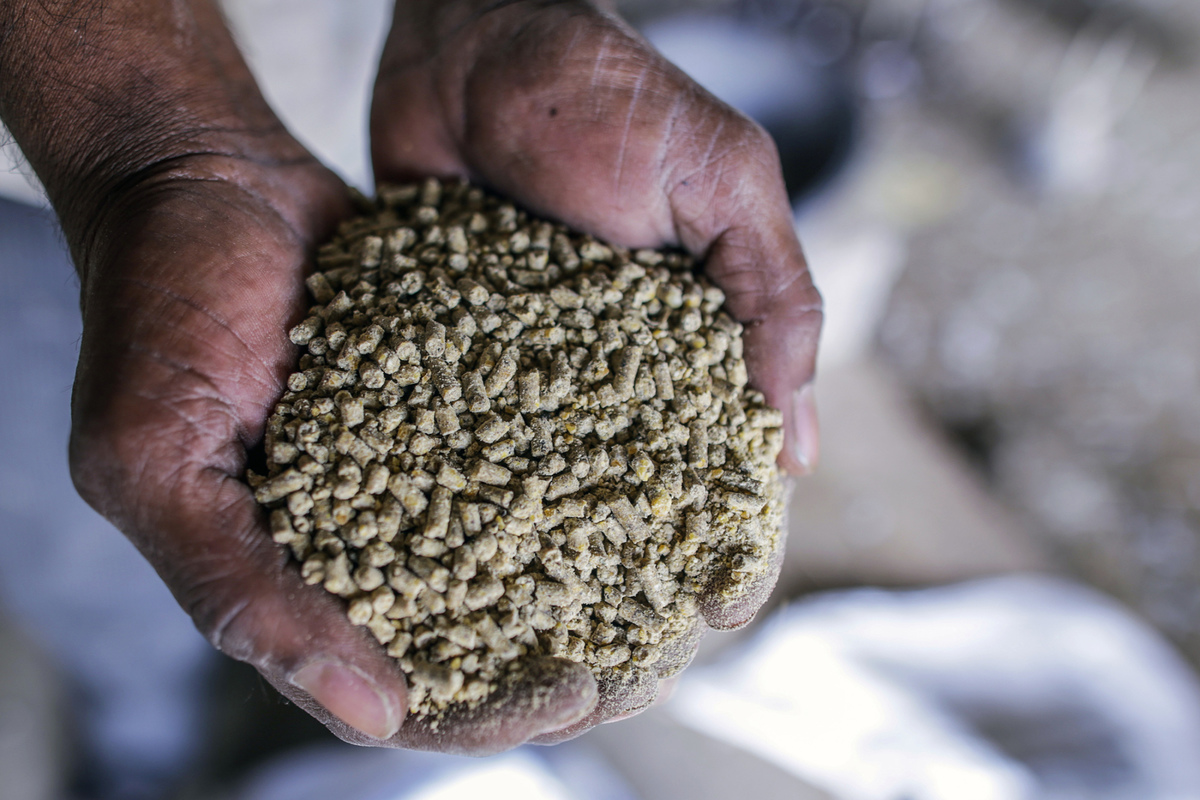
Forecasts for the first above-average monsoon in India in three years is set to boost planting of crops from rice to oilseeds, with record food grain output possible after two years of shortfall.
Rainfall from June is seen at 106 percent of the 50-year average of 89 centimeters (35 inches) as the El Nino that often triggers dry weather weakens, the India Meteorological Department said on Tuesday. The forecast has a margin of error of 5 percent. Total precipitation may be 105 percent of the average , Skymet Weather Services Pvt., a private forecaster, said Monday.
The prediction for a stronger monsoon after the first back-to-back shortfall in three decades is seen bolstering Prime Minister Narendra Modi’s aim to double farmer incomes in five years and stem the slide in his popularity ahead of key state elections next year. Output of crops including rice, corn, sugar cane and oilseed all fell last season increasing the cost of food in Asia’s third-largest economy.
“Food grain production may touch previous records or it may cross” above them, K.K. Singh, head of the agro meteorological division of the state forecaster, said by phone on Tuesday. “After deficient years there will be less soil borne diseases, which is good for the crops. Farmers will definitely increase acreage.”
Food Prices
The June to September monsoon rains are crucial to keep food prices in check as the rainfall in that period accounts for about 80 percent of India’s total and waters more than 50 percent of farmland. The central bank lowered its key interest rate for the first time in six months on April 5 with Governor Raghuram Rajan saying he would watch its performance to look for more room to ease. About half of India’s 1.3 billion people are employed in agriculture, which accounts for almost 20 percent of the nation’s $2 trillion economy. Normal rainfall will boost farm output and improve demand for motorcycles, smartphones and tractors.
“With a good monsoon we will look at a larger production for sure while prices will certainly reduce,” Pravin Dongre, chairman of the India Pulses and Grains Association, said by phone on Tuesday. “You will see a drop in imports. It’s matter of demand and supply. Things are looking good.”
“After two consecutive weak monsoons, a normal monsoon will provide much respite to the rural sector,” Kotak Mahindra Bank Ltd. economists Madhavi Arora and Upasna Bhardwaj wrote in a report on Tuesday. “Forecast of above normal monsoon bodes well for boosting rural demand and lowers chances of food price spikes. Normal monsoon should strengthen the case for another rate cut.”
La Nina
The monsoon affects both summer and winter sowing. Rainfall was 14 percent below the 50-year average in 2015, following a 12 percent shortfall in 2014, data from the India Meteorological Department show.
El Nino has already peaked and will continue to decline, according to forecasters from the U.S. to Australia. The chances of a La Nina developing this year have increased to 50 percent as the Pacific Ocean cools, Australia’s Bureau of Meteorology said on Tuesday.
La Nina, sometimes thought of as El Nino’s opposite, typically brings more rain to parts of Asia, including India. El Nino is a warming in the equatorial Pacific Ocean, while La Nina is a cooling of the waters. Each can impact agricultural markets as farmers contend with too much or too little rain. Based on the 26 El Nino events since 1900, about 50 percent have been followed by a neutral year with 40 percent by La Nina, according to the Australian Bureau of Meteorology.
“Analysis of previous data suggests that monsoon season rainfall over the country as a whole was deficient or below normal during 65 percent of the El Nino years,” the Indian forecaster said. “However, during 71 percent of the years followed by El Nino, monsoon was normal and above.”
--With assistance from Vrishti Beniwal Ameya Karve Rajhkumar K Shaaw and Pradeep Kurup To contact the reporter on this story: Pratik Parija in New Delhi at pparija@bloomberg.net. To contact the editors responsible for this story: Phoebe Sedgman at psedgman2@bloomberg.net, Andrew Hobbs, Thomas Kutty Abraham
©2016 Bloomberg L.P.