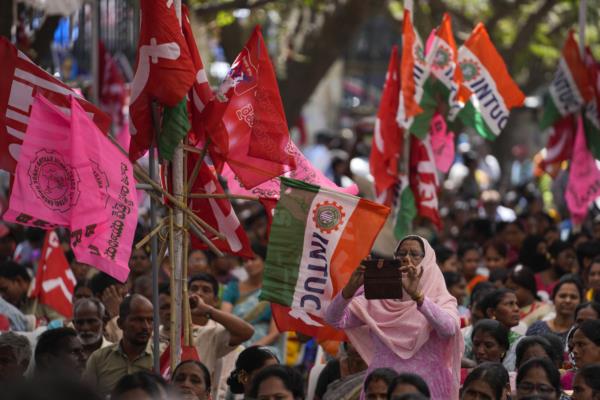
Farmers in northern India have taken to the streets once again to voice their grievances and demand change. The protests have gained momentum, with farmers blocking highways and staging sit-ins near toll plazas in the states of Haryana and Punjab. Tens of thousands of farmers have also embarked on a march toward the capital, New Delhi, in tractors and wagons, seeking guaranteed prices for their produce.
The farmers' protest comes on the heels of similar demonstrations two years ago, which lasted for over a year. During that time, farmers camped on the outskirts of Delhi to protest against new agriculture laws that were eventually withdrawn. Now, they are rallying for legislations that will ensure minimum support prices for all farm produce.
Currently, the Indian government provides a safety net for agricultural producers by setting minimum purchase prices for essential crops. This system, implemented in the 1960s, aimed to maintain food reserves and prevent shortages. However, farmers are now demanding that this protection be extended to cover all their produce.
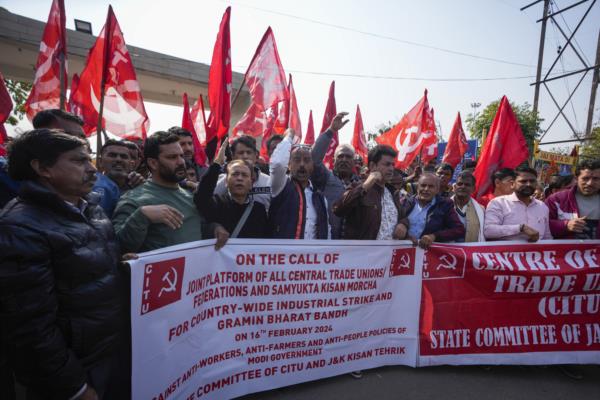
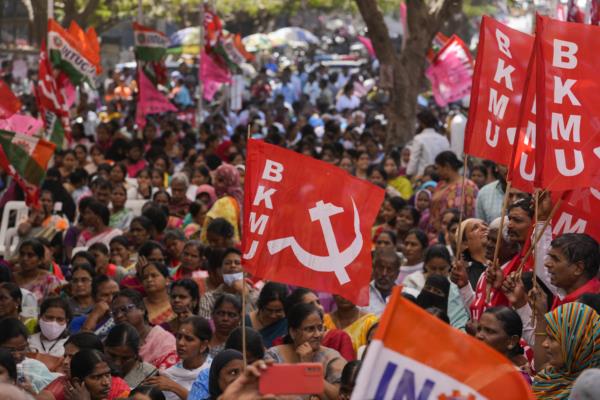
While the protesting farmers are relatively better-off compared to their counterparts in other states, the rising costs of cultivation and mounting debts have pushed them to overproduce rice and wheat, crops for which they currently receive minimum support prices. Unfortunately, this excessive cultivation has led to depletion of the water table in Punjab and Haryana, necessitating the need for alternative crops. The farmers argue that a guaranteed minimum support price for these other crops would help stabilize their incomes.
In addition to fair prices for their produce, farmers are also calling on the government to fulfill its promises of doubling their income, waiving their loans, and withdrawing legal cases against them from the previous protests in 2021.
The demands put forth by the farmers have sparked concerns of potential food inflation, according to some economists. However, experts argue that the farmers' frustrations stem from the lack of implementation of existing policies rather than new demands. The government already has a system of guaranteed prices for 23 crops, but it mainly applies to crops like rice and wheat. For the remaining 21 crops, the government rarely purchases them at the guaranteed prices, raising the need for a more comprehensive safeguard.
Despite several discussions between farm leaders and government ministers, no resolution has been reached. Agriculture Minister Arjun Munda, who recently met with the farm leaders, expressed optimism and stated that further negotiations would take place on Sunday.
The timing of these protests is significant, as India gears up for elections in the coming months. Prime Minister Narendra Modi, who is widely expected to secure a third term, repealed the agricultural laws in 2021 in an attempt to appease the influential farming community ahead of crucial state polls.
The farmers' protests highlight the deep-seated issues faced by farmers in India and the urgent need for comprehensive reforms that address their concerns. As the demonstrations continue, all eyes are on the government to see if they will take concrete steps towards ensuring fair prices, doubling farm incomes, and resolving the long-standing issues faced by the agricultural sector.