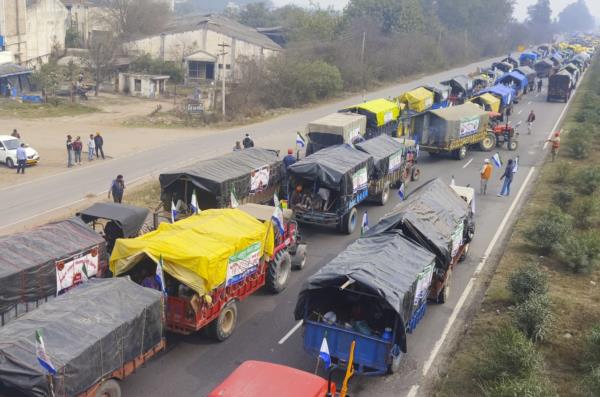
Tens of thousands of Indian farmers are once again marching towards the capital, demanding guaranteed crop prices and renewing a movement that successfully led the government to repeal contentious agricultural laws two years ago. However, this time around, authorities are determined to control the demonstrations to avoid a repeat of the prolonged protests witnessed in 2021.
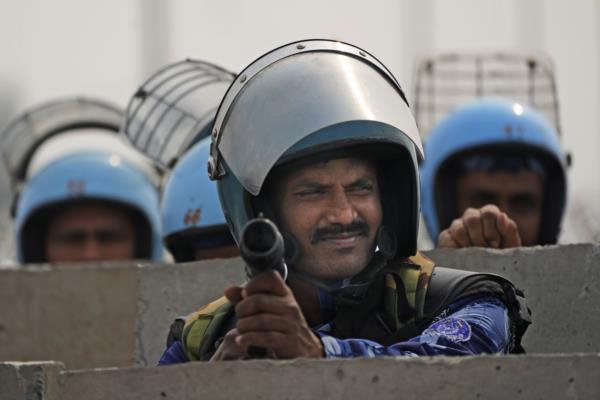
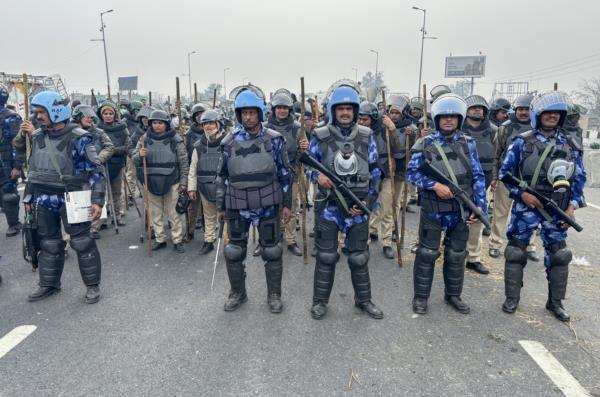
The current protests have been met with resistance from police, who have used tear gas, detained farmers, and heavily barricaded border points to prevent them from entering New Delhi. This is a clear indication of the government's resolve to manage the situation better than in the previous protests, during which tens of thousands of farmers camped outside the capital for over a year, braving harsh weather conditions and the devastating COVID-19 surge.
So, why are farmers protesting once again? The farmers, who have traveled on tractors and trucks from the neighboring states of Haryana and Punjab, claim that the government has failed to fulfill some of their key demands from the previous protests. Although Prime Minister Narendra Modi repealed the agricultural laws that sparked the initial wave of protests, farmer groups leading the current march argue that little progress has been made regarding other crucial demands. These include guaranteed crop prices, a doubling of farmers' income, and loan waivers.
At the heart of their protests lies the demand for legislation that guarantees minimum support prices. Currently, the government protects agricultural producers against significant drops in farm prices by setting a minimum purchase price for essential crops. This system was established in the 1960s to nurture food reserves and prevent shortages. However, farmers are insisting that this protection extends to all farm produce, not just essential crops.

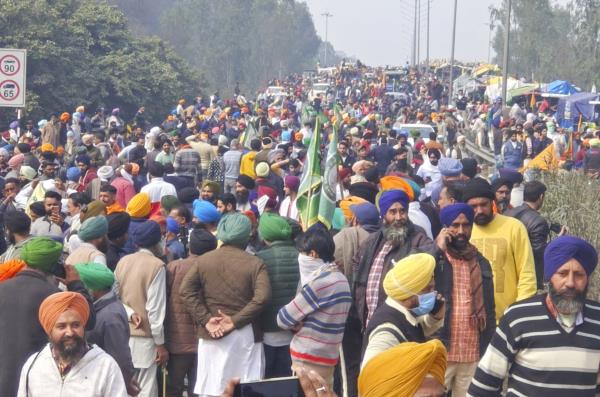
When the government announced the repeal of the controversial laws in November 2021, it was perceived as a victory for the farmers and a rare retreat by Prime Minister Modi. The laws had been defended as necessary reforms to modernize Indian farming, but the farmers feared that market-oriented reforms would leave them economically worse off. The protests initially began in northern India but soon spread nationwide, garnering international support. Unfortunately, they also saw the loss of many lives due to suicides, adverse weather conditions, and the COVID-19 pandemic.
These renewed protests carry significant implications for the Modi government, particularly as national elections approach. Modi, who is widely expected to secure a third successive term, faces a critical test with the farming community, which represents the most influential voting bloc in India. Farmers hold a romanticized image as the heart and soul of the nation, and politicians have long been cautious about alienating them. Furthermore, farmers are particularly vital to Modi's political base, as his party governs northern Haryana and a few other states with substantial farming populations.
If the protests were to gain momentum similar to that of the previous movement, it could present a new challenge for Modi and his government just months before the general election. As the farmers continue their march towards the capital, all eyes will be on how the government chooses to address their demands and handle the demonstrations. The outcome could have far-reaching implications not only for the future of Indian agriculture but also for the political landscape of the country.