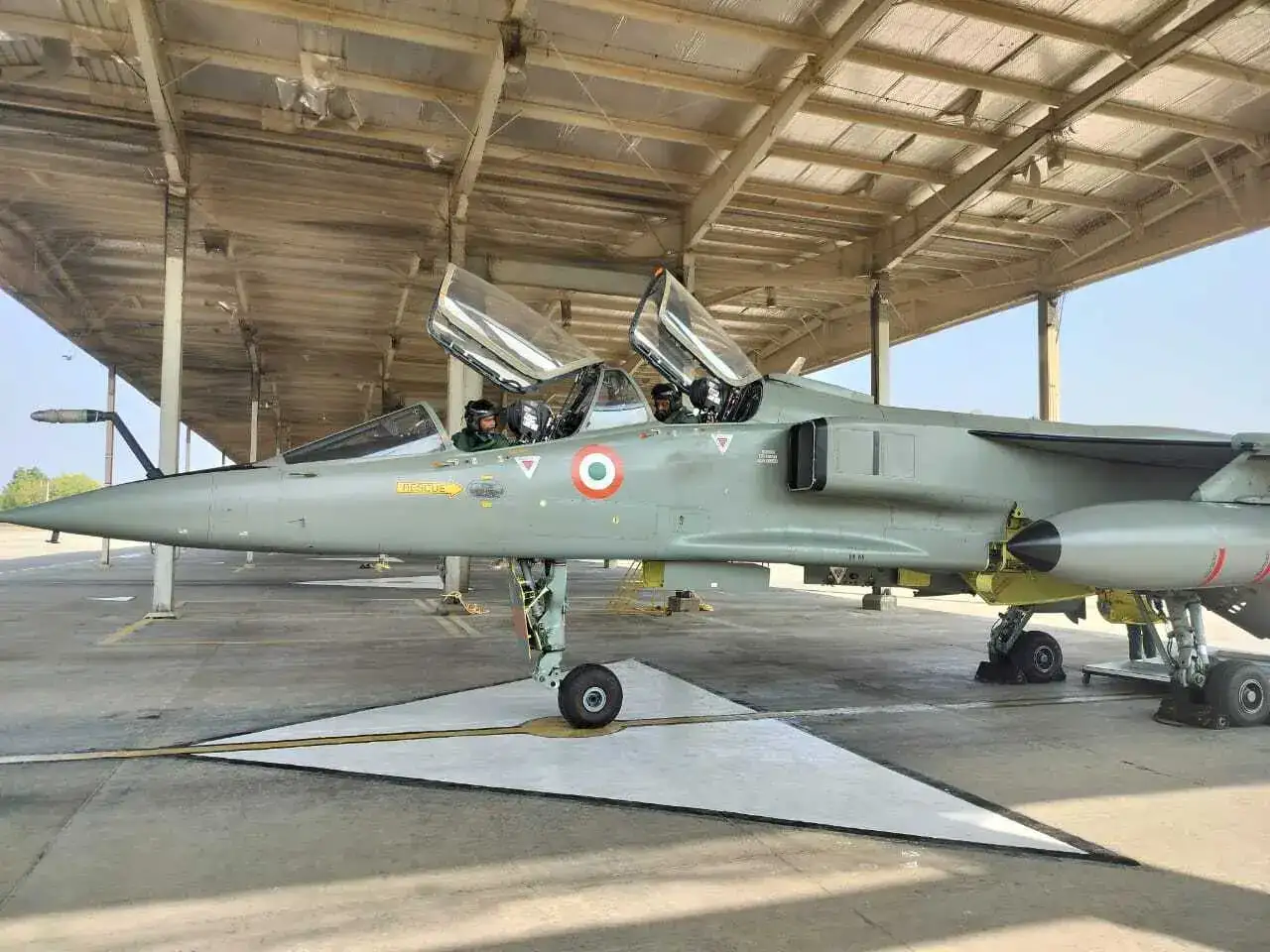
The Indian Air Force (IAF) is facing growing challenges in maintaining its ageing Jaguar deep penetration strike aircraft fleet, particularly due to a shrinking supply of spare parts for critical systems such as ejection seats, reports TOI.
The issue has drawn attention amid renewed focus on pilot safety following the recent mid-air collision involving two US Navy E/A-18 Growlers in the United States, which highlighted the importance of ejection seat systems in combat aircraft.
The Jaguar remains the second most widely used fixed-wing combat aircraft in IAF service, with six operational squadrons continuing to fly the platform. A typical IAF fighter squadron consists of around 16 to 18 aircraft.
Jaguar fleet upgraded despite ageing airframes
First inducted into the IAF in the early 1980s, the Jaguar became the oldest serving combat aircraft in the force after the retirement of the MiG-21 Bison fleet.
Over the years, the IAF has continued upgrading the aircraft under the DARIN-III modernisation programme, which introduced updated avionics and advanced systems including an Active Electronically Scanned Array (AESA) radar.
The Air Force had also planned to re-engine the aircraft and had selected the Honeywell F-125IN engine for the programme, although the re-engining plan did not materialise.
Global retirement of Jaguar aircraft affecting spare supplies
India is currently the only operator of the Jaguar aircraft after the platform was retired by countries including France, the United Kingdom, Oman, Nigeria and Ecuador.
The retirement of the aircraft globally has complicated the procurement of spare parts, as original equipment manufacturers in France and the UK no longer produce the aircraft and stocks of components have reduced significantly.
To sustain operations, India has sourced Jaguar airframes and spare parts from countries that previously operated the aircraft, including France, Oman and the United Kingdom.
Shortage of Martin Baker Mk-9 ejection seat components raises concern
A major concern for the IAF is the declining availability of spare parts for the Martin Baker Mk-9 ejection seat, considered a critical safety system for pilots during emergencies.
According to the report, the manufacturer has stopped producing several components required for the seat, creating additional maintenance challenges for the fleet.
The IAF is understood to be using techniques such as 3D printing to keep aircraft systems and sub-systems operational.
The E/A-18 Growlers are also equipped with Martin Baker ejection seats.
Crash record and indigenous replacement efforts
The Jaguar fleet has recorded 10 crashes since June 2015, including three incidents in 2025 that resulted in the deaths of Squadron Leader Lokendra Singh, Flight Lieutenant Rishi Raj Singh and Flight Lieutenant Siddhartha Yadav.
As part of efforts to address the ejection seat issue, the Air Force is exploring domestic alternatives to replace the Martin Baker Mk-9 system.
The Chandigarh-based Terminal Ballistics Research Laboratory (TBRL) has tested an indigenous ejection seat that could potentially be adapted for Jaguar aircraft, which are currently scheduled for phased retirement by 2035.