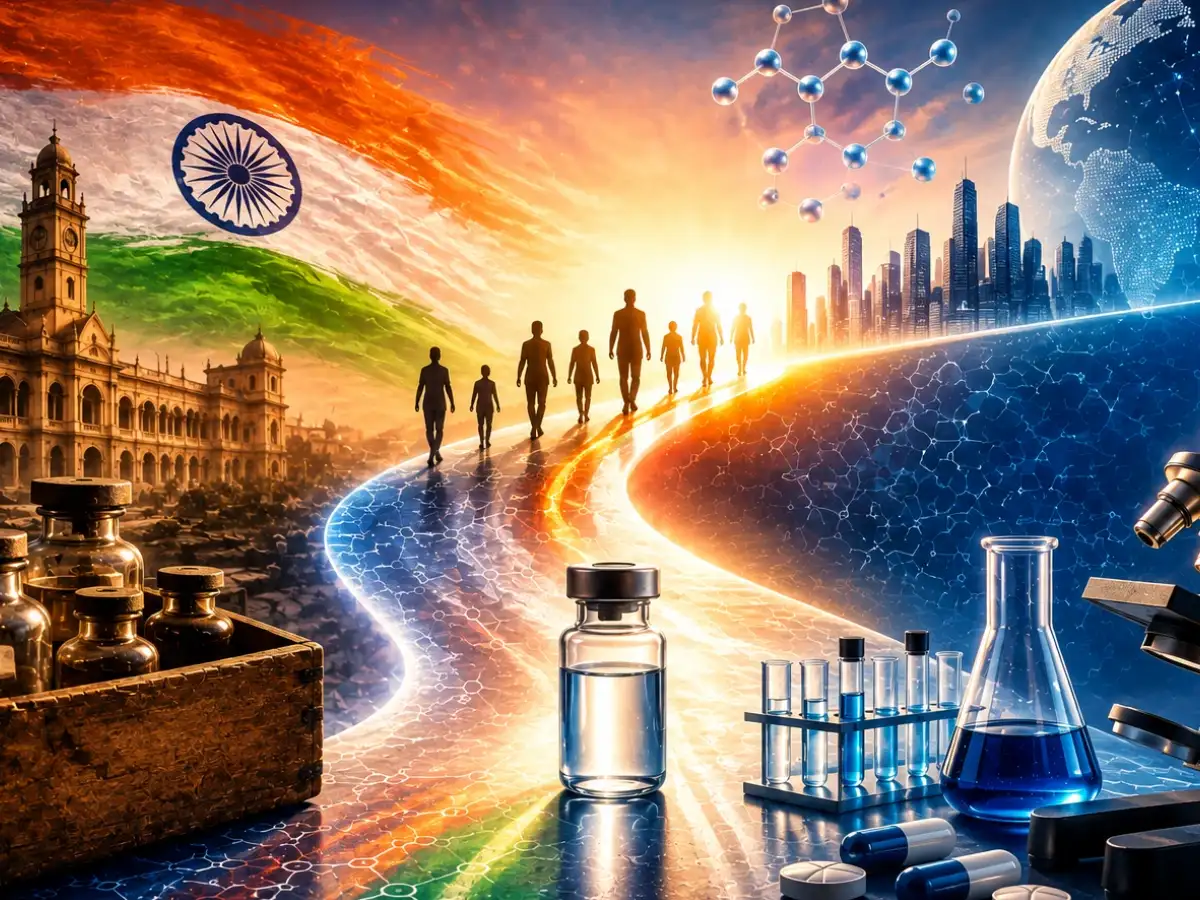
As India prepares to mark its 80th Independence Day on August 15, its pharmaceutical industry has quietly delivered a milestone, since 1947, that fits the occasion better than most.
On May 30, 2026, the US Food and Drug Administration (USFDA) approved Zaynich, an injectable antibiotic for drug-resistant urinary tract infections developed by Mumbai-based Wockhardt.
“Zaynich is the first New Chemical Entity fully developed and commercialized by an Indian pharmaceutical company to receive an FDA approval, representing a historic milestone not only for Wockhardt, but for the Indian pharmaceutical industry.” said Dr. Habil F. Khorakiwala, Founder and Chairman of Wockhardt Group.
Also read: India pharma sector to miss 2030 sales target amid tariff and shipping woes, trade body says
It is a small, technical-sounding milestone. But set against the arc of India's pharmaceutical history, it serves as a symbolic bookend: a country that once could not manufacture its own smallpox vaccine now inventing a drug that America's toughest regulator has signed off on.
"India's pharmaceutical journey has always been driven by one objective: improving patient access to medicines," said Sudarshan Jain, Secretary General of the Indian Pharmaceutical Alliance (IPA). "Its leadership in manufacturing affordable generic medicines is not only India's but also the world's greatest public health contribution." Those same capabilities, he said, are now powering the industry's innovation journey.
A country that used to import even its vaccines
Long before "Made in India" pharma meant generics or vaccines, it meant nothing at all. The Indian Council of Medical Research's (ICMR) own published history of vaccination in the country notes that until 1850, India imported all of its smallpox vaccine from Great Britain, with no domestic production of its own. It would take the setting up of institutions like the Haffkine Institute in Bombay, in 1899, for India to begin producing vaccines domestically at any real scale, decades before independence, but under colonial administration, not Indian ownership.