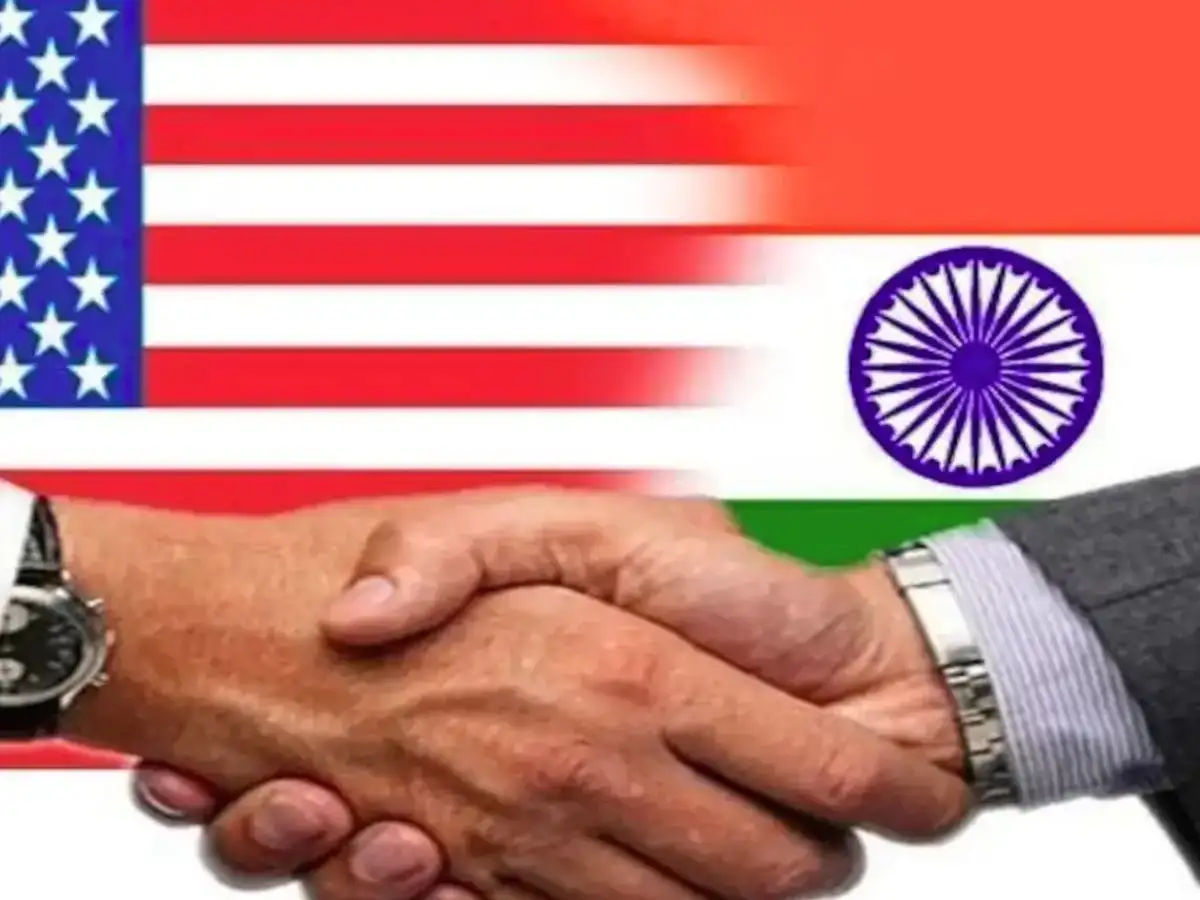
India and the United States will begin a fresh round of negotiations on Monday aimed at finalising the contours of an interim bilateral trade agreement, as both sides seek to recalibrate the proposed pact following significant changes in the US tariff regime.
The four-day discussions, scheduled from June 1 to June 4 in New Delhi, will be led by US chief negotiator Brendan Lynch and India's chief negotiator Darpan Jain, additional secretary in the Department of Commerce.
Also Read: India-US trade pact may be weeks away: US Ambassador to India Sergio Gor
According to the commerce ministry, the two sides are expected to work towards finalising the details of the interim agreement while advancing broader negotiations under the proposed Bilateral Trade Agreement (BTA). Discussions are expected to cover market access, non-tariff barriers, customs and trade facilitation, investment promotion and economic security cooperation.
India and the US had, on February 7, agreed on a framework for the first phase of the BTA, laying the groundwork for an interim trade pact. The current round of talks is expected to focus on translating that framework into a legally binding agreement.
The framework had envisaged a reduction in US tariffs on Indian goods to 18% from 50%. It also provided for the removal of a 25% tariff imposed on Indian products linked to India's purchases of Russian oil, with the remaining tariff burden proposed to be lowered to 18% under the deal.
However, the trade landscape shifted after the US Supreme Court, on February 20, struck down President Donald Trump's reciprocal tariffs that had been imposed under the International Emergency Economic Powers Act (IEEPA) of 1977. Subsequently, Trump announced a flat 10% tariff on imports from all countries for a 150-day period beginning February 24.
Also Read: India and US push deeper AI and chip ties as firms eye access to next-generation technologies
The developments prompted a postponement of a scheduled February meeting between the chief negotiators. Negotiations resumed in April when an Indian delegation led by Jain visited Washington from April 20-23.
The latest round in New Delhi is expected to build on those discussions and may also revisit elements of the original framework in view of the altered tariff environment.
Under the proposed arrangement, India had offered to eliminate or reduce tariffs on a range of US industrial products and agricultural goods, including dried distillers' grains (DDGs), red sorghum used in animal feed, tree nuts, fresh and processed fruits, soybean oil, wine, spirits and other products.
India has also indicated its willingness to purchase up to USD 500 billion worth of US goods over five years, including energy products, aircraft and aircraft components, technology products, precious metals and coking coal.
Trade experts say the negotiations have gained added significance as the uniform 10% tariff imposed by Washington has narrowed the relative tariff advantage India previously enjoyed over competing export economies, making a recalibration of the proposed pact necessary.
The talks also come against the backdrop of two Section 301 investigations launched by the US Trade Representative (USTR) in March against several countries, including India, concerning alleged excess industrial capacity and failures to address forced labour issues in global supply chains.
India has strongly contested the allegations and urged the US authorities to withdraw the investigations, arguing that the notices initiating the probes fail to provide adequate justification for the claims.
The US remained India's second-largest trading partner in FY26. India's exports to the US rose 0.92% to USD 87.3 billion during the fiscal year, while imports from the US increased 15.95% to USD 52.9 billion. India's trade surplus with the US narrowed to USD 34.4 billion from USD 40.89 billion in the previous fiscal year.
( With inputs from PTI)