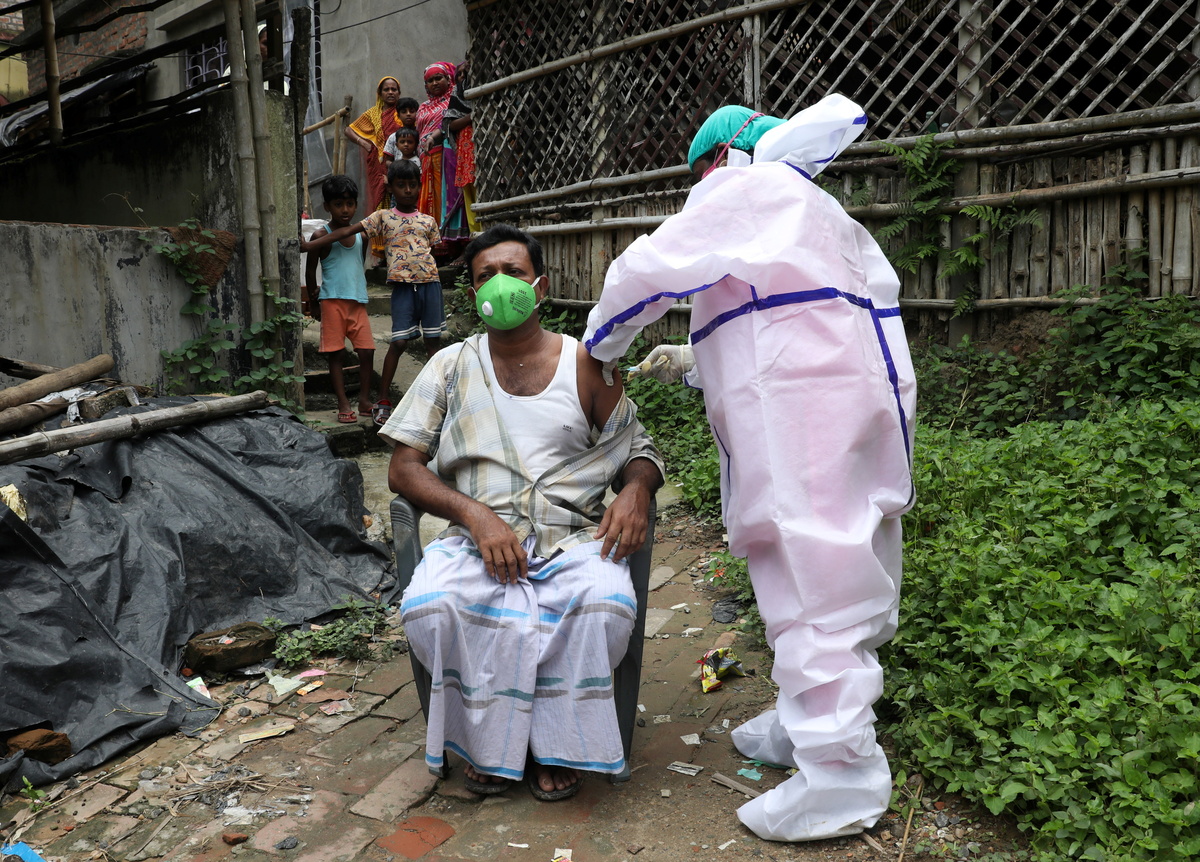
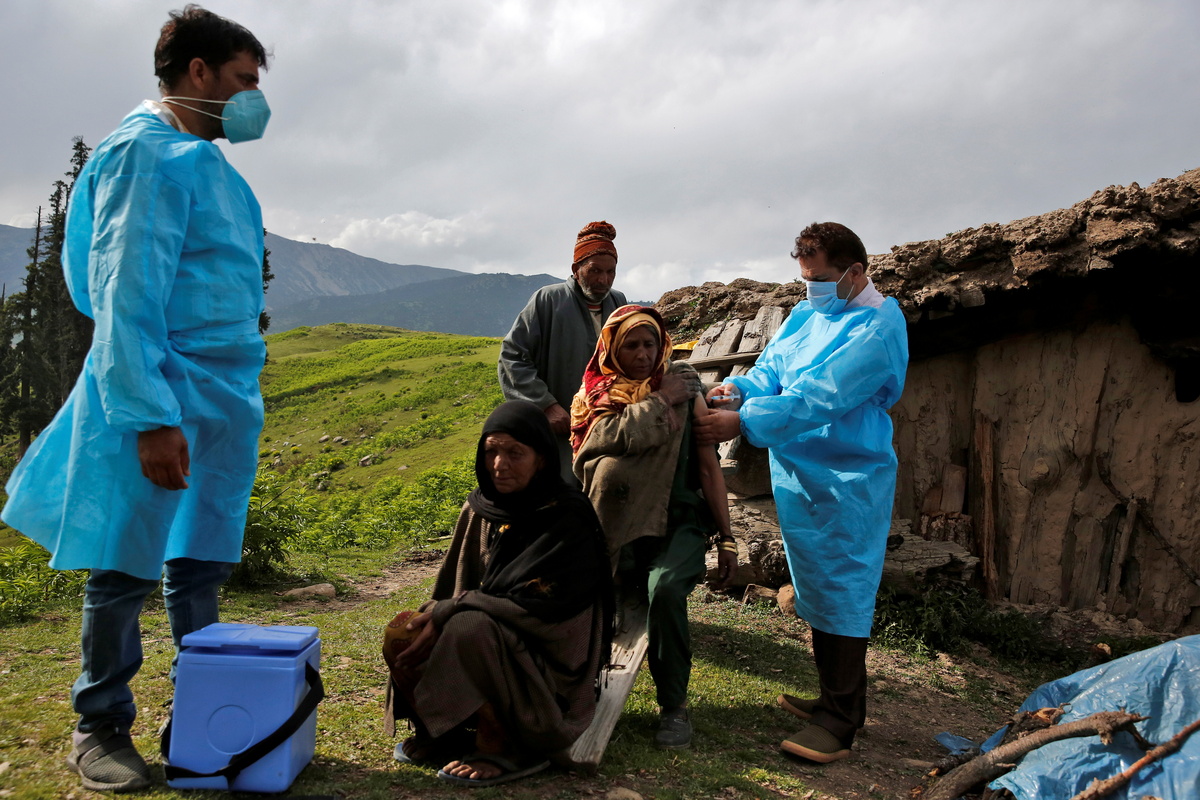
India gave out a record 8.3 million vaccine doses on Monday under a federal campaign to inoculate all adults for free after weeks of criticism that a chaotic rollout had worsened a second wave that killed hundreds of thousands.
Earlier this month, Prime Minister Narendra Modi said the government would buy 75% of all vaccines from drug makers and distribute them for free to states, which along with private hospitals had earlier been buying shots for people aged 18-45.
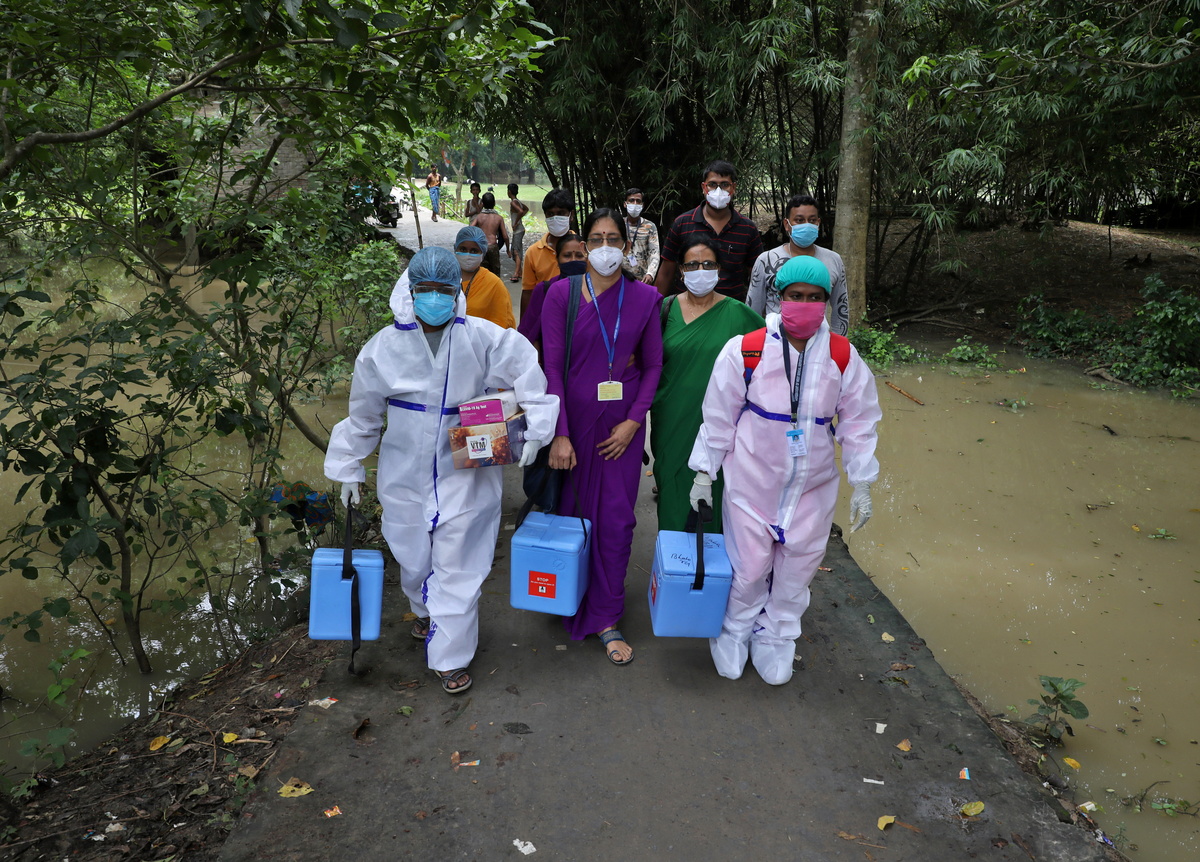
India's previous record of 4.5 million doses was on April 5, followed by a sharp decline with average daily inoculation falling below 3 million.
"Today's record-breaking vaccination numbers are gladdening. The vaccine remains our strongest weapon to fight COVID-19," Modi wrote in a tweet, and thanked the front-line workers who enabled citizens to get vaccinated.
Experts have said India needs to administer 10 million doses a day to achieve its aim of inoculating 950 million adults by December. So far, India has fully vaccinated fewer than 5% with two doses.
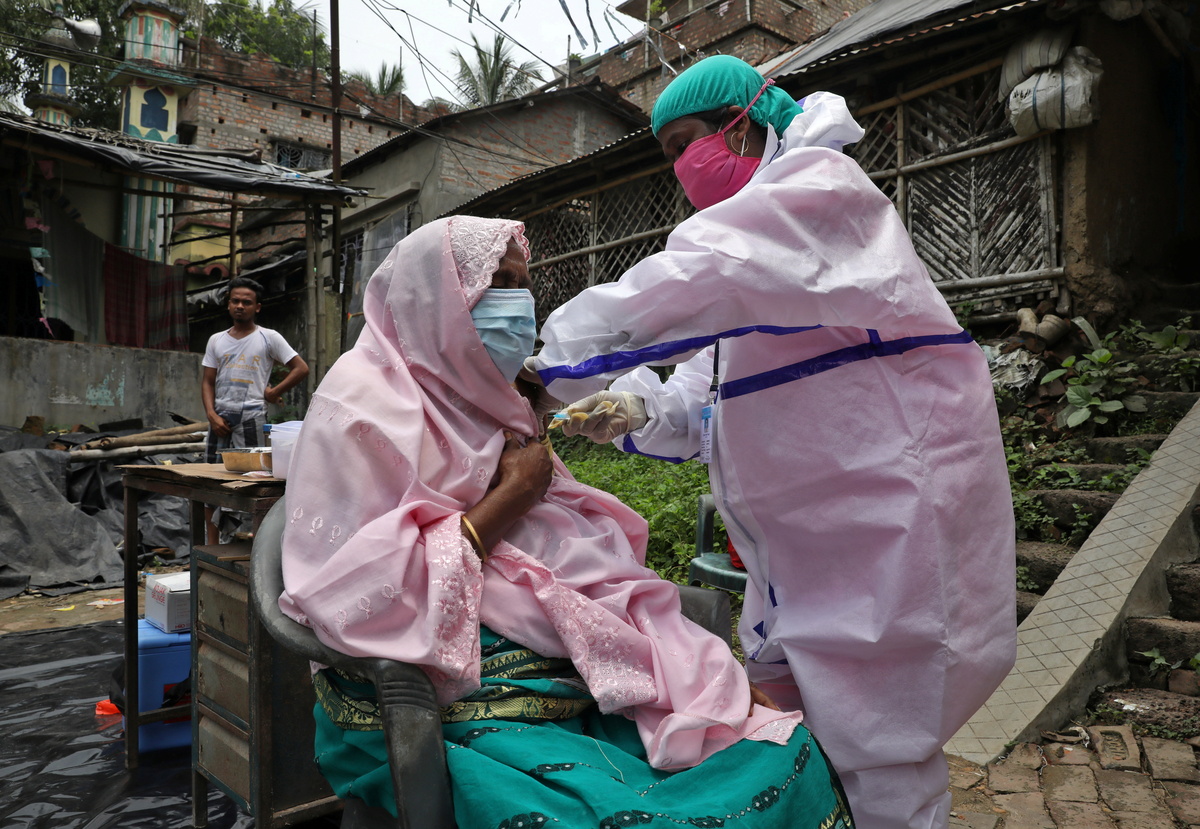
"If supply remains consistent, we will be on course to inoculate most of our population by the end of the year, D N Patil, a senior health official in the country's richest state of Maharashtra, told Reuters.
Maharashtra has a population of more than 125 million.
Earlier this month, the government said India could have as many as 10 million doses of COVID-19 vaccines available per day in July and August.
Government adviser Vinod Kumar Paul said on Monday that administering 10 million shots per day was not a "set goal".
"As the ramping up takes place, speed of implementation should also ramp up and that would lead to a certain number," Paul said in an interview with CNBC-TV18 channel.
"There is a demonstration by the system of how much can be done on a given day, at least this is something that should become obvious by the end of the day."
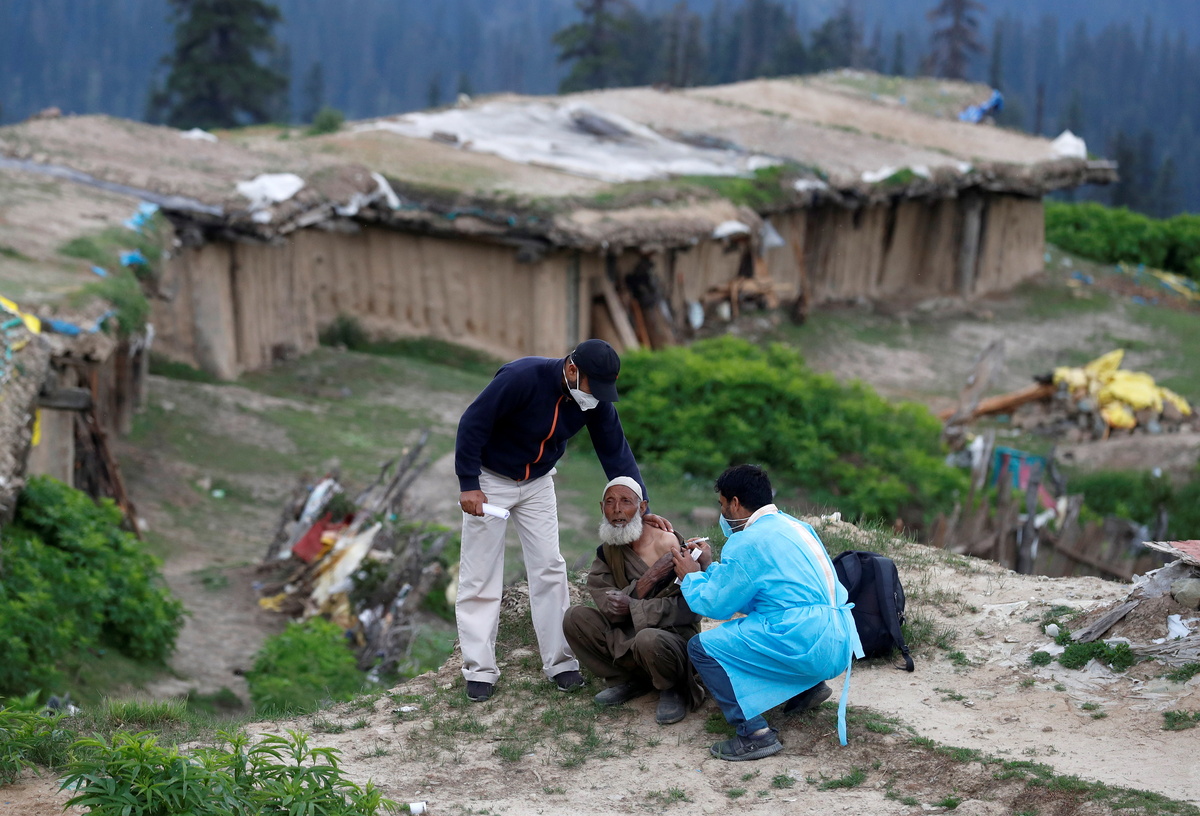
The country is using domestically made doses of the AstraZeneca vaccine and Indian company Bharat Biotech's Covaxin. The government is attempting to secure foreign vaccines such as Pfizer's and has waived strict rules to allow quicker imports.
INFECTIONS DECLINE
Over the last 24 hours, India reported 53,256 new cases, the lowest since March 24. Infections hit a peak of about 400,000 a day in May and deaths soared to around 170,000 in April-May.
With an overall case load of 29.9 million, India ranks second-highest globally behind the United States.
Since May, widespread vaccine shortages have worsened the divide between urban and rural areas, as many younger city-dwellers turned to private hospitals, paying between $9 and $24 a dose.
"It marks the beginning of the end of adversities related to COVID-19 in the country," Giridhara Babu, a member of the Indian Council of Medical Research, the country's main health research agency, told Reuters.
Experts warn that millions remain vulnerable to infection, particularly in the countryside where two-thirds of the population lives. And a swift reopening of cities could complicate mass immunisation efforts.
(Reporting by Neha Arora in New Delhi, Shilpa Jamkhandikar in Pune, Ankur Banerjee, Uday Sampath and Bhargav Acharya in Bengaluru; Editing by Christopher Cushing, Giles Elgood and Jonathan Oatis)