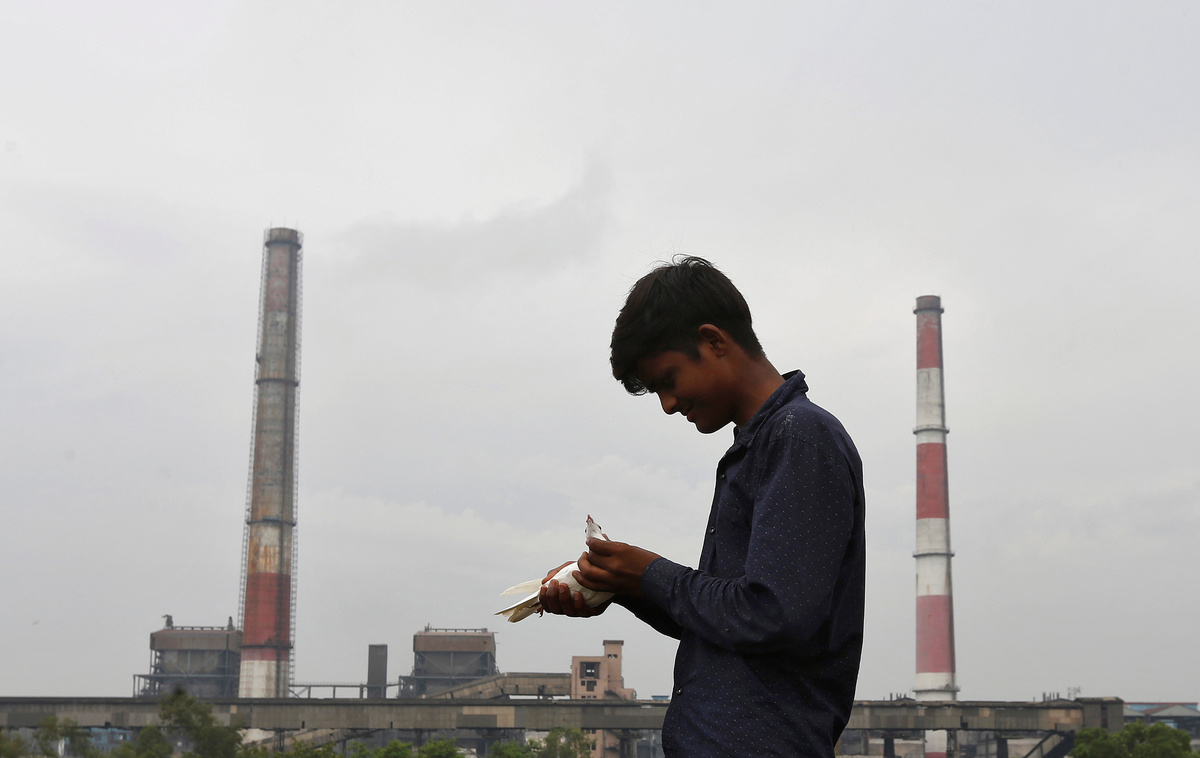
India's Supreme Court rejected a request by power producers to extend a deadline to install equipment to cut emissions by two years to 2024, according to an order uploaded on the court's website late on Monday.
India has a phased plan for plants to comply with emissions standards, which involve installing Flue Gas Desulphurization (FGD) units that cut emissions of sulphur dioxide - known to cause lung diseases.
More than half of India's coal-fired power plants ordered to retrofit equipment to curb sulphur oxide emissions are set to miss deadlines which go up to the end of 2022.
"We are not inclined to allow the prayer made in the application," India's Supreme Court said in the order.
Power plant operators have blamed costs and technical difficulties for missing an earlier deadline at the end of 2017 and then again at the end of 2019.
The Association of Power Producers (APP) - a lobby group for thermal plants which filed the petition in the court seeking a two-year extension - said the court declined to grant any blanket extension.
"This implies that each project would need to be decided individually based on project-specific facts - no blanket extension," said Ashok Khurana, director general of the APP.
Power plants in and around the capital New Delhi have already missed a deadline to install emission control systems.
Last month India removed a provision requiring the washing of coal, saying the process caused more pollution. State-run NTPC Ltd has been pushing to make a rule that requires trucks and wagons transporting coal to be covered with tarpaulin sheets non-mandatory.
"We are seeing a systematic delay or dilution of environmental norms over past years," Sunil Dahiya, an analyst at the Centre for Research on Energy and Clean Air (CREA), said.
"The Supreme Court must not stop here, the non-compliant plants should be shut down and penalised heavily to set a good precedent for stricter compliance in future," Dahiya said.
(Reporting by Sudarshan Varadhan; Editing by Susan Fenton)