India's Supreme Court has ruled to decriminalise gay sex in a unanimous verdict handed down by a five-judge panel.
Previously, gay sex had been punishable by up to 10 years in prison under Section 377 of the Indian constitution, which outlawed sexual activities "against the order of nature" and was interpreted by police and courts as referring to homosexuality.
LGBT+ activists said the law, though rarely enforced, was the foundation for systemic discrimination and harassment of gay Indians.
Reading out the first judgement on the case in the Supreme Court shortly before noon on Thursday, the Chief Justice of India Dipak Misra said interpreting Section 377 to criminalise gay sex was "irrational and indefensible".
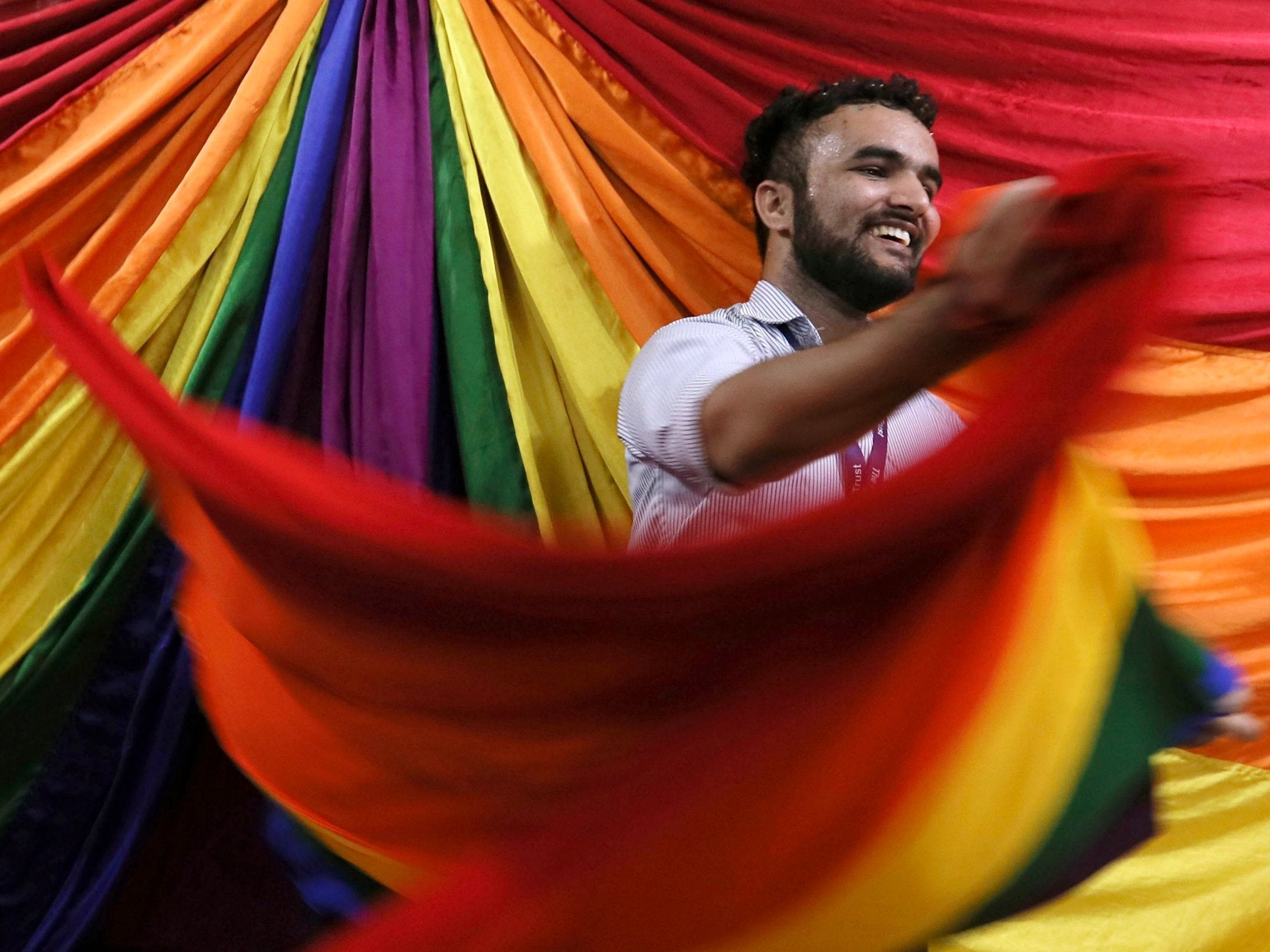
There were scenes of celebration not just outside the court in Delhi but also shown in videos from across India, as Mr Misra observed that members of the LGBT+ community "must have the same rights as any other citizen".
The founder of the HIV charity the Naz Foundation, Anjali Gopalan, speaking to The Independent outside the court, said it was "wonderful news".
"They have opened the door to discussing rights. They have apologised to the gay community and said copies of the judgment will be handed to every police station. It is the best judgement we could have hoped for."
"Any consensual sexual relationship between two consenting adults - homosexuals, heterosexuals or lesbians - cannot be said to be unconstitutional," Mr Misra said.
Bismaya, an activist with the Delhi branch of Impulse, an LGBT+ advocacy group, told The Independent. "Im so happy, it's overwhelming, I cried when we heard the news.
"I'm gay and I'm not afraid of that. It's something I used to say, but now for the first time I have the legal backing. Finally, the law is going to protect me.
"It's great for me but it's also a great day for the whole of India. Acceptance in the wider society will take time, because we cannot expect change overnight.
"It has been a battle for two decades for this judgement. If now we get full acceptance in a couple of years, that would be great."
It's great for me, but it's also a great day for the whole of India.
The Indian government had left Thursday's decision up to the Supreme Court, saying it would neither fight nor directly support the five lead petitioners asking for Section 377 to be reconsidered.
Legal experts interpreted that as implicit backing for the movement, which was started more than 15 years ago by a legal challenge to the Delhi High Court from the Naz Foundation.
In 2009, the High Court declared the ban on gay sex to be unconstitutional. But that judgment was overturned by a small panel of the Supreme Court, which said amending or repealing the law should be left to Parliament.
"We have finally got justice," said Ashok Row Kavi, LGBT+ rights activist and founder of Humsafar Trust, outside the court.
"Thanks to all that fought for this, braving the worst sort of prejudice. This is a good day for human rights," Meenakshi Ganguly, South Asia director for Human Rights Watch said on Twitter.
"It is not only about decriminalising but recognising our fundamental rights," said Akhilesh Godi, one of the petitioners in the case, shortly before the ruling.