Something fishy is in the air in West Bengal, the Indian border state where prime minister Narendra Modi is going all out to unseat one of the most powerful female politicians in the country.
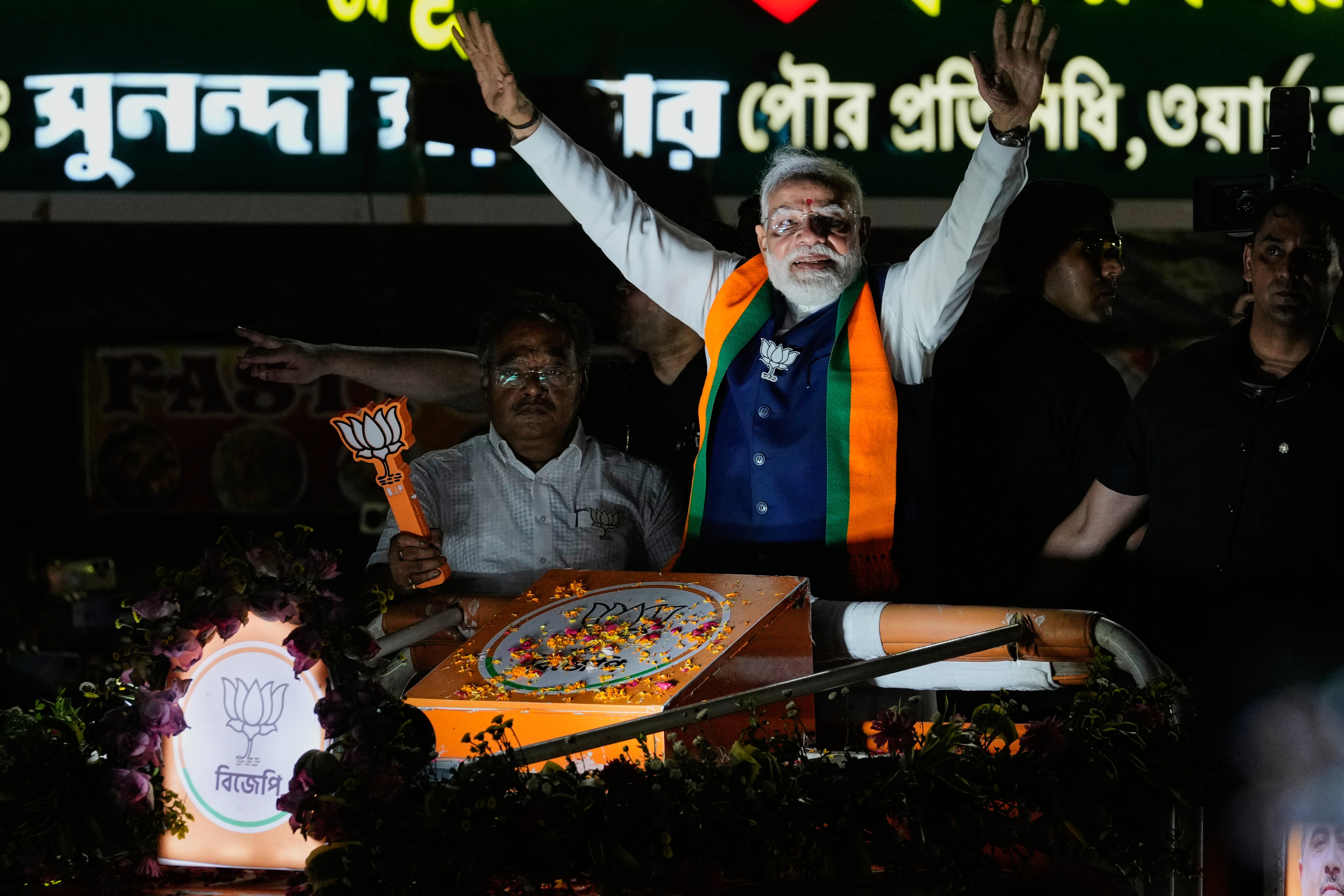
The state voted in the second and final phase of its assembly election on Wednesday, concluding a high-pitched campaign that saw Modi's Hindu nationalist BJP party mobilised in extraordinary numbers in its bid to oust chief minister Mamata Banerjee’s Trinamool Congress.
Banerjee is seeking a fourth term at the helm in a state where power has changed hands just once since 1977. Three other states and a federal territory have gone to polls this month but in none of those places has the contest been as intense as in West Bengal.
That is partly because the BJP appears to believe it has a rare shot at winning in the eastern state, where it has never been in power, and partly because Modi sees Banerjee, one of his fiercest critics, as one of the last holdouts of the old guard.
So, this election, Modi is betting big.
“The BJP's biggest nemesis is a regional party leader, not the Congress," Sayantan Ghosh, author of the book Battleground Bengal, tells The Independent, referring to the main national opposition party.
"Because the BJP knows how to fight the Congress.”
In the run-up to the second phase, Modi marshalled all his resources to Kolkata. He stuffed hotels in the state capital with his cabinet members, prominent BJP faces and chief ministers from states ruled by his party to campaign against the Trinamool.
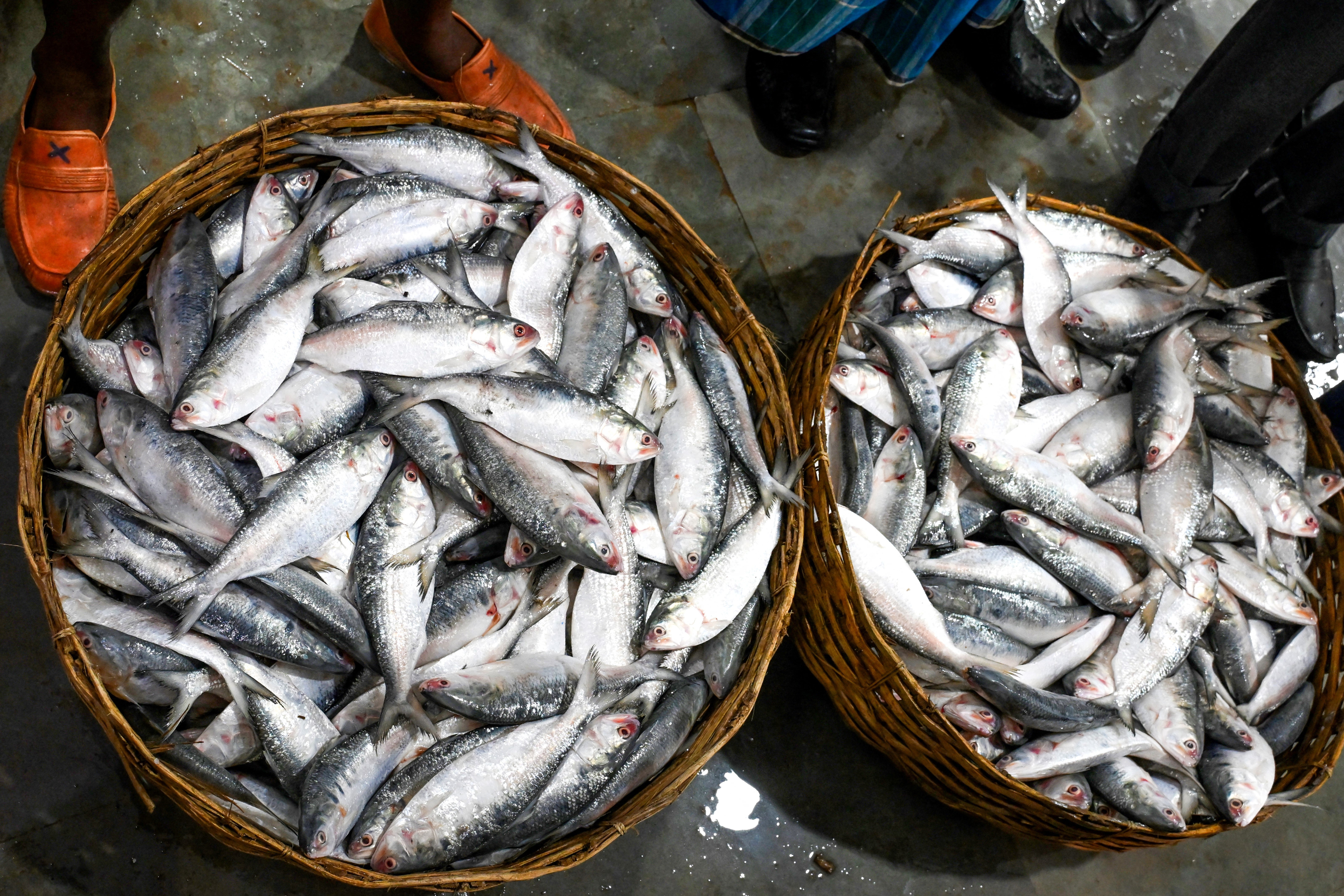
The BJP’s nominees brandished whole fish at rallies and relished the staple Bengali diet of fish and rice in an attempt to quell anxieties that they would impose vegetarianism, associated with the Hindu right.
“People can see their desperation," claims Saayoni Ghosh, an actor-turned-legislator from the Trinamool, referring to the BJP. "There is not a single road and lane where the BJP has not sent the home minister and defence minister to campaign.”
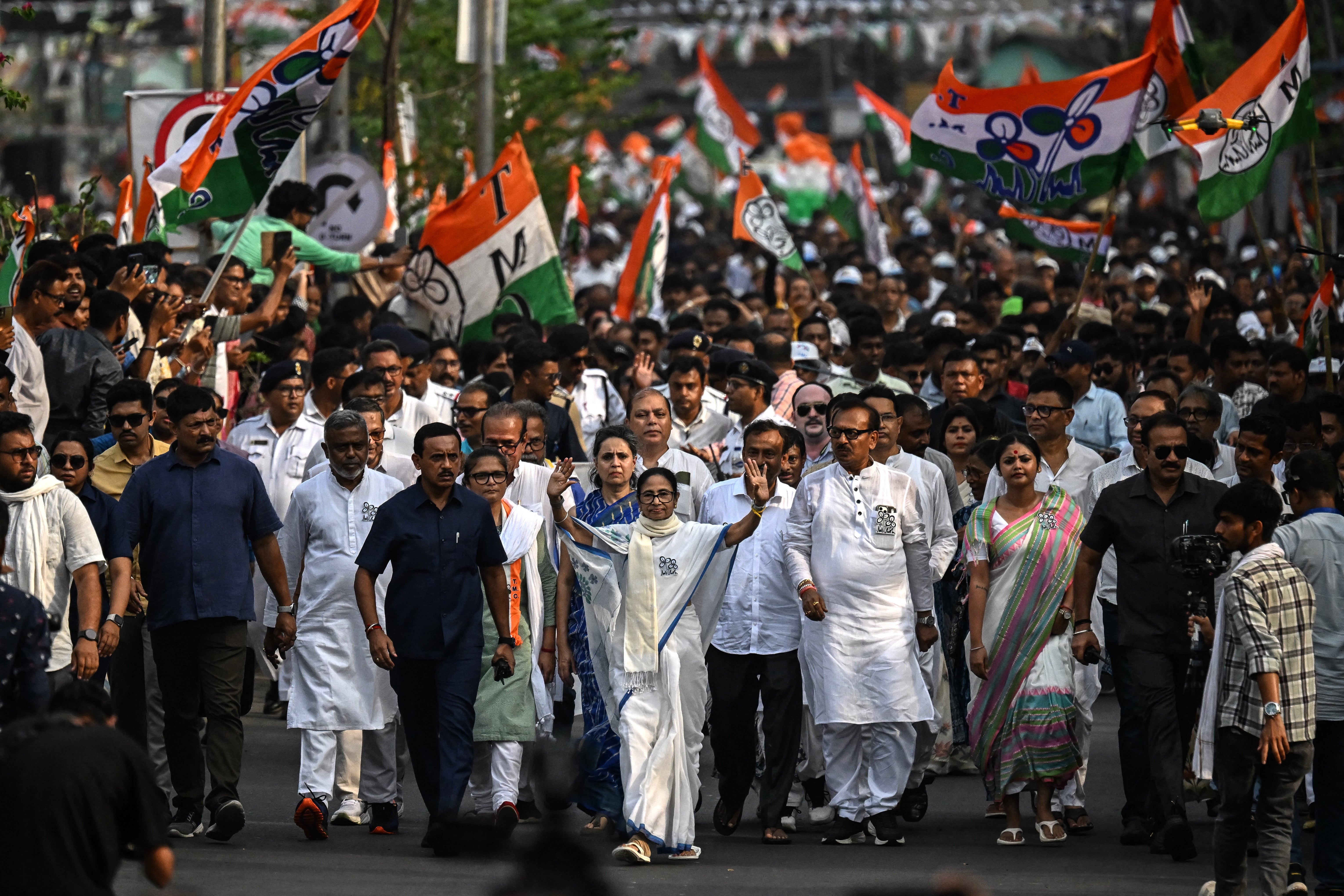
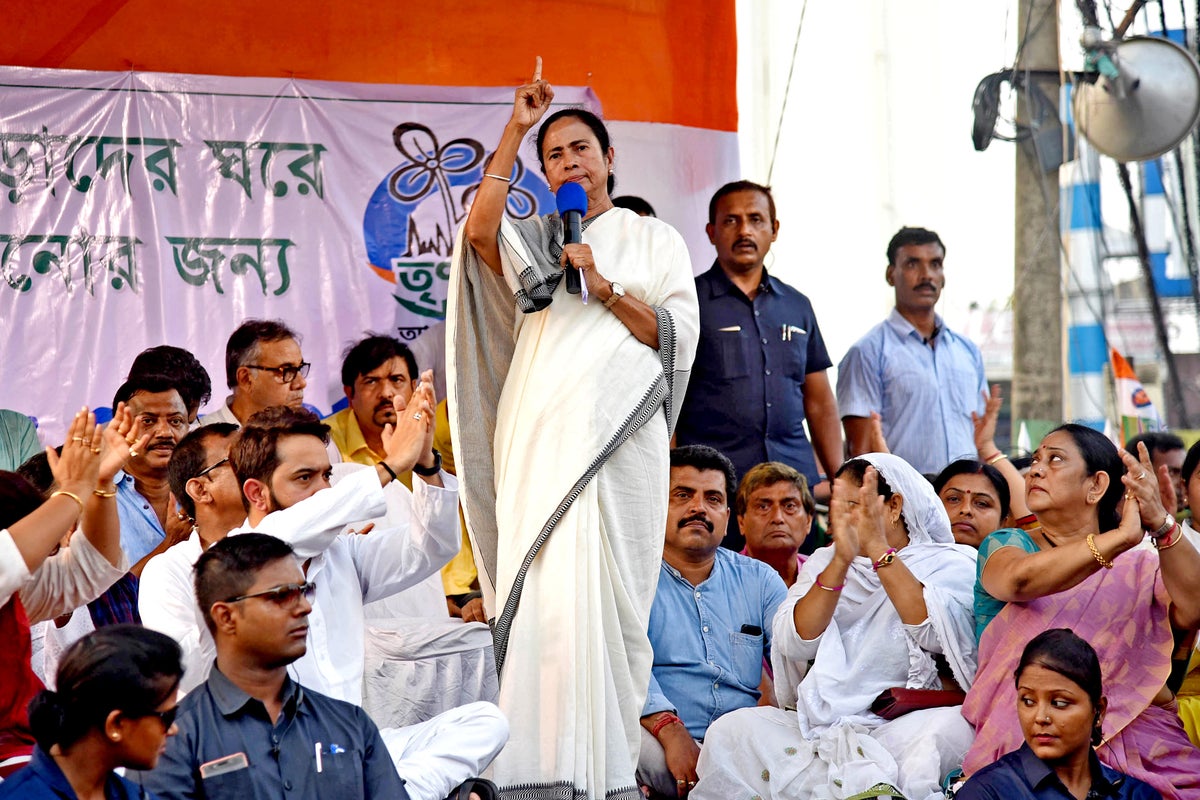
This election is one of Banerjee’s toughest political tests yet. A street fighter from her days in student politics, “Didi”, or elder sister, as she’s popularly known, rode to power in 2011 on an anti-incumbency wave against a long-ruling Communist coalition. Her politics of grassroots populism, welfare schemes and Bengali sub-nationalism then won her two more consecutive terms.
In an interview with the Financial Times, she said that the BJP was “obsessed with Mamata”. “They’re trying to capture Bengal,” she said. And at a campaign rally this week, she claimed the BJP was under “a lot of pressure”.
“I heard that about 50 helicopters are flying in the sky today, 19 chief ministers, all central ministers, CRPF, CISF, BSF, Enforcement Directorate, Income Tax, NIA, they have got everything,” she charged, rattling off the names of federal paramilitary and security agencies.
This election has been a huge undertaking, held under mounting scrutiny over a voter list purge. The election commission has imposed unprecedented restrictions on tourist movement, banned liquor sales for days, ordered the deployment of 250,000 paramilitary personnel and armoured vehicles, and stationed officers of the federal counter-terrorism agency NIA in the state.
Sayantan Ghosh argues that the election is a fight between ideologies. “Historically, Bengal has a liberal left-leaning population, so this is an ideological battle for the BJP,” he explains. “If they can capture, or if they can win Bengal, it's not only a state, it's a victory of their ideology.”
"They know they will never win Kerala, but Bengal could be a possibility. So, that is why there is this desperation. And of course, Narendra Modi believes himself to be bigger than himself. He knows his face is on the line. That a regional leader can defeat his cult again and again is not a good sign in the cult politics of Narendra Modi. That's why he is so desperate,” he adds.
The BJP has campaigned on promises of bringing employment, development, women’s safety, and improved law and order.
The party has also promised to change an alleged culture of corruption and misgovernance.
The Trinamool, on its part, has played up its identity as representative of Bengalis while portraying the BJP as a party rooted in the Hindi heartland and, thus, an outsider force.
West Bengal is one of the few states where Modi’s party has historically struggled to make inroads, a failure attributed to the unease of a deep-rooted local culture with the BJP’s push for a Hindu nation.
Bengalis take pride in their rich intellectual legacy, which has produced Nobel laureates such as Rabindranath Tagore and Amartya Sen, and many would distance themselves from the kind of identity-driven, communal politics that critics associate with the BJP.
Policing what people can and cannot eat is a politically charged issue across the country, and at a campaign rally Banerjee alleged that “the BJP will not allow you to eat fish. Nor will they allow you to eat meat or eggs”.
Swapan Dasgupta, one of the BJP’s heavyweight candidates in Kolkata, challenges that narrative, saying it has been “contrived” as a political weapon by the Trinamool.
"The party was founded in Bengal," he , he The Independent, referring to the BJP. "I’m a proud Bengali and a proud Indian.”
It is true that Syama Prasad Mukherjee, a Bengali, founded the Bharatiya Jana Sangh in 1951 which eventually became the party now known as the BJP.
And while the party has never been able to govern the state, it has seen a steady rise in its polling numbers over the past decade.
From winning only three seats in the 2016 assembly election, it surged to 77 in 2021. The party is now hoping to build on that momentum and secure a majority.
The result of the election in West Bengal, as well as in the states of Tamil Nadu, Kerala and Assam and the federal territory of Puducherry, are expected to be declared on 4 May.
"Once voted to power, we will restore law and order and bring investment and root out the mafia raj and the syndicate raj, which is prevalent, and extortion that has taken over. These will be worked on immediately," Dasgupta says, referring to allegations of corruption that have dogged the Trinamool over the past 15 years.
Among ordinary voters here, however, the party retains formidable support.
"The BJP is a party of North Indians. If they are voted to power, they will increase communalisation of the state," says Nirmal Das, a shopkeeper in Kolkata. “Both Bengali Hindus and Bengali Muslims won't be able to coexist and live peacefully.”
His daughter disagrees. Rumpi Das, a 28-year-old IT professional, rues that young graduates are forced to migrate due to a lack of employment opportunities in the city. "Where are the jobs, the development? All states are developing while Bengal is going backwards in time," she says.
"Just the Lakshmi Bhandar alone won't feed us," she adds, referring to Banerjee's flagship welfare scheme under which Rs 1,500–1,700 rupees per month is transferred to women.
Turnout is expected to be very high at the election, partly driven by concerns over individuals’ right to vote. A process known as the SIR, or Special Intensive Revision of electoral rolls, triggered widespread anxiety after it led to the deletion of nearly nine million names in West Bengal. More than 2.7 million people have appealed, but just 138 cases were heard before voting began in the first phase of the election on 23 April.
Many thousands of migrant workers have travelled from other states and paid inflated fares just to vote, with the first phase seeing a staggering record turnout of 93 per cent.
Outside a polling booth in Dum Dum constituency, Sayak Saha, a 21-year-old first-time voter, says he paid almost double the usual airfare to come to Kolkata to cast his ballot.
“My parents insisted that I vote this year after the whole SIR process. Everyone is scared. What if after 10 years, I’m asked to prove my citizenship,” Saha tells The Independent. “I don’t want to suffer the fate of so many other genuine voters in the future.”