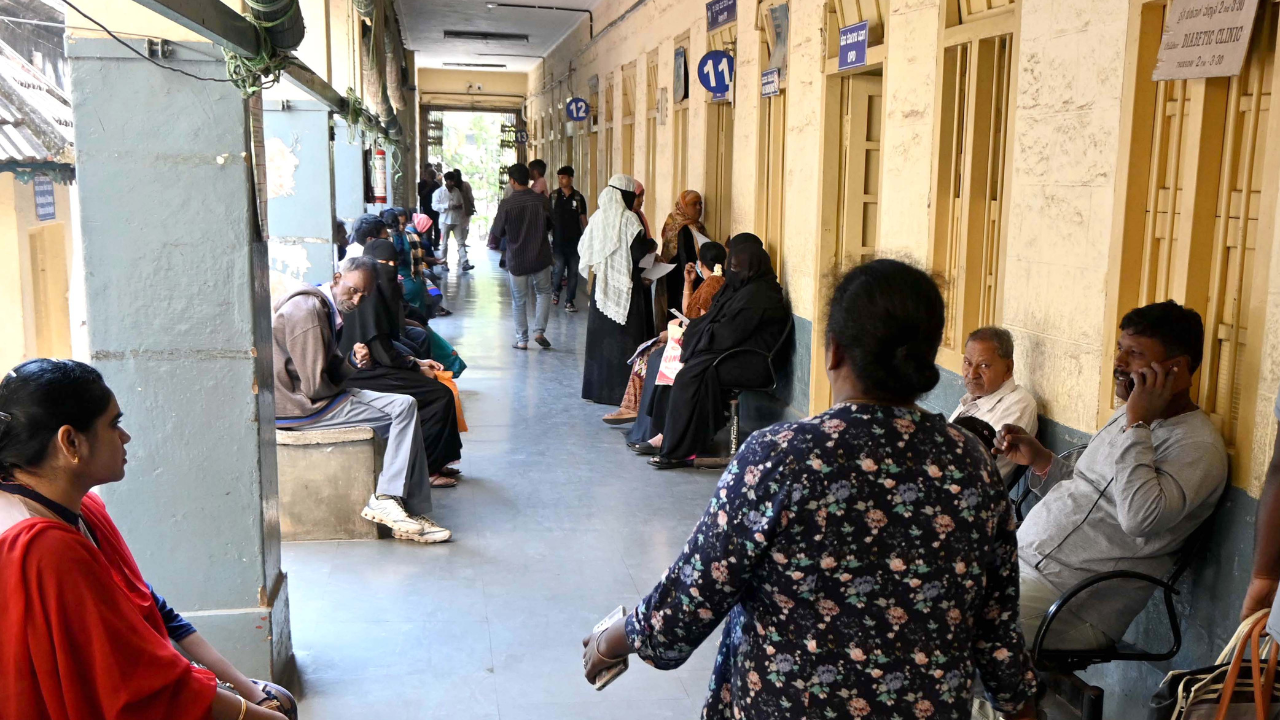
BENGALURU: An 87-year-old man from Karnataka's Hassan district has become India’s first victim of H3N2 virus. He was admitted to Hassan Institute of Medical Sciences, Hassan on February 24 and he died due to H3N2 on March 1, D Randeep, commissioner of health and family welfare services, told TOI.
Explainer: What you need to know about H3N2 flu spike
"He had symptoms of fever, cough, and breathlessness," said Randeep.
The patient had comorbidities including hypertension, asthma, and acute kidney injury. His lab test results confirmed H3N2 on March 3, two days after he died.
No fresh cases of H3N2 have been reported in the place, said Randeep. A total of 16 H3N2 cases have been reported in Karnataka from January to March 2023. The state has also logged 10 cases of H1N1 this year.
FAQs:
What's H3N2 infleunza?
H3N2 is a variant of the influenza virus. H3N2 influenza viruses began circulating in humans in 1968 and have evolved substantially since.
Typically, flu seasons dominated by H3N2 activity are more severe, particularly among at-risk groups such as older adults and younger children.
Symptoms
The symptoms of H3N2 include cold, cough and throat pain. Air pollution makes the H3N2 strain worse.
It is easily contagious and has increased the number of hospitalisations for influenza.
According to ICMR researchers, feverish upper respiratory infections are a common occurrence in people and may be made worse by air pollution.
Coughing, nausea, vomiting, sore throat, body aches, and diarrhoea are additional typical symptoms.
How serious it is?
Of the hospitalised SARI patients down with influenza A H3N2, about 92% reported fever, 86% cough, 27% breathlessness and 16% wheezing.
Another 16% had clinical signs of pneumonia and 6% seizures. Ten percent of SARI patients, having H3N2, needed oxygen support while 7% required ICU care.
How is it different from the common flu?
Of the four — A, B, C and D — influenza viruses A and B cause the seasonal epidemics of flu, a respiratory illness, that occur every year.
Some influenza A subtypes — H1N1 (or, swine flu virus) and H3N2 — can cause more severe illnesses.
At risk
A survey published in Nature shows that H3N2 virus infections produce non-neutralising H3N2 antibodies, particularly among middle-aged.
The Indian Medical Association says people over 50 and below 15 are more vulnerable, and air pollution could be a precipitating factor.
Dos and Don'ts
The IMA has issued a note of caution against misuse of antibiotics amid a spike in flu cases in India.
It has said many people are taking antibiotics on their own to manage fever and coughs which can be due to the seasonal influenza.
ICMR says antibiotics should be prescribed by doctors to ensure that they are not given beyond the recommended duration.