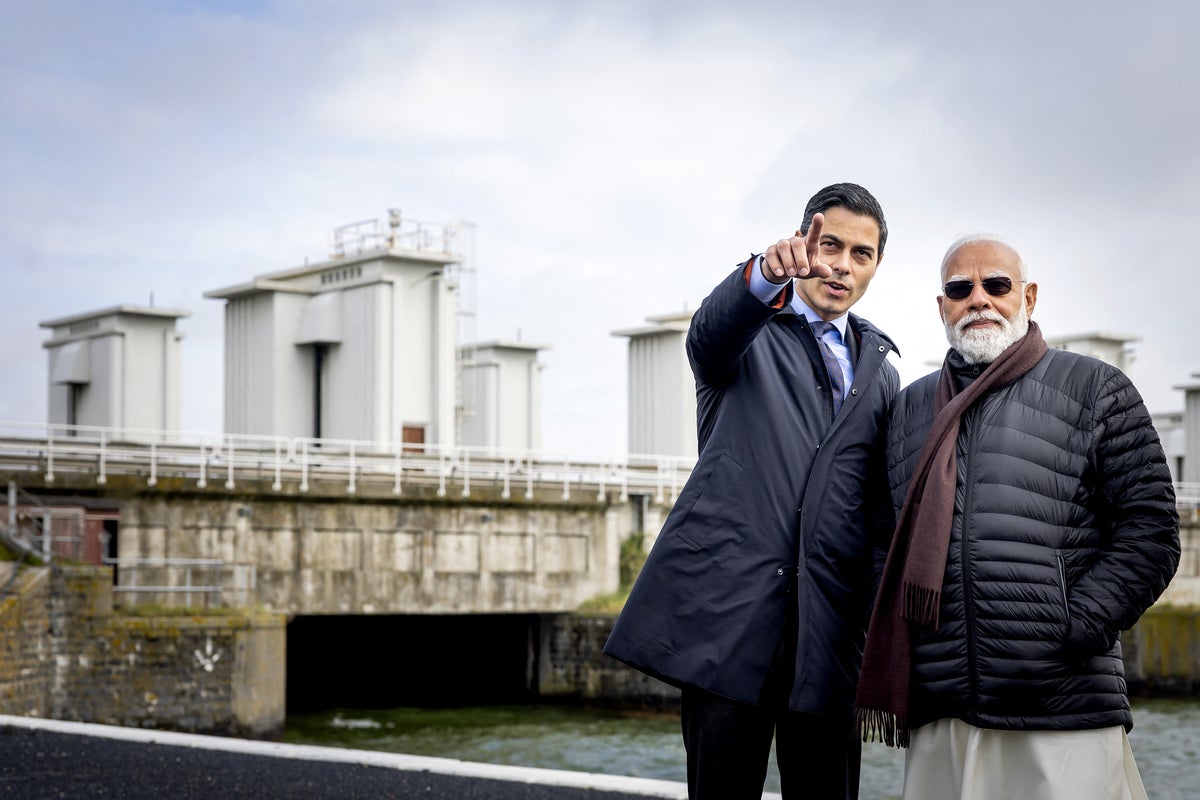
Dutch prime minister Rob Jetten voiced concern about the erosion of press freedom and minority rights in India ahead of his meeting with visiting prime minister Narendra Modi over the weekend, triggering a sharp response from Delhi.
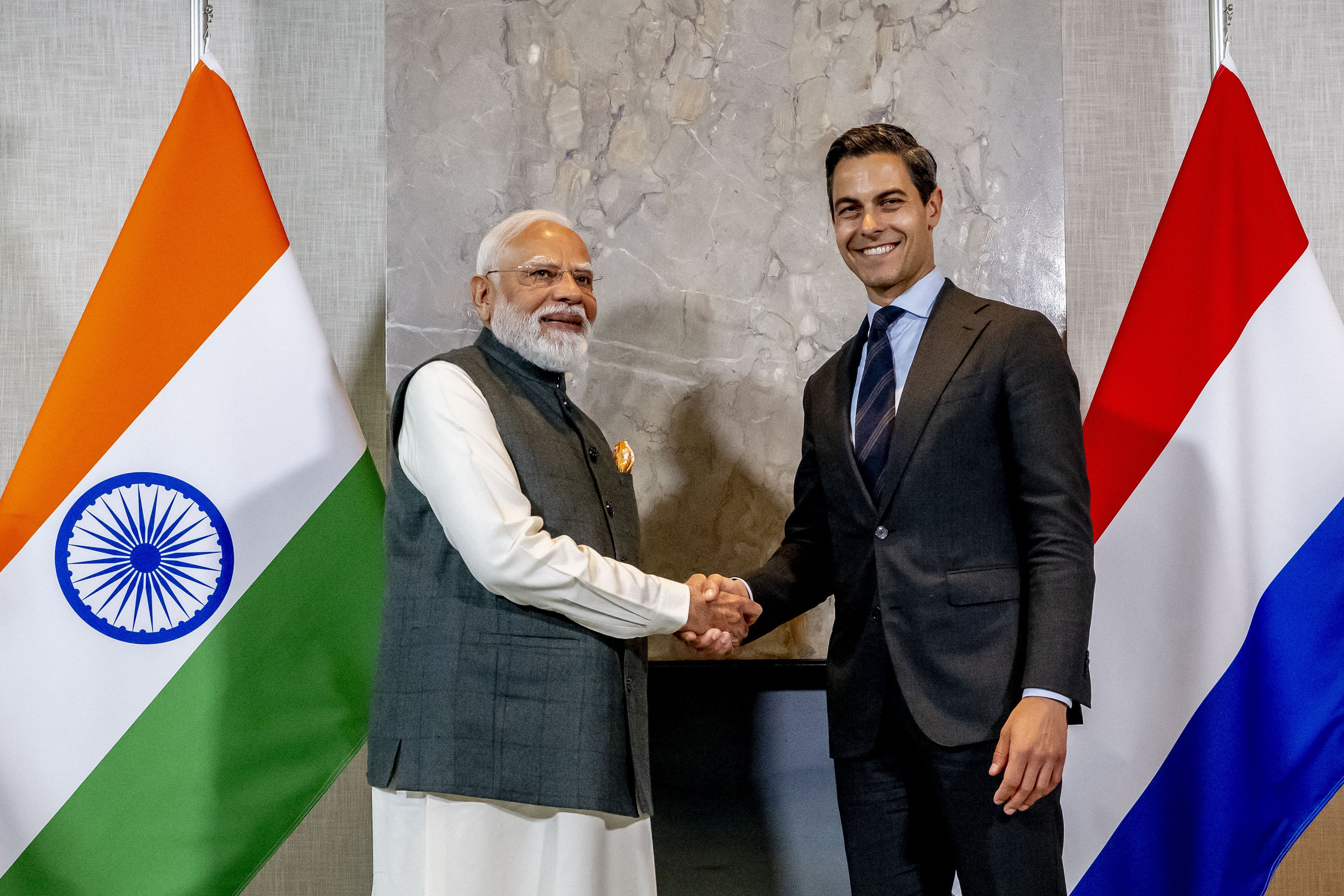
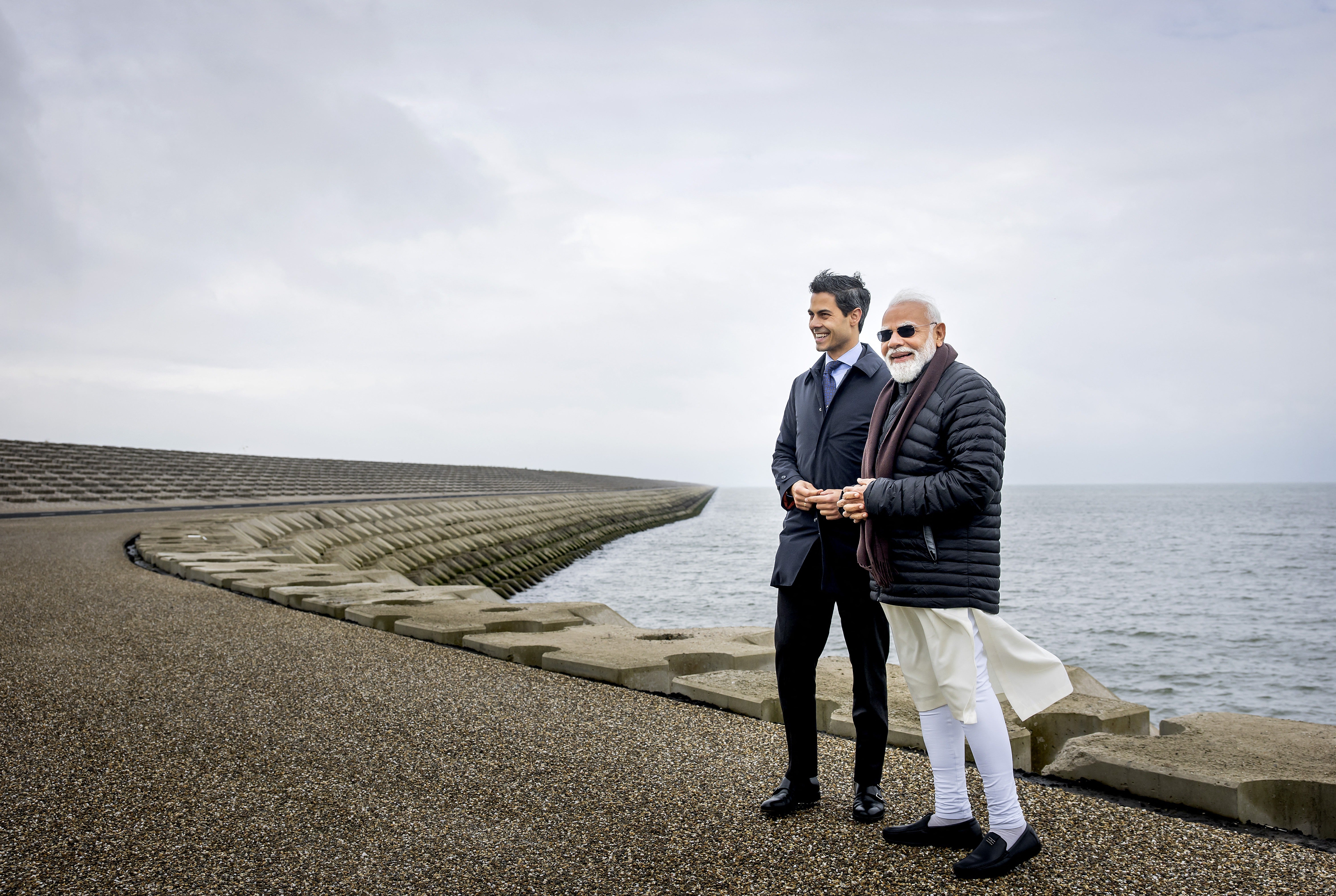
At their meeting, Mr Jetten and Mr Modi, who kicked off his four-nation European tour with a two-day visit to the Netherlands on Saturday, elevated the Indo-Dutch relationship to a “strategic partnership”.
Mr Jetten was speaking to the press ahead of the meeting when he was asked about concerns over the state of press freedom and minority rights in India, according to the newspaper De Volkskrant.
“It is not only about press freedom but also about the rights of minorities, who are under severe pressure. That applies in the first place to the Muslim community but also to many other smaller communities,” Mr Jetten was quoted as replying by the paper.
“The concern is to what extent India remains an inclusive society where the same rights apply to everyone.”
According to Mr Jetten, such concerns were “regularly raised” with the Indian government.
When Sibi George, secretary in the Indian foreign ministry, was asked about the Dutch prime minister’s comments during a press briefing in The Hague on Sunday, he said such questions stemmed from "a lack of understanding" of India's history.
He hadn’t seen the prime minister’s remarks, Mr George added, and was only responding to the broader question of press and minority freedom in India.
“India is a country of 1.4 billion people, the largest populated country in the world. A country of civilization of more than 5000 years old. It's a diverse country,” he continued, “diversity in terms of culture, diversity in terms of languages, diversity in terms of food, diversity in terms of religion”.
“Every religion, whenever any part of the world there was persecution in the past, they all came to India and thrived in India. This is the beauty of India,” the diplomat said.
“This question comes because of the lack of understanding of this.”
On the question of press freedom, Mr George said India was a very "noisy democracy" because "everyone has the freedom of expression, freedom of press in the country”.
In a lengthy reply, he said that Jews in India never faced persecution, Christianity came to the land immediately after the resurrection of Jesus Christ and Islam arrived during the lifetime of Prophet Muhammad.
“We are one-sixth of the total population of the world, but not one-sixth of the problems of the world. This is the beauty of India, which makes us proud. Every minority thrives,” he said.
According to the Indian Express, citing foreign ministry sources, the issue was not discussed during the meeting between Mr Jetten and Mr Modi.
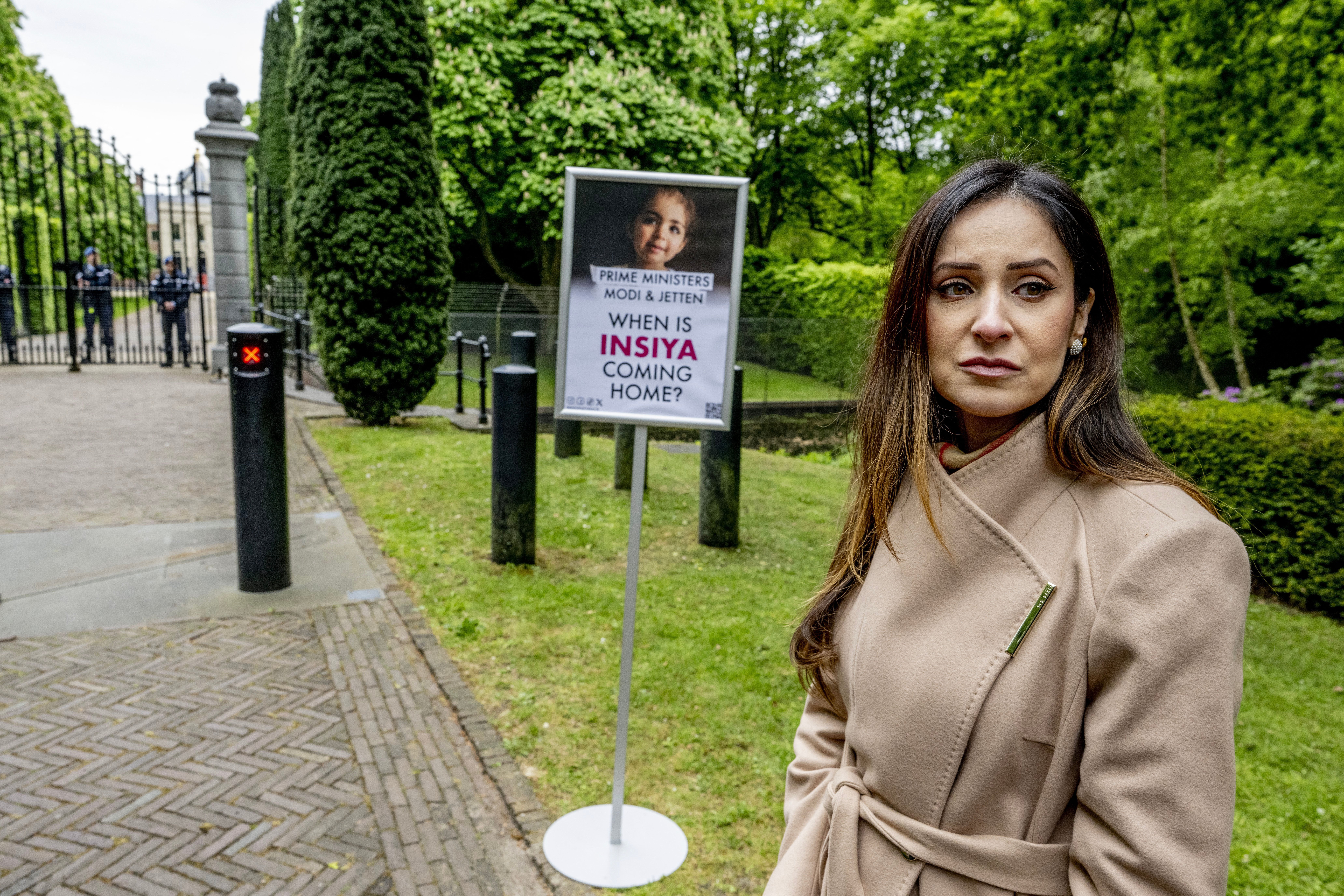
Separately, the case of Insiya Hemani, a Dutch girl abducted by her father and brought to India in 2016, was raised during the visit.
The girl, just two-years-old then, was forcibly taken by her father, Shehzad Hemani, to India while she was visiting her grandmother in Amsterdam-Oost. A Dutch court convicted the father and sentenced him to over eight years in prison.
Mr George said only that “this was raised by the Netherlands leadership” and added that the matter was now sub-judice. “I would not like to comment on this at this stage,” he said.
India is ranked 157th out of 180 countries in the 2026 World Press Freedom Index released by the advocacy group Reporters Without Borders, remaining in the "very serious" category. The country dropped six places from its 2025 ranking.
The RSF said press freedom was in crisis in “the world’s largest democracy” and blamed Mr Modi and his Hindu nationalist Bharatiya Janata Party for rising violence against journalists.
It also pointed to growing media concentration in India, noting that billionaire Mukesh Ambani owned more than 70 media outlets now, while fellow industrialist Gautam Adani’s takeover of NDTV in 2022 marked what it described as the decline of pluralism in mainstream media.
Similarly, human rights groups have repeatedly expressed concerns about the ruling party’s rhetoric against minorities as well as a recent spate of sectarian violence around Hindu religious festivals and state-sponsored demolitions of mostly Muslim properties.
The US Commission on International Religious Freedom said that religious minorities continued to be attacked in India as religious freedom declined.
It said in a report that Indian authorities were using discriminatory anti-conversion and cow slaughter laws to target minorities, especially Muslims. India denied the report as biased.
Rhinoceros tries to flip jeep in Indian safari park
Minnesota teen swaps football and gaming for life as a Buddhist lama
At least 111 dead as freak summer hailstorm and rains strike northern India
US set to drop criminal charges against Indian billionaire Gautam Adani
India condemns vessel sinking as Strait of Hormuz crisis continues
Why billions of people could miss out on watching the World Cup