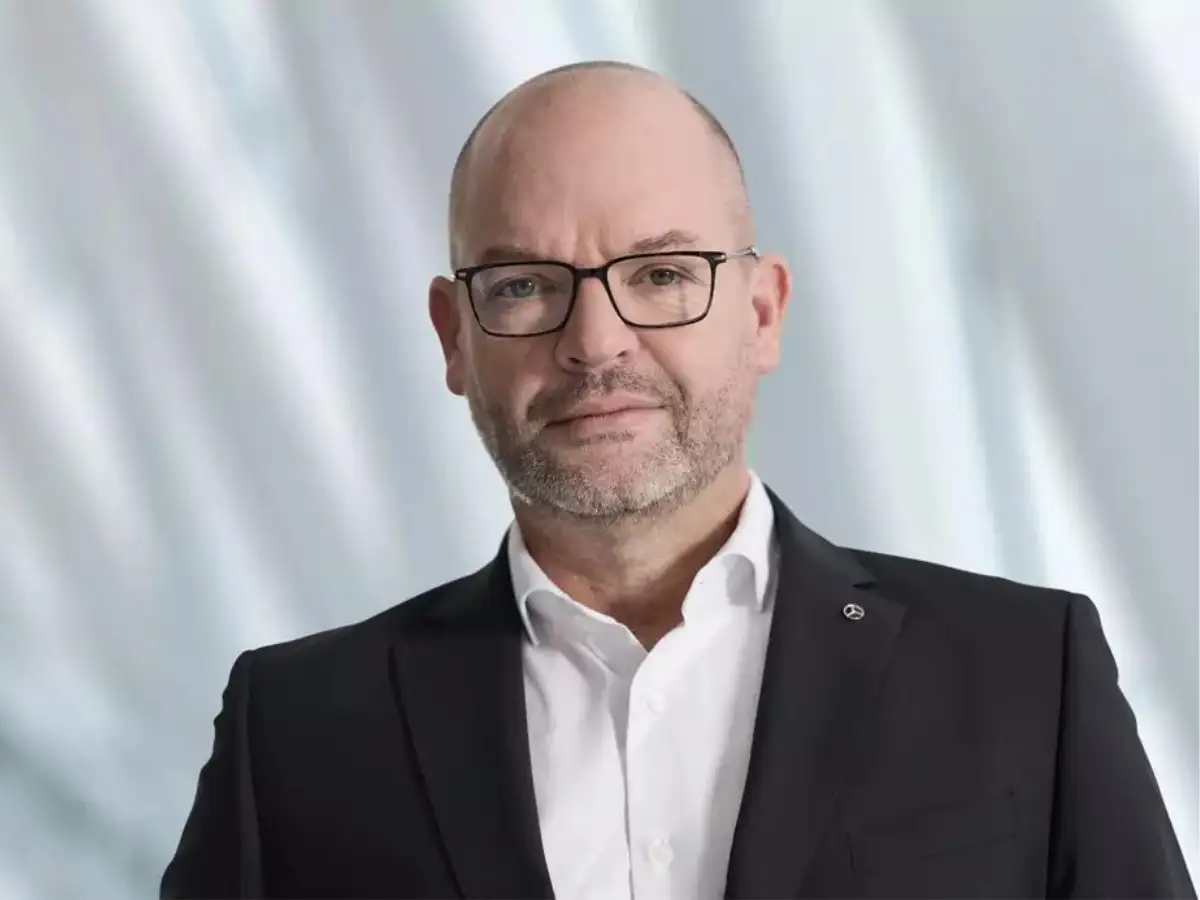
"There is a piece of India in every Mercedes, and I hope to see even more of it in the future," said Mercedes-Benz Group board member and chief technology officer Jörg Burzer, as the German automaker unveiled its latest S-Class model in Mumbai.
The S-Class, the luxury-car maker’s top-tier offering, is one of the early models that will feature MB.OS—Mercedes-Benz’s proprietary operating system designed majorly in India.
MB.OS is the company’s biggest software transformation to date and has been significantly developed by engineers at its Bengaluru R&D centre, Burzer told ET on the sidelines of the event on Tuesday.
The automaker is transforming vehicles into software-defined platforms powered by artificial intelligence. Burzer said MB.OS provides the foundation for this transformation.
The platform was unveiled in April this year, with the launch of Mercedes CLA BEV, the electric luxury sedan based on the Mercedes Modular Architecture.
"Our philosophy is that we create a principal tech stack on our own," he said. "Then we always can decide if we select a partner and work with a partner or we do that on our own.”
Mercedes-Benz Research and Development India is the company’s largest R&D centre outside Europe, employing more than 8,500 engineers and technologists. The lab has contributed to several innovations including in next-gen mobility across digital engineering, advanced driver assistance systems, infotainment, MB.OS, battery technologies and charging ecosystems, as well as simulation and digital twins.
Mercedes is accelerating its plans on autonomous driving through its partnership with Nvidia. The company currently offers Level 2++ autonomous driving capabilities and expects to roll out Level 3 systems more broadly from 2028, with Level 4 autonomy to follow.
Bengaluru-based teams are playing a key role in developing software stacks, testing, automated parking systems and other technologies critical to its self-driving ambitions, Burzer said.
The company is also expanding partnerships with Indian technology firms and engineering service providers, including Infosys, KPIT and Tata Elexi, as it scales software development globally.
Burzer said the next phase will involve agentic AI systems that can understand user behaviour and make recommendations autonomously.
"We will see more and more AI agents coming which you can easily update over the air," he said. "The agent basically knows if you are driving a commute every second day or once a week...and can say, 'Don't go to this coffee shop today because it's too crowded. Take the next one’."
Digital technologies have also helped the automaker navigate supply chain disruptions and geopolitical uncertainties during the year. For instance, visibility across supplier networks helped manage the semiconductor shortages that disrupted the automotive industry.
"We were able to master that because we had transparency on the supply chain," he said. "We knew exactly which quantity of semiconductor was available and where.”