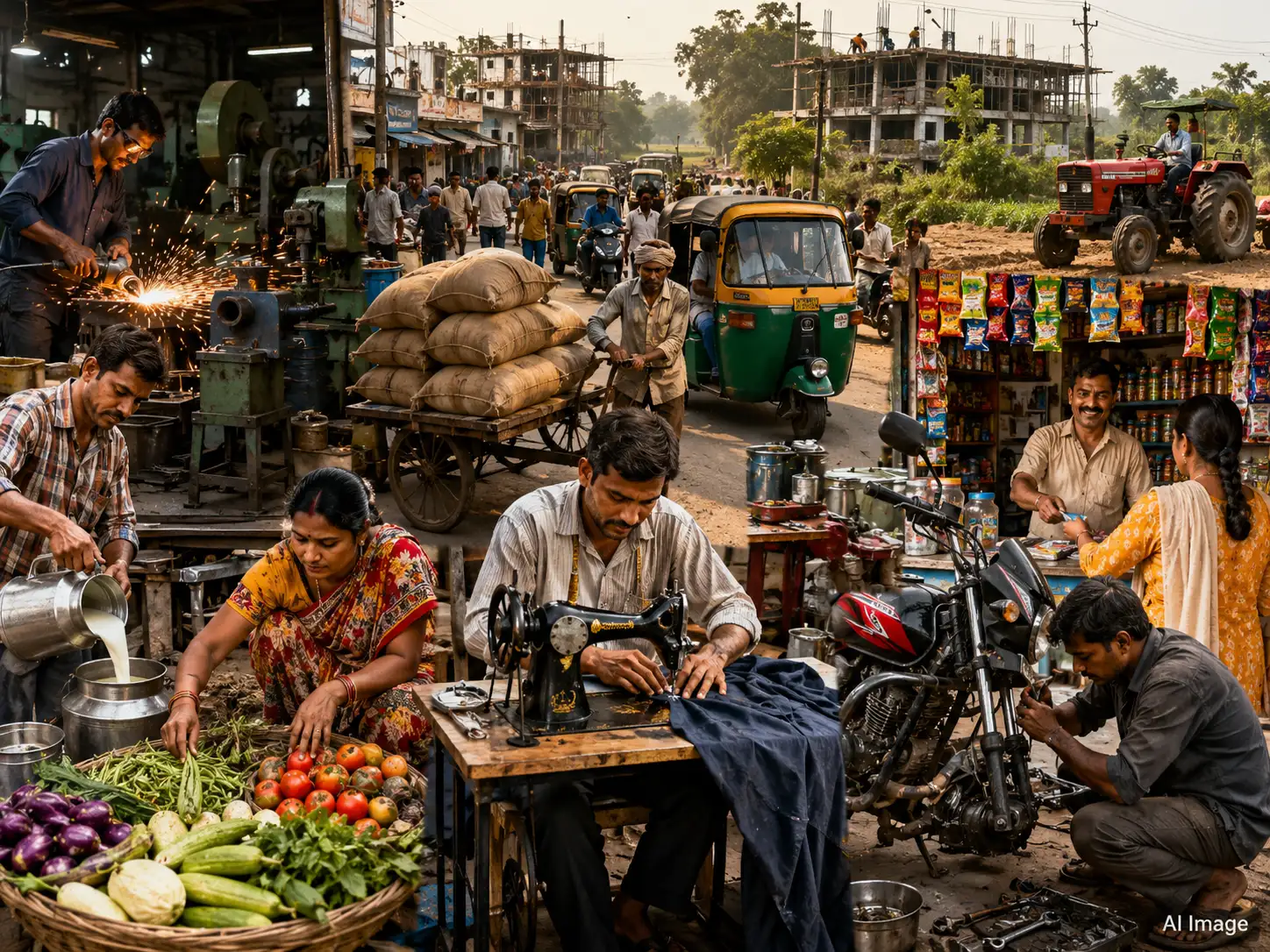
India's economy has a data blindspot at its heart. The government tracks inflation, factory output, tax collections every month and corporate earnings every quarter. But there is no high-frequency indicator that reveals how the country's biggest source of employment is actually performing. That gap may soon be filled. ET has reported today that the Ministry of Statistics and Programme Implementation (MoSPI) is planning an index for unincorporated enterprises that will periodically measure the health of India's informal economy. "The ministry aims to soon come out with the index for unincorporated sector enterprises," an official told ET. "While the official timeline is 2031, we are aiming to launch it earlier."
Also Read: Plan afoot to create index for unincorporated enterprises
The proposal may appear technical, but it has the potential to reshape everything from monetary policy, GDP estimates and government planning to corporate decisions and equity investment by bringing into view a part of the economy that has long remained statistically underrepresented. The informal sector employs roughly 80% of India's workers while contributing a little less than 50% to productivity. Yet it remains a blindspot for lack of tracking.
The informal economy is far larger than many think
When people hear the term "informal economy", they often think of unregistered roadside vendors or tiny family businesses. In reality, the sector is much broader. MoSPI defines unincorporated enterprises as non-agricultural establishments that are not registered under the Companies Act. These include kirana stores, neighbourhood retailers, restaurants, transport operators, repair shops, small manufacturers, beauty salons, home-based businesses, traders, workshops and countless service providers. Many may be registered under GST or Udyam and comply with local regulations, but they are still classified as unincorporated because they are not companies.