India: it's hot, humid and can overwhelm the senses. "But," says David Blair, who recently returned to London after five years in Mumbai and Delhi with design consultancy Fitch, "if you're the sort of person who thinks this could be a great place, you're already the right person to
give it a go.
"You feel you're somewhere where anything can happen," he adds. "Delhi might be less friendly, but Mumbai is openly social. The more you do, the more at ease you get. Parents assimilate particularly well through the networks other parents provide. India's the sort of place where, if you love it immediately, things will fall into place."
Perhaps this explains why the country's bustle seems to be back. With strong inward investment (Ikea recently became the first major foreign retailer to enter the subcontinent, with plans to open 25 stores, while Pizza Express has also opened franchises), India is back to its best.
The country has the 11th-largest world economy by GDP and the Association of Executive Search Consultants has found growing numbers of expats putting India as their preferred destination. Recruiters in India have reported a 20% rise in expats applying for jobs – no doubt because of the country's solid growth predictions: in 2013, the Indian economy is forecast to grow by 6%, creating 1.3m jobs.
But the life India can offer also seems to be a deciding factor. Research by HSBC Expat has found that 83% of expats say their disposable incomes are higher in India than before their posting, while the mainly young population of mobile workers will find like minds in India, where half of the population is under 25.
IT has historically been the big sector for expat opportunities (particularly in Bangalore), but others are catching up fast: the fast-moving consumable goods sector (supermarket goods, including food and toiletries), is predicted to grow at 5.3% this year, creating 176,900 jobs; retail 10.5% (102,800); hospitality 3.4% (106,300); and banking and finance 8.1% (72,900).
The key to urban areas
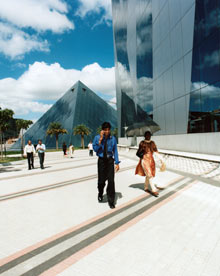
Work opportunities are split between three key urban areas: Mumbai (the most expensive place to live) has banking, finance and luxury brands; Delhi (less expensive accommodation but still around 25-30% of take-home pay) for diplomatic services, business and civil service roles; and Bangalore, home to IT and business-process outsourcing.
However, with more than 100 dialects and a population of 1.24 billion (more than that of Europe), India is far from a homogeneous society. The cuisine is said to change every 24 miles and India has a further five cities with populations of more than 5 million – and 10 more with between 2 and 3 million people.
"Many of these new cities have skills gaps to be filled," says Adrian Mutton of Delhi-based Sannam S4, which has helped 75 companies move into India in the past two years. "Pune [in the state of Maharashtra, near Mumbai] is now a major entity in its own right, especially in car production," he says.
Carol Stubbings, head of international mobility for PwC, highlights another city that has undergone a rapid expansion over the past 25 years: Gurgaon. One of Delhi's four satellite cities, Gurgaon is part of the National Capital Region, has the third-highest per capita income in India and it's growing fast.
Other cities that expats will soon be hearing about are Chennai (predicted to have 12.8 million people by 2025), Hyderabad, in the south-eastern state of Andhra Pradesh, and Jaipur, India's first planned city, in the north-west.
Those with the verve to relocate to these emerging, exciting cities should act fast, however. People now need to earn $25,000 (£16,000) a year to be considered for employment visas and expats could soon be competing with returning Indians who left during the 1990s "brain drain".
The companies bill (passed in December 2012) will bring more Indian businesses under European standards (such as an April-March tax year), so opportunities need to be taken now.
"India is learning fast – and it won't take long for the skills transfer they need to be complete," says Tony Goodwin, CEO of global executive recruitment firm Antal International. "There's a window of around 10 years. Until then, moving to India will be a great experience. It'll be a shock, but you definitely won't regret it."
And for those who see this as simply meaning decade's worth of strong development and internal growth though, that's more than long enough. India may already have a population of more than 1 billion people, but there are still many opportunities for expats to quickly advance their careers – and awaken their senses.
India's top cities
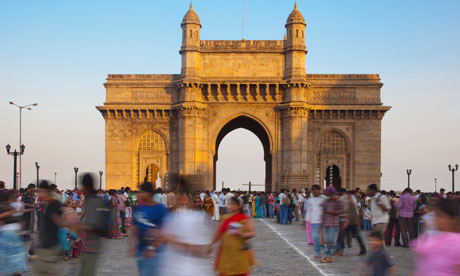
Delhi
Population:
16.7 million
Who it attracts:
Single professionals and families, drawn to the IT, telecommunications, hotels, banking and media sectors.
Where expats stay:
Vasant Vihar in south-west Delhi; Saket and Nehru Place in south Delhi; Mayur Vihar in east Delhi
Good for:
Families – children are welcome almost everywhere. It is common for people living in Delhi to spend their free time with the whole family.
Did you know?
- Delhi is the world's second-most bird-rich capital city, after Nairobi in Kenya.
- Delhi Transport Corporation, which runs the city's public transport, has the world's largest fleet of environmentally friendly CNG (compressed natural gas) buses.
- Delhi has been destroyed and rebuilt seven times by successive dynasties.
Mumbai
Population:
18.4 million
Who it attracts:
Fewer young families, more singletons, entrepreneurs and mid-career professionals working predominantly in the manufacturing and industrial sectors. The media sector is also booming and the city is home to the Bollywood film industry. In 2009, Mumbai was named by the World Bank as one of the cities where new businesses start up fastest. Forbes cites it as one of the top 20 cities for billionaires.
Where expats stay:
Bandra West is popular
Good for:
Self-starters and those able to work within hierarchical business structures rooted in the traditional Hindi caste system.
Did you know?
- More than 6 million people (more than Ireland's population) use Mumbai's railway network every day.
- The city is home to India's first cricket club.
- The wooden pole in the centre of the Banganga Tank, Mumbai, signifies the centre of the earth.
Bangalore
Population:
8.43 million
Who it attracts:
Young IT professionals drawn to the so-called "Silicon Valley of India"; families who enjoy campus-style living in out-of-town areas.
Where expats stay:
East Bangalore, including Whitefield and the gated community at Palm Meadows; also Sarjapur Road for easy access to the stores and restaurants of Koramangala
Good for:
High-quality schools for expats with families, including the International School Bangalore and Inventure Academy
Did you know?
- As well as a being a hub for theatre and music, the city also has the largest number of pubs in India.
- It was the first city in India to have electricity.
According to one expat on HSBC's Expat Explorer website: "If you have children and move to Bangalore, choose the school before your housing … Adults can do more useful work in a car compared to children on a bus."
For more expat tips on India visit the HSBC Expat Hints and Tips tool.
Cities to watch

Gurgaon
Already home to companies such as Bharti Airtel, Nokia, Motorola, Alcatel-Lucent, Ericsson, PwC, Deloitte, SAP, KPMG, McKinsey and Nestlé. It's close to Delhi airport and Hero Honda, the world's largest motorcycle company, is based here. Gurgaon ranks 11th among Indian cities on the "Life After Work" index produced by Indian fortnightly publication Business Today.
Chennai
Industrial city specialising in the automobile, computer, technology, hardware manufacturing and healthcare sectors. By 2012, it had become India's second-largest exporter of IT and business-process outsourcing (BPO) services. The city is host to the third-largest expat population in India, after Mumbai and Delhi, rising to 82,790 in 2011 from 35,000 in 2009.
Hyderabad
Historically a manufacturing centre, it is emerging as the place for pharmaceutical and biotechnology industries (its nickname is the "Genome Valley of India"). The Telugu film industry is based here and, in September 2012, the city got its first Walmart.
Find out more about the expat lifestyle
You can read more than 800 tips from expats on 50 countries, from Australia to Zambia, and 18 themes with the HSBC Expat Hints & Tips tool. For a video introduction to expat banking and to find out how HSBC Expat can help you in your next move click here.