Get all your news in one place.
100’s of premium titles.
One app.
Start reading
Reuters
Reuters
World
Jatindra Dash and Serajul Quadir

Cyclone slams into Indian temple town, Bangladesh braces with evacuation order

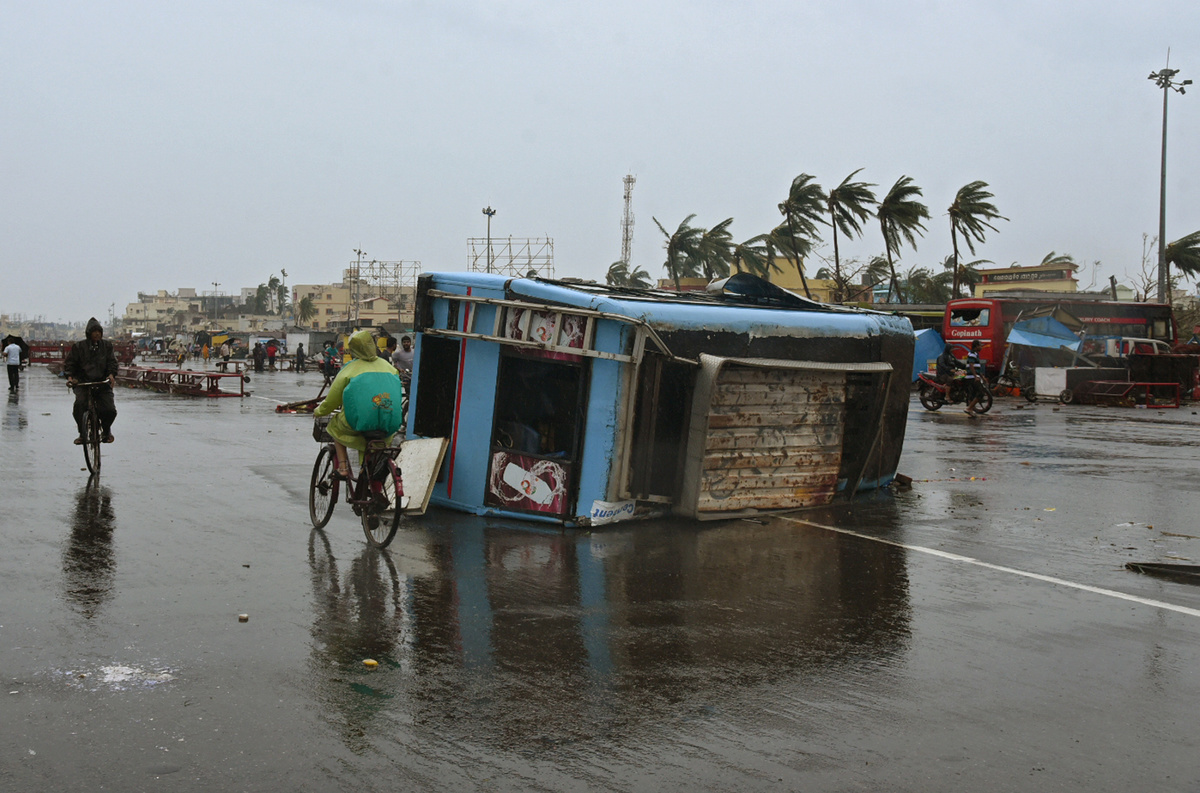
People move past a damaged vehicle after Cyclone Fani hit Puri, in the eastern state of Odisha, India, May 3, 2019. REUTERS/Stringer

BHUBANESWAR, India/ DHAKA (Reuters) - A cyclone barreled into eastern India on Friday, damaging houses in the tourist town of Puri and wounding 160 people after a million people were moved into storm shelters.

Trees were uprooted, power and telecom lines snapped as Tropical Cyclone Fani, the strongest storm to hit India in five years, swept ashore the eastern state of Odisha.
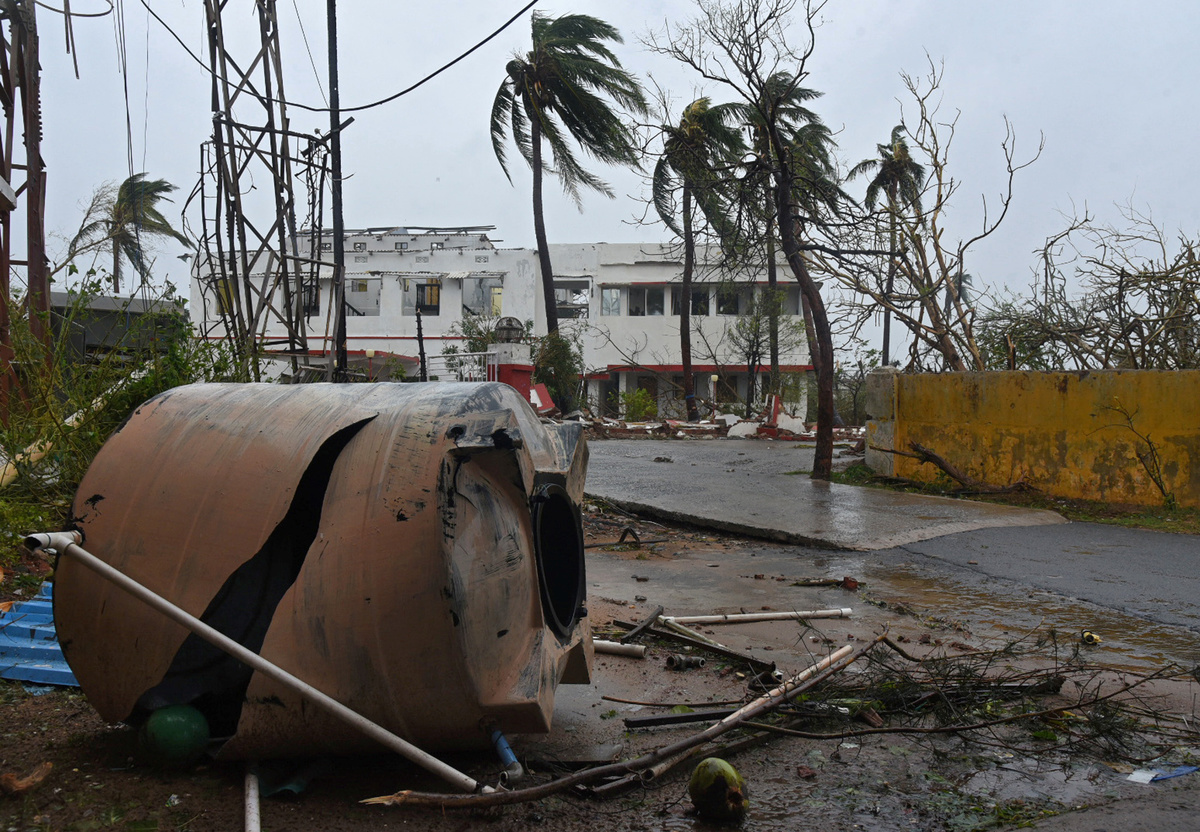
A damaged water tank is pictured after Cyclone Fani hit Puri, in the eastern state of Odisha, India, May 3, 2019. REUTERS/Stringer

Bangladesh, which lies further up the path of Tropical Cyclone Fani, ordered the evacuation of 2.1 million people before the storm arrives on Saturday.

Indian government spokesman Sitanshu Kar said there were no reports of deaths but 160 people were believed injured.

Bangladesh's junior disaster minister Enamur Rahman said 56 thousand volunteers were racing to move millions out of the storm's path.
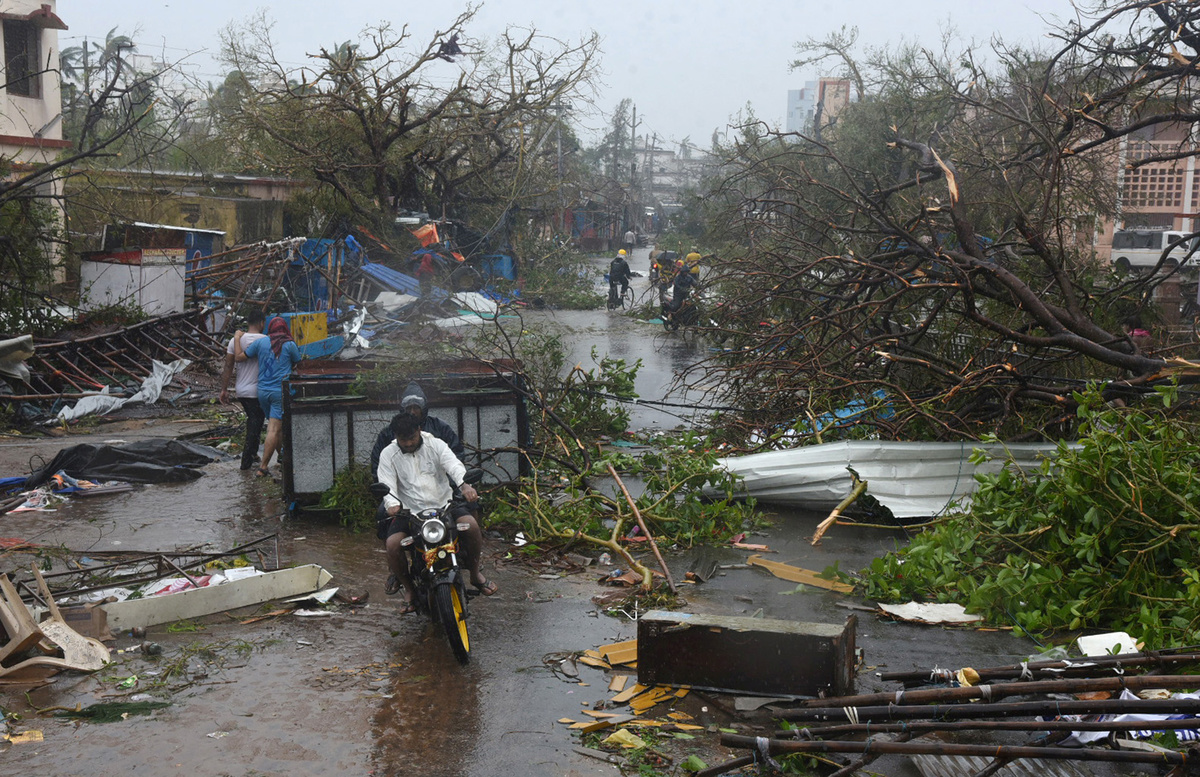
People move through debris on a road after Cyclone Fani hit Puri, in the eastern state of Odisha, India, May 3, 2019. REUTERS/Stringer

Fani spent days building up power in the northern reaches of the Bay of Bengal before it struck the coast of Odisha at around 8 a.m., the state-run India Meteorological Department (IMD) said.

Howling winds gusting up to 200 kph (124 mph) whipsawed trees, uprooting scores, and driving rain impacted visibility, while streets were deserted in the state capital Bhubaneswar and Puri.

"Damage in Puri is extensive, power supply, telephone lines disrupted," Odisha's Special Relief Commissioner Bishnupada Sethi told Reuters, referring to the seaside Hindu temple town that is popular with pilgrims and was directly in the storm's path.
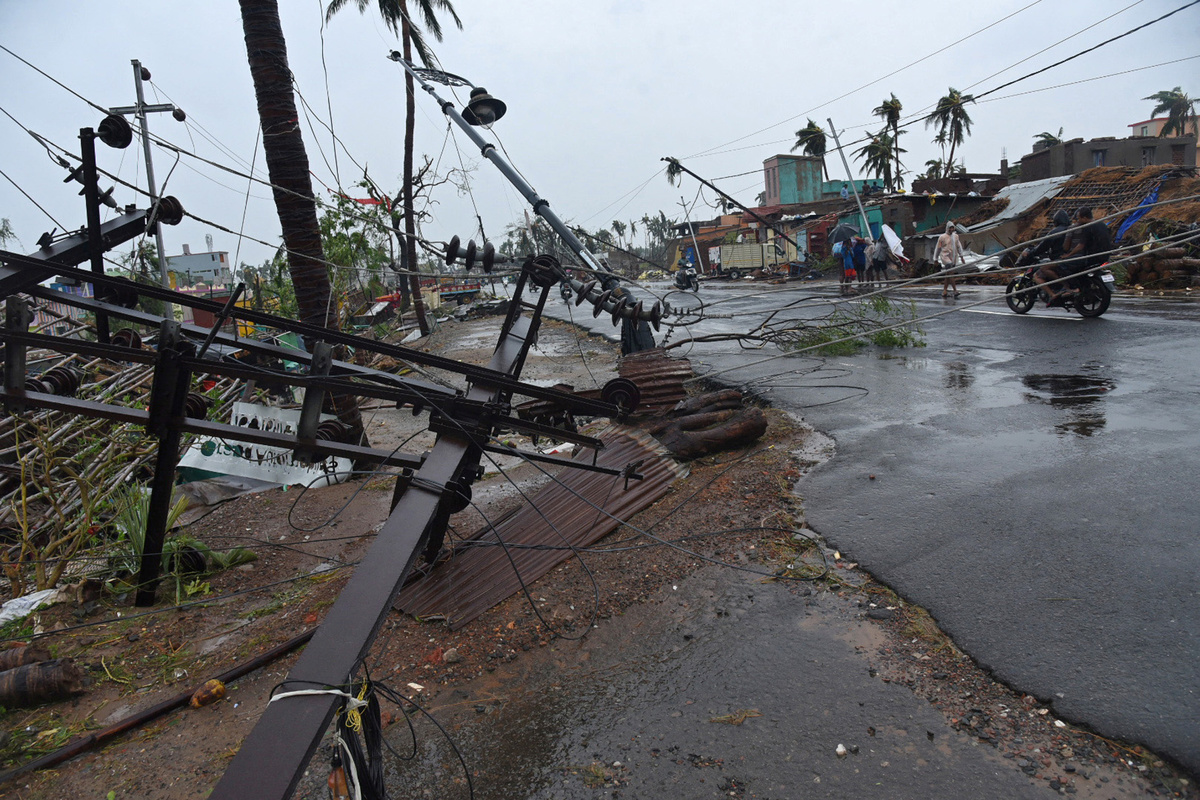
Fallen utility poles are pictured after Cyclone Fani hit Puri, in the eastern state of Odisha, India, May 3, 2019. REUTERS/Stringer

Cyclone tracker Tropical Storm Risk put Fani as a powerful category four storm on a scale of one to five. The IMD said the storm was now weakening.

Close to 60 km (37 miles) inland, winds brought down electricity poles in Bhubaneswar, where authorities had ordered the airport to stay closed. Schools and colleges in Odisha were also shut. A major hospital in the city suffered extensive structural damage but all patients and staff were safe, authorities said.
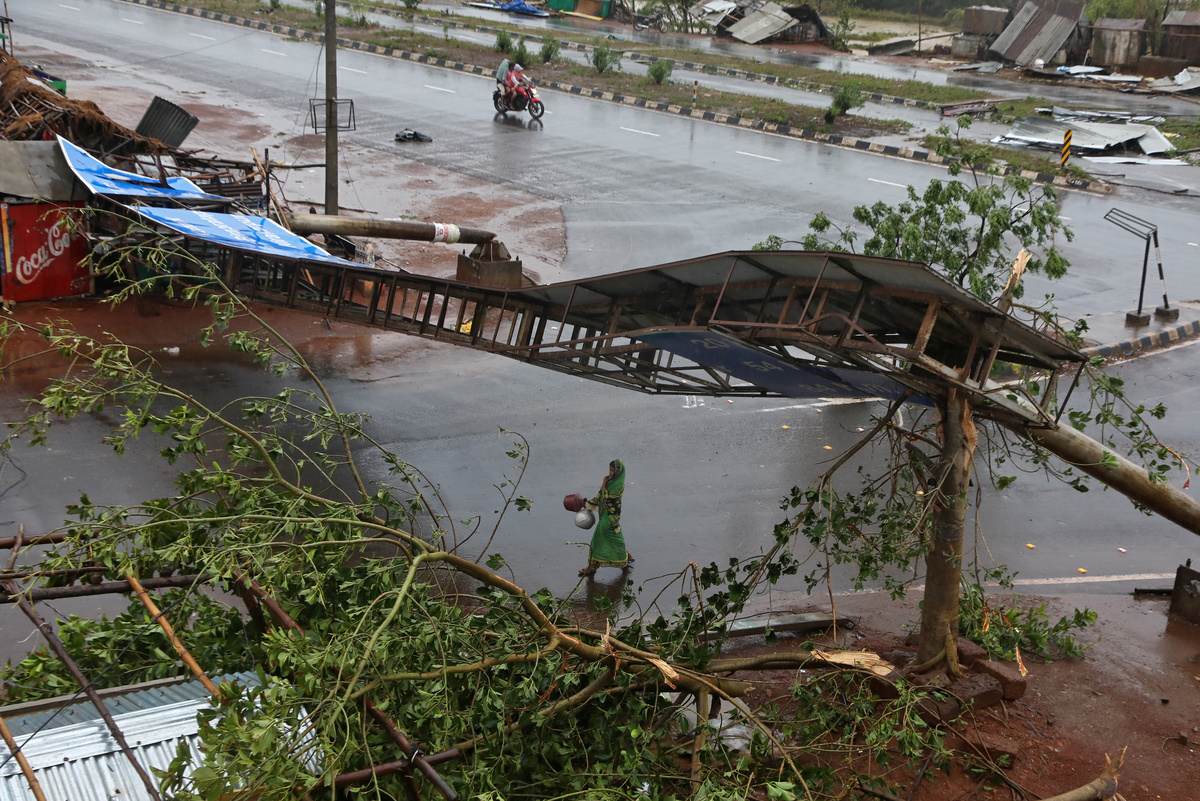
A woman carries pitchers next to uprooted trees and a fallen signboard following Cyclone Fani in Khordha district in the eastern state of Odisha, India, May 3, 2019. REUTERS/R Narendra

"PANIC SITUATION"

"It was a massive cyclone, like many others our house is flooded. Boundary walls of houses around us have collapsed, trees have been uprooted. It is a panic situation," Anuradha Mohanty, a Bhubaneswar resident, told Reuters.

People packed into shelters, spreading mats to wait out the storm, television and social media showed.
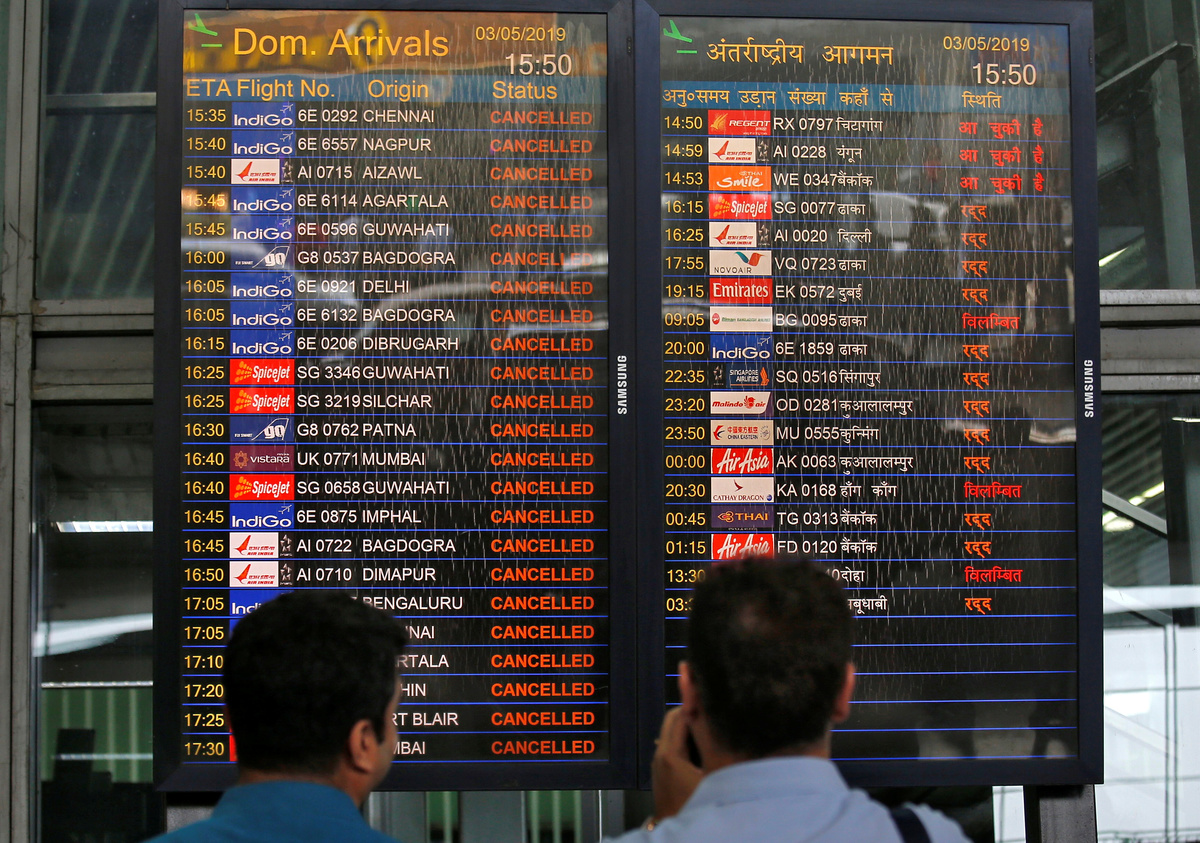
Stranded passengers look at a flight information board displaying cancelled flights following Cyclone Fani, at the Netaji Subhas Chandra Bose International Airport in Kolkata, India, May 3, 2019. REUTERS/Rupak De Chowdhuri

More than 600 pregnant women were shifted into safe locations, with nearly 500 ambulances on standby. Some 242 medical institutions had been provided with power back-up, government authorities said.

Heavy rains lashed the Bangladeshi capital Dhaka and a few coastal districts of the country. Seaports have been ordered shut, a government official said.

The storm is not expected to touch the country's southeastern district of Cox’s Bazar where nearly a million Rohingya Muslims are sheltered.
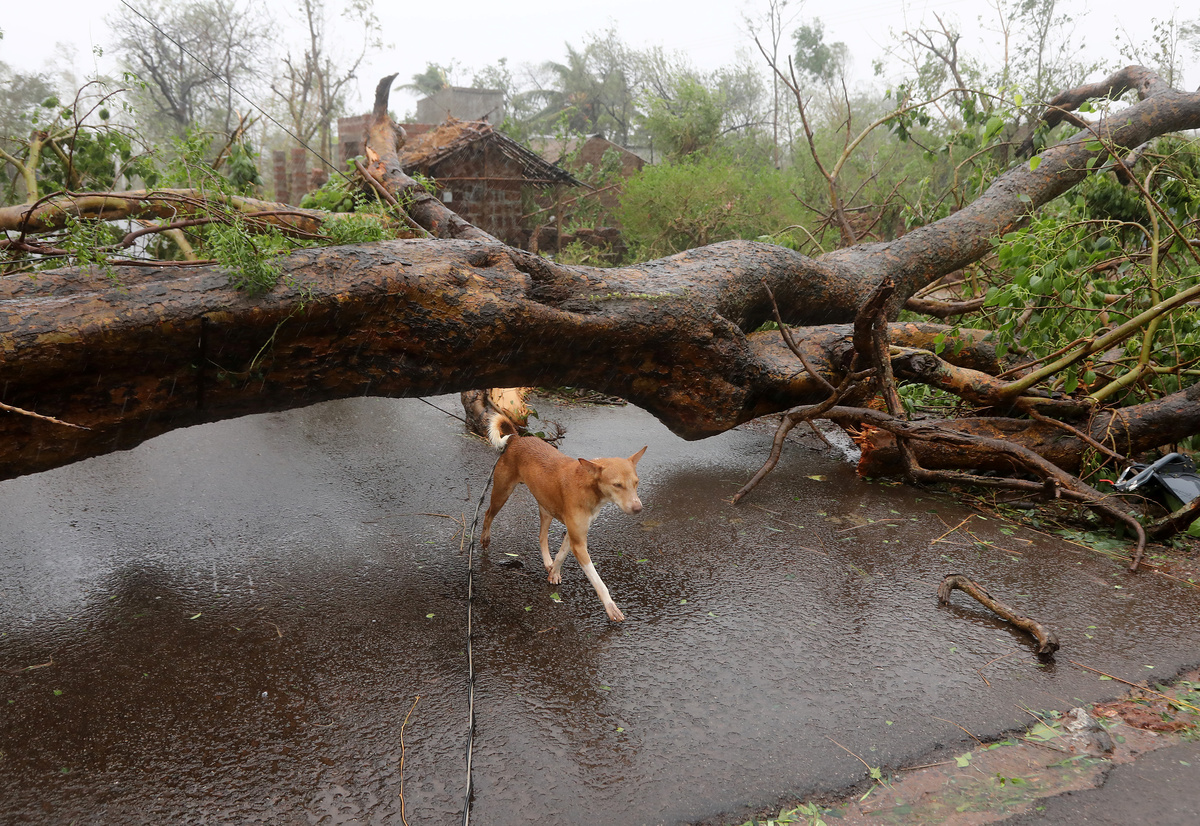
A dog walks under an uprooted tree following Cyclone Fani in Khordha district in the eastern state of Odisha, India, May 3, 2019. REUTERS/R Narendra

Plants of Indian Oil Corporation Ltd, the country’s top refiner, and power producer NTPC Ltd are operating normal in Odisha.

India's cyclone season can last from April to December, when severe storms batter coastal cities and cause widespread deaths and damage to crops and property in both India and neighboring Bangladesh.

But recent technological advances have helped meteorologists predict weather patterns more accurately and prepare.
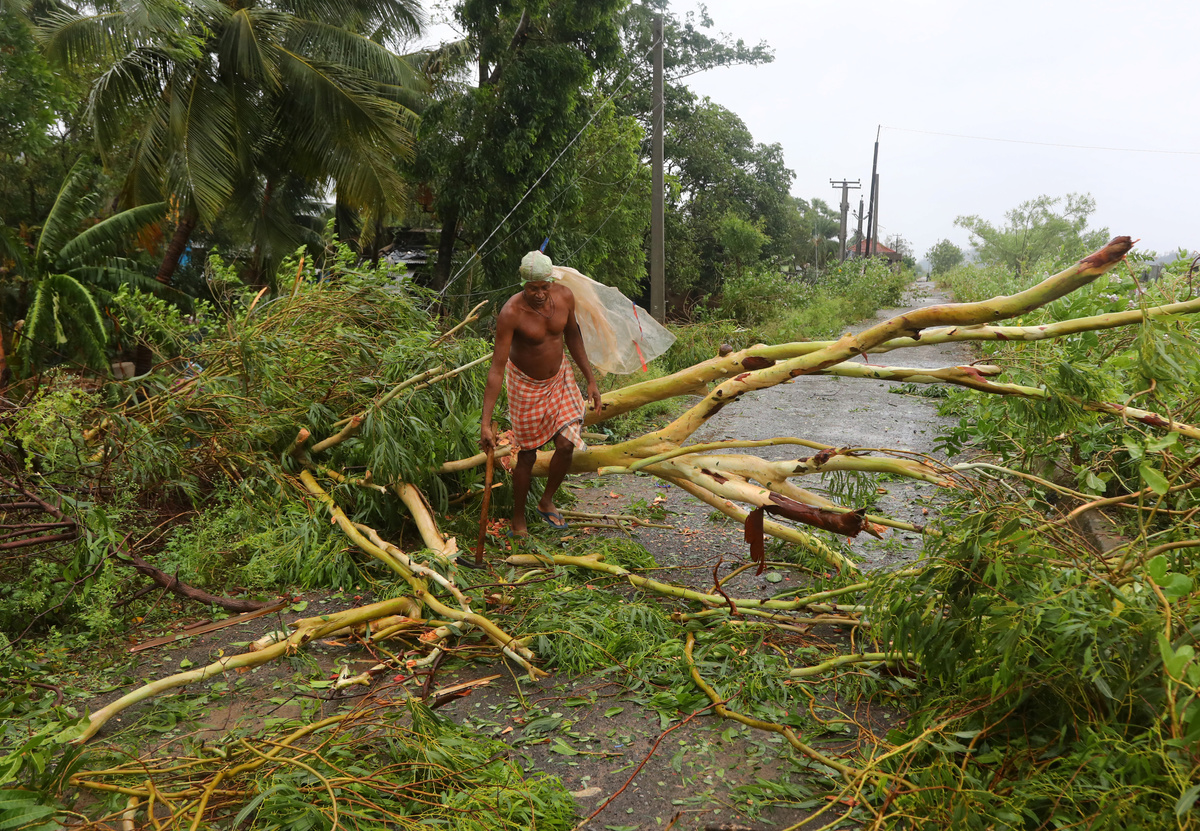
A man cuts branches of an uprooted tree following Cyclone Fani in Khordha district in the eastern state of Odisha, India, May 3, 2019. REUTERS/R Narendra

A super-cyclone battered the coast of Odisha for 30 hours in 1999, killing 10,000 people. In 2013, a mass evacuation of nearly a million people likely saved thousands of lives.

Cyclones typically quickly lose power as they move inland.

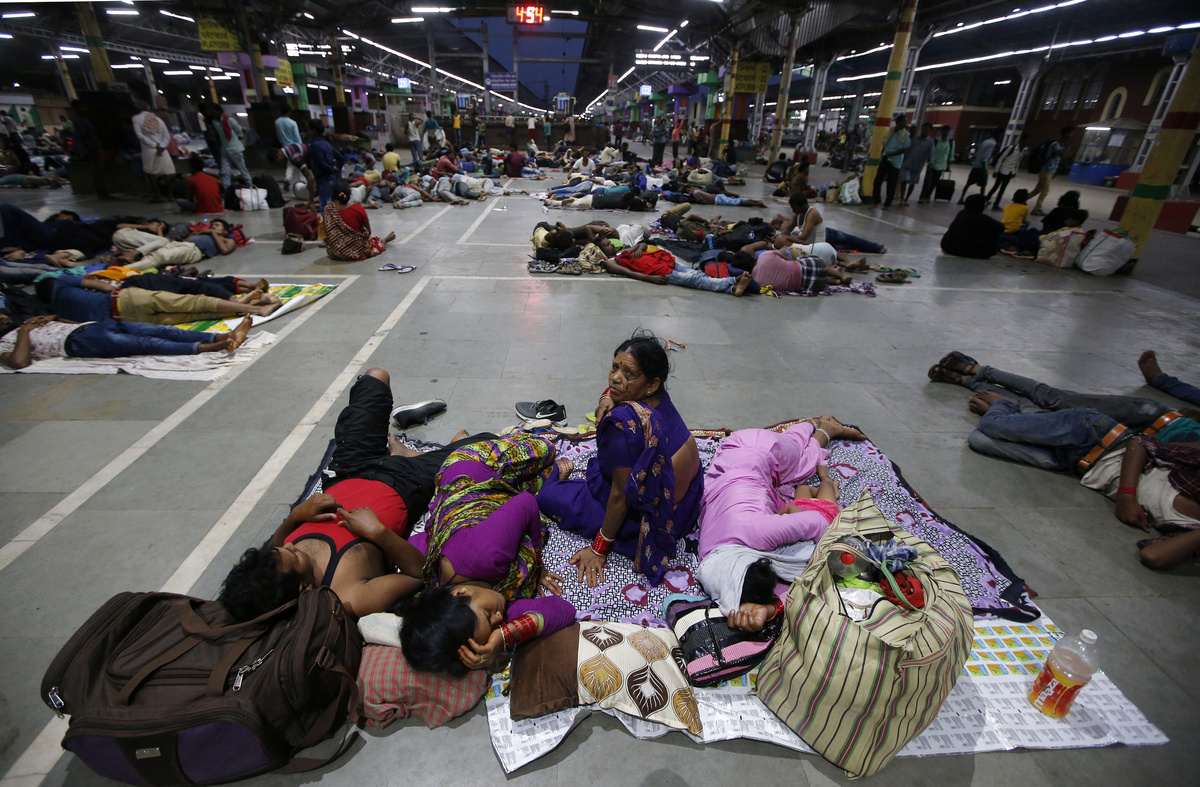
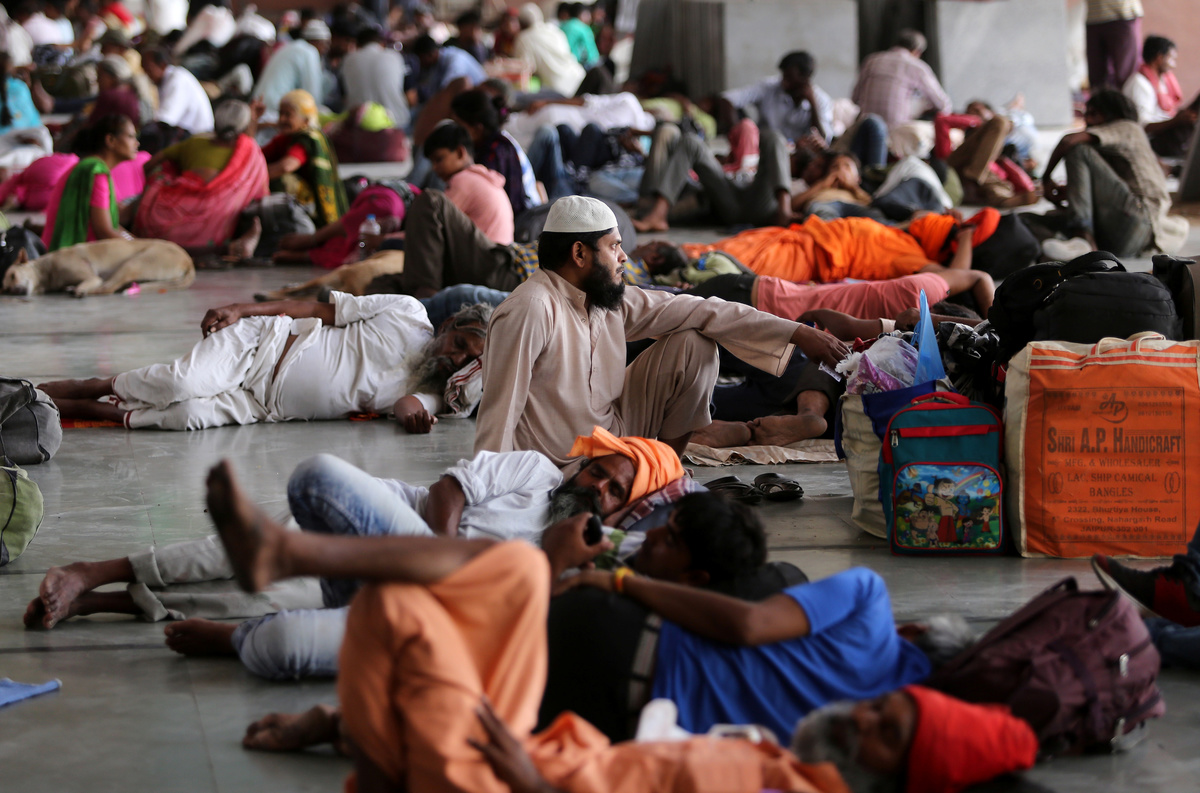
Stranded passengers rest inside a railway station after trains between Kolkata and Odisha were cancelled ahead of Cyclone Fani, in Kolkata, India, May 3, 2019. REUTERS/Rupak De Chowdhuri

(Writing by Mayank Bhardwaj and Devjyot Ghoshal; additional reporting by Serajul Quadir in DHAKA; Promit Mukherjee in MUMBAI; Editing by Simon Cameron-Moore, Nick Macfie and Alison Williams)

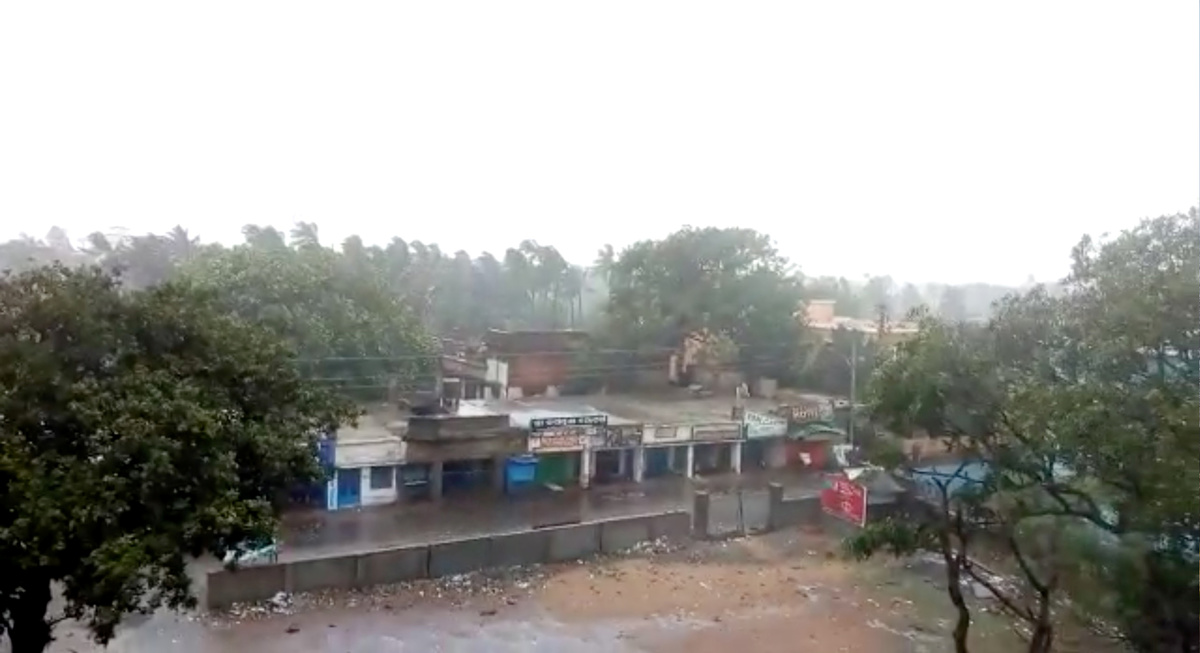
A glass door shatters during Cyclone Fani in Bhubaneswar, Odisha, India May 3, 2019 in this still image taken from a video obtained from social media. AMAN PRATAP SINGH/via REUTERS
Trees are blown by strong winds ahead of cyclone Fani's landfall in Puri, India, May 3, 2019 in this picture obtained from social media. Mandatory credit Likan Patra/via REUTERS
Trees are blown by strong winds at a neighbourhood in Puri, India, May 3, 2019 in this picture obtained from social media. Mandatory credit Lushna Patra/via REUTERS
Stranded passengers rest inside a railway station after trains between Kolkata and Odisha were cancelled ahead of Cyclone Fani, in Kolkata, India, May 3, 2019. REUTERS/Rupak De Chowdhuri
Stranded passengers wait for train services to resume at a railway station after their trains were cancelled following Cyclone Fani, in Ahmedabad, India May 3, 2019. REUTERS/Amit Dave
A window glass shatters during Cyclone Fani in Bhubaneswar, Odisha, India May 3, 2019 in this still image taken from a video obtained from social media. AMAN PRATAP SINGH/via REUTERS
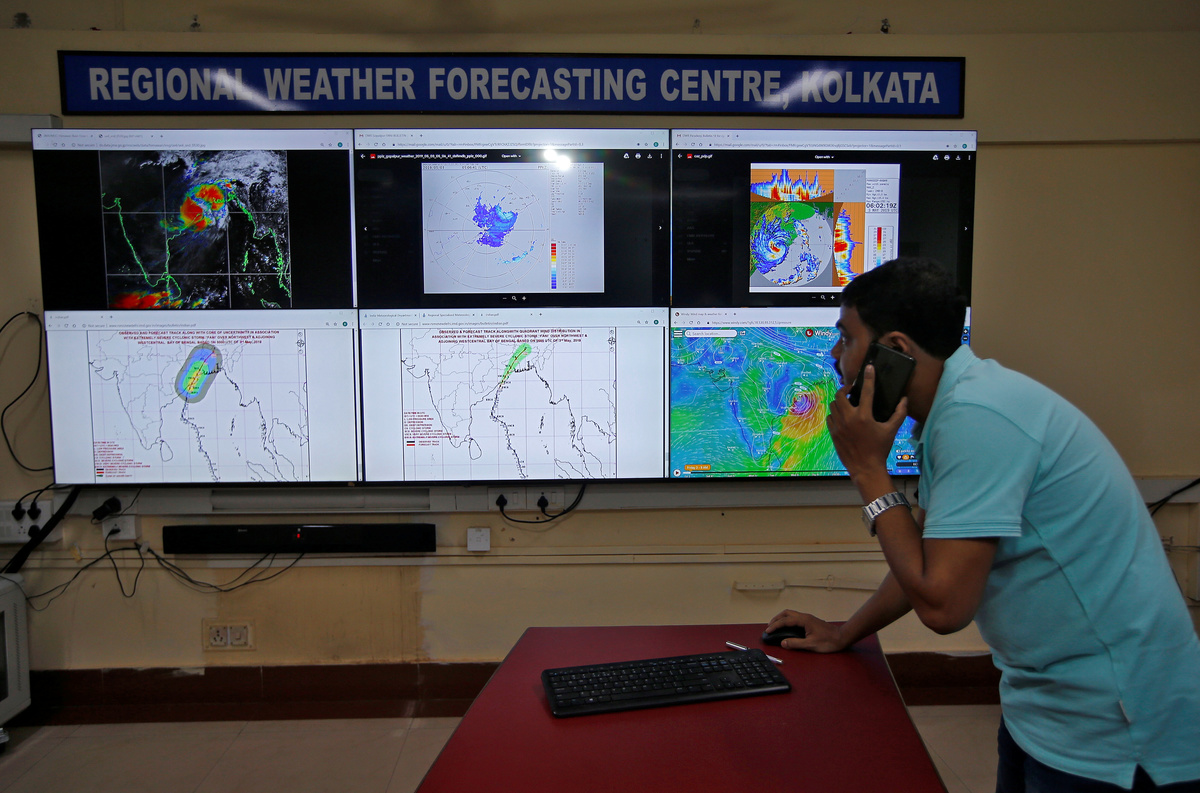
Debapriya Roy, a scientist at India Meteorological Department Earth System Science Organisation, monitors Cyclone Fani inside his office in Kolkata, India, May 3, 2019. REUTERS/Rupak De Chowdhuri
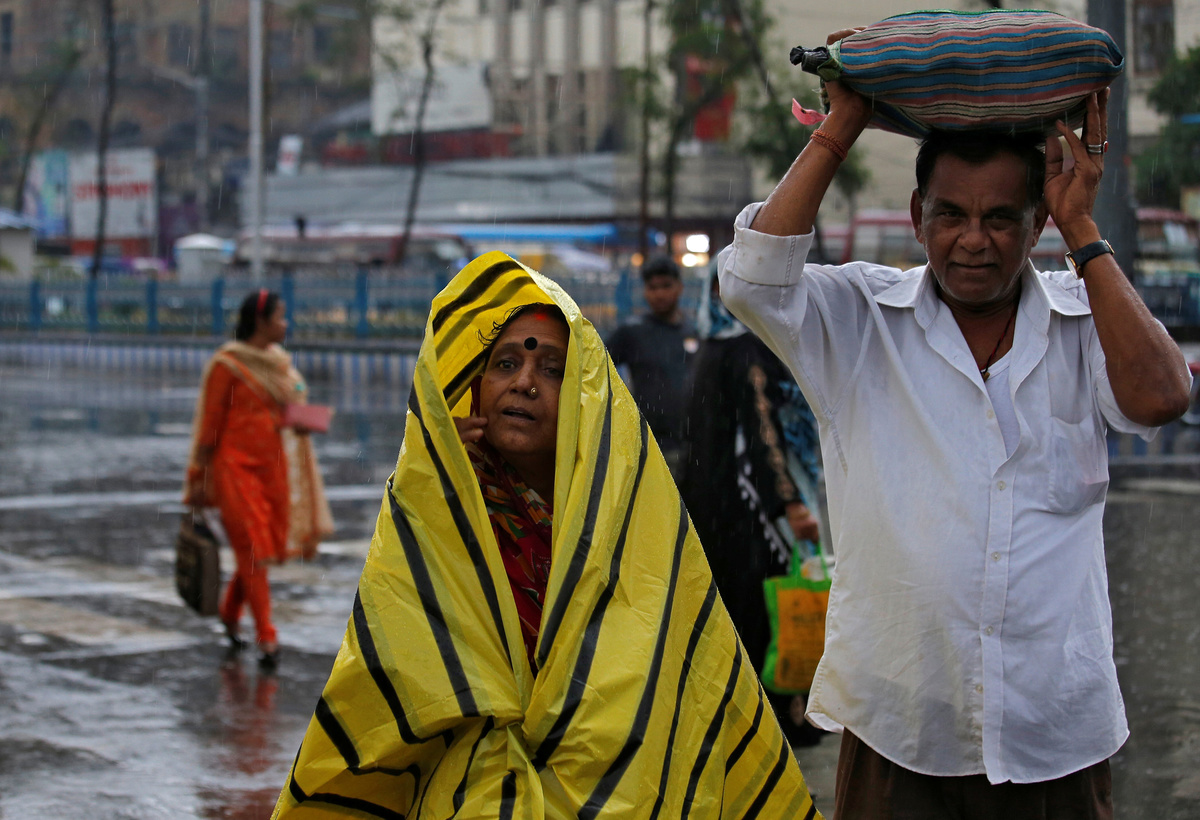
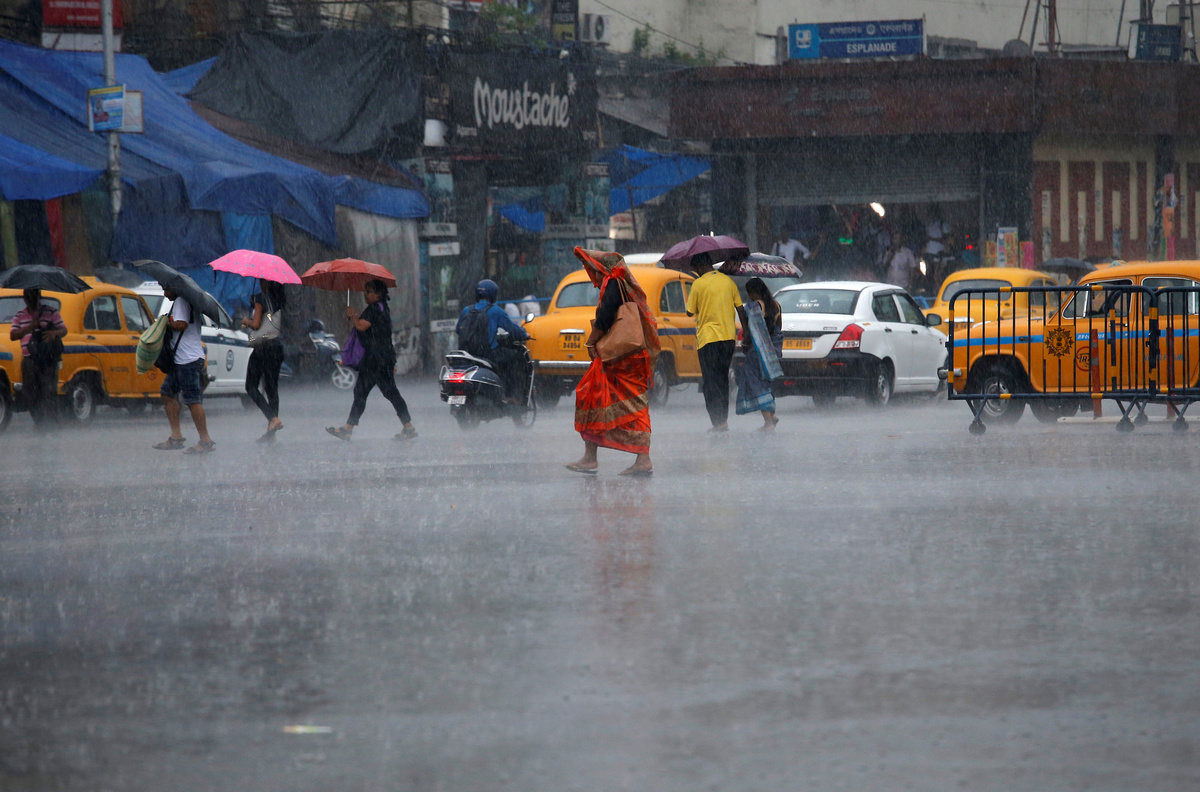
Commuters shelter from the rains as they cross a road in Kolkata, India, May 3, 2019. REUTERS/Rupak De Chowdhuri
Commuters cross a road during heavy rains in Kolkata, India, May 3, 2019. REUTERS/Rupak De Chowdhuri
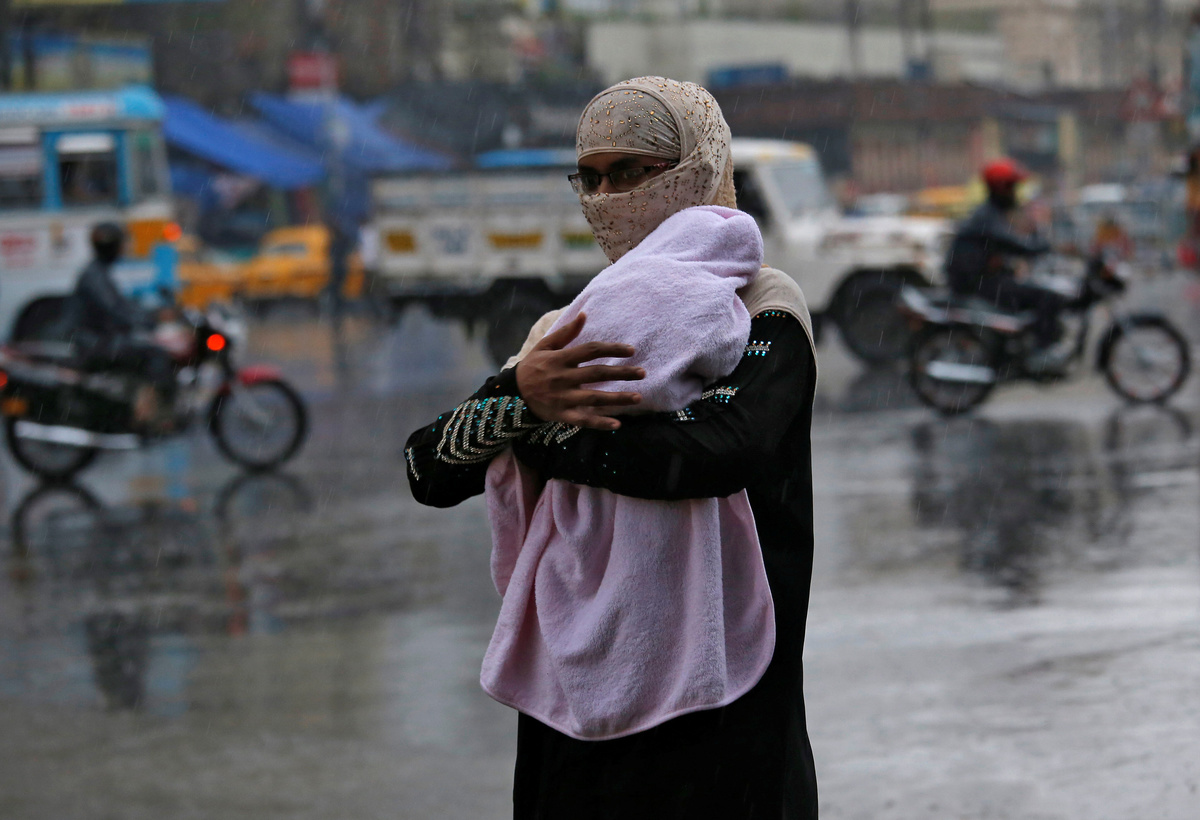
A woman covers her baby as she walks during heavy rains in Kolkata, India, May 3, 2019. REUTERS/Rupak De Chowdhuri
Sign up to read this article
Read news from 100’s of titles, curated specifically for you.
Already a member? Sign in here
Related Stories
Top stories on inkl right now
One subscription that gives you access to news from hundreds of sites
Already a member? Sign in here
Our Picks
Fourteen days free
Download the app
One app. One membership.
100+ trusted global sources.