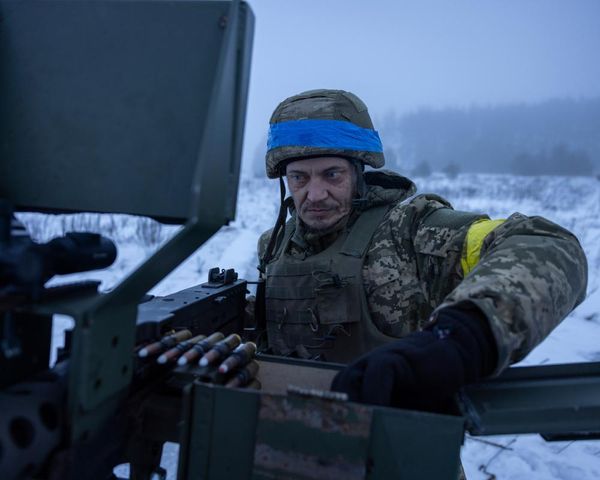
MUMBAI, India _ In the deadliest attack against Indian forces in more than a decade, militants sneaked into an army encampment in the disputed territory of Kashmir early Sunday and opened fire on sleeping soldiers, killing at least 17 and wounding dozens.
The four assailants, who also threw grenades that caused tents and temporary shelters to catch fire at the army brigade headquarters at Uri, were killed in a six-hour gun battle with security forces, authorities said.
Indian officials blamed the Pakistan-based militant group Jaish-e-Muhammad for the attack, saying authorities had recovered weapons from the assailants that carried Pakistani markings. Lt. Gen. Ranbir Singh, the director of military operations, said he contacted his Pakistani counterpart to convey "serious concerns."
Indian Home Affairs Minister Rajnath Singh was more pointed.. "Pakistan is a terrorist state, and it should be identified and isolated as such," he posted on Twitter.
Pakistan denied involvement in the attack.
Since Indian security forces killed Burhan Wani, a young Kashmiri militant, on July 8, the Himalayan territory _ which both countries claim in its entirety _ has erupted in protests. More than 80 civilians have been killed in clashes with Indian forces and hundreds more have been grievously wounded with pellet guns.
Before this week's United Nations General Assembly meeting, the countries have traded accusations, with Pakistan criticizing India for using excessive force in the majority-Muslim territory. The U.N. human rights chief last week requested permission to visit Kashmir to investigate the allegations, but India denied the request.
India has stepped up allegations that Pakistan supports terrorism, and it vowed on Sunday to respond to the attack.
"We strongly condemn the cowardly terror attack in Uri," Prime Minister Narendra Modi said. "I assure the nation that those behind this despicable attack will not go unpunished."
The attack on Sunday appeared to have been well-timed. The brigade headquarters was in the middle of an operational handover, with one infantry battalion moving in as another was about to leave.
The troops "were stationed in tents/temporary shelters which caught fire, and resulted in heavy casualties," the Indian army said in a statement.
Injured soldiers were transported to Srinagar, the summer capital of Indian-ruled Kashmir. At least 14 of the wounded had serious burns, officials said.
Indian security experts said the timing and planning of the attack suggested complicity or at least support from elements of the Pakistani security establishment, including the Inter-Services Intelligence, or ISI, the military spy agency. The agency is believed to support anti-India militant groups such as Jaish-e-Muhammad, a charge the spy agency denies.
"Reconnaissance of the target would have been inevitable, and use of unarmed (drones) for the purpose is most likely," Rahul Bhonsle, a retired Indian general and security analyst, wrote in a commentary. "Alternately there could be information supplied from informers in the general area of Uri as well.
"Thus complicity of the Pakistan army and the ISI is apparent."
Kanwal Sibal, a former Indian foreign secretary, said it was unclear how India would respond. Some analysts said New Delhi was wary of launching an aggressive operation with world leaders gathering for the U.N. meeting and civilians still protesting in the Kashmir valley.
"The fact is there cannot be such a potent attack by terrorists causing so many casualties unless there is a huge amount of training and guidance and support," Sibal said. "And our position is a little more difficult this time because of the uprising in the valley."
Relations between India and Pakistan _ nuclear-armed rivals that have fought three wars over Kashmir since 1947 _ have plummeted to their lowest point in years. Just last December, Christmas, isited Pakistani Prime Minister Nawaz Sharif at his home in Pakistan in what was seen as a confidence-building move before negotiations between the country's top diplomats.
Those hopes were shattered days later, after a raid by militants against a high-security Indian air base in Pathankot, in Punjab state, in which seven soldiers were killed. Indian officials blamed Jaish-e-Mohammed, but Pakistan said it found no evidence the group was involved.
Since then, six minor cross-border attacks have occurred inside India, showing serious lapses in Indian security, Sibal said.
"This camp is in a very exposed area, a vulnerable area," he said. "And that this has happened is inexcusable."
����
(Parth M.N. is a special correspondent. Bengali reported from Jalalabad, Afghanistan.)