The freelance workers that make up a growing chunk of Japan's workforce have been afforded few of the protections regular workers receive, but change could be on the horizon.
The government has started rolling up its sleeves as it considers ways to provide greater stability for freelance workers, who are not officially tied long-term to an individual organization such as a company. While freelancing has grabbed the spotlight as a new working style, these workers are often unfairly treated by businesses that hire them and many have been left in the lurch during the new coronavirus outbreak. What can be done to help freelancers work with peace of mind?
A government report issued in May calculated about 4.62 million people worked as freelancers in Japan, an increase of about 1.2 million from a year earlier. This rise partly resulted from more people undertaking one-off projects that could be done online. Their jobs cover a broad spectrum, ranging from website design to system engineering to literary work.
The government has embraced the growing freelance sector. "We certainly want to properly encourage its growth, as a new way of working and one of the diverse styles of work," said Yasutoshi Nishimura, minister in charge of social security reform.
Freelancers can work when and where they choose. Many freelancers do this work as a side job, and honing skills separate from their primary occupation has in some cases resulted in the launch of new businesses.
Some estimates indicate about 30% of freelancers are aged 60 or older. The government aims to increase work opportunities for elderly people, partly so they will pay tax and social insurance premiums.
-- Weak position
However, freelancers are frequently in a vulnerable position compared with the businesses that farm out work to them. Many freelancers have seen their work evaporate due to the impact of factors including government requests for businesses to voluntarily close to combat the coronavirus pandemic. Common problems freelancers encounter include having to swallow the unilateral cancelation of verbally agreed jobs, and delays in payments for work they did.
Furthermore, a freelancer is not in an official employment relationship with the company that gives them work, so they do not receive protections guaranteed by labor regulations -- such as the Labor Standards Law -- that stipulates rules covering working hours, restrictions on dismissal and a minimum wage. Freelancers also are not covered by industrial accident compensation insurance or employment insurance, and they cannot receive an employee pension.
Despite this, some freelancers receive job orders entirely from a certain company and work under their control and supervision, essentially doing the same work as the company's employees. There has been a steady stream of companies using workers who are freelance in name only as a legal loophole to avoid various regulations and paying insurance premiums.
"Many freelance workers are in a desperate spot," said Koichi Kamata, professor emeritus at Toyo University. "Their income is low and unstable, and they receive no compensation if they get injured or sick because of their job."
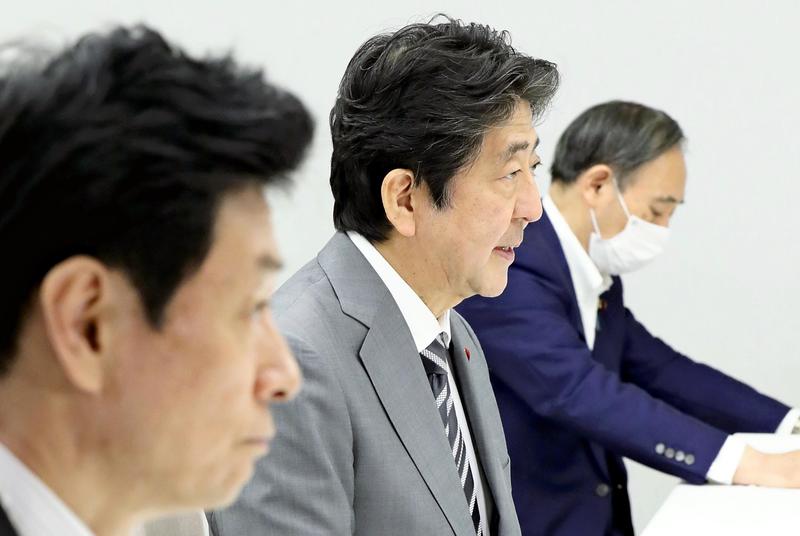
In May, the planning meeting on a social security system oriented to all generations, a government panel headed by Prime Minister Shinzo Abe, heard a number of expert members call for steps to protect freelance workers.
-- Guidelines in pipeline
In its second interim report, which was released in June, the panel drew up a plan to compile guidelines on freelancer protections this fiscal year.
If a business doing work with a freelancer without a contract unilaterally changes the conditions of their deal, it is considered unjustly using a superior bargaining position -- an act prohibited by the Antimonopoly Law -- and could result in an administrative penalty being handed down. The guidelines will clearly spell out this point. This aims to prevent the unfair treatment of freelancers, especially by small and midsize businesses unaware of the legal rules.
Furthermore, the Labor Standards Law and other laws could come into play if a freelancer is considered to effectively be employed because they are made to work under the same instructions as employees at a company. The guidelines will carefully spell out the rules so freelancers cannot be exploited as a method to illegally skirt around regulations.
The Health, Labor and Welfare Ministry, the Small and Medium Enterprise Agency and the Japan Fair Trade Commission are among the bodies that will jointly compile the guidelines. The entire government is taking a united approach because previous efforts involving individual ministries and agencies working independently failed to come up with sufficient protections for freelancers.
A special system allows independent taxi drivers and some other self-employed workers to voluntarily sign up for industrial accident compensation insurance. The interim report contained a plan to also allow freelancers to take out this insurance.
Read more from The Japan News at https://japannews.yomiuri.co.jp/