A special provision that allows graduates of vocational schools for certified nursing care who have not passed the national examination to obtain tentative certification will be extended for another five years.
The planned extension was a response from the Health, Labor and Welfare Ministry to concerns that discontinuing the provision could worsen the labor shortage in the nursing care industry, even as the number of foreign students in such vocational schools continues to rapidly increase.
Conversely, there has been deep-rooted voices of opposition to the special measure from the perspective of how to ensure the quality of nursing care services.
In line with extending the special provision, it is essential to provide a wide range of support for the foreign students, such as having Japanese language programs.
A law revision in 2016 made it mandatory for graduates from such vocational schools designated by the ministry to pass the national examination to be certified.
Prior to the revision, graduates were able to obtain certification without taking the exam. Therefore, as a bridge-gap measure, the special provision was introduced to allow graduates to obtain tentative certification on condition that they work in nursing care field.
The special measure was to expire at the end of fiscal 2021, but the ministry plans to extend it until the end of fiscal 2026. It is partly because of the rapid increase in foreign students.
Starting in 2017, "nursing care" was added as a category of residential visa status of foreign nationals. By obtaining nursing care certification, it allows them to permanently work in Japan.
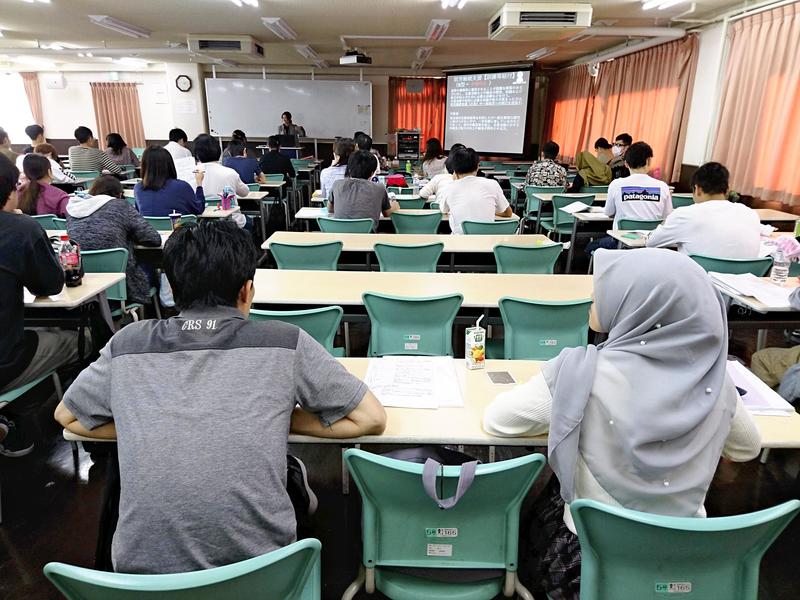
This change led to an increase in foreign students aiming to obtain the certification. In fiscal 2019, the number of foreign students enrolled in the vocational schools exceeded 2,000, a record high and which accounted for about 30% of students in total.
The main issue is that the percentage of foreign students passing the national exam has been low.
While about 90% of Japanese students pass the exam, less than 30% of foreign students are able to, partly because of the disadvantage of having to take the exam in Japanese.
If foreign students, who have a desire to work in the nursing care industry and learned the necessary skills, return home upon graduating because they fail the exam, it results in a lost opportunity to secure human resources for the nursing care industry.
In discussions about the issue, a supporter of the extension said, "We want foreign students to stay in the nursing care workplaces that they worked hard to join."
But there is also a strong opposition. "If certification can be obtained without passing the exam, the service quality can not be level."
Junya Ishimoto, head of the Japan Association of Certified Care Workers, has stressed making passing the national exam mandatory, and is critical of extending the special provision.
"It will lessen the value of certification and the credibility of the exam," he said.
An estimate by the welfare ministry showed that in 2025, when everyone in the "dankai" generation -- Japan's postwar baby boomers -- will be 75 or older, there will be a shortage of about 340,000 workers in the nursing care sector.
Expectations on foreign students are high. Yutaka Sawada, head of the Japan Association of Training Institutions for Certified Care Workers, said, "Educational support should be expanded so that foreign students can pass the exam."
However, to resolve the labor shortage in the nursing care industry, discussions on how to improve working conditions for care workers can not be avoided.
Unless the industry can dispel the image that the standard salary is low considering the difficulty of the job, more Japanese will shun this type of work, and Japan may lag behind other countries in luring foreign workers for this industry.
Read more from The Japan News at https://japannews.yomiuri.co.jp/