SEATTLE _ When Capt. Ken Penwell's son was looking for a job, Penwell offered to get him work as a deckhand. Penwell captains hopper dredges for Seattle's Manson Construction, sucking up dirt and clay from river beds.
But Kyle Penwell didn't want to go into his father's career.
"'Dad, I don't want to be gone that long from friends and family like you were,'" the father recalled his son saying.
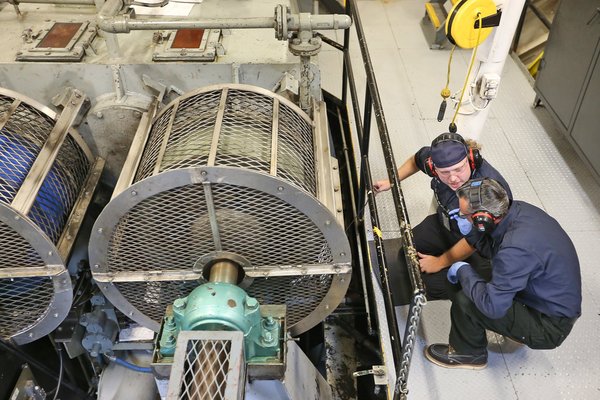
Ken Penwell has been in the maritime industry 37 years, and in his first job he was gone for five months at a time. He texts and calls his family as often as possible, but the job has taken a toll. Penwell has been separated from his wife for 10 years.
Penwell is 60 and hoping to retire soon. He's not the only one: The marine workforce in Washington state _ which includes sailors, engineers, captains and other workers on everything from tugboats to shipping vessels _ is headed for a mass retirement. Close to a third of the state's almost 6,000 water-transportation workers alone are older than 55, according to 2016 data from the Census Bureau.
"We're just about at a cliff," said Joshua Berger, director of economic development for the maritime sector of the Washington state Department of Commerce. He says this issue is the maritime sector's biggest concern right now.
For years, young people haven't been entering the maritime trades in numbers sufficient to fill holes left by old workers, Berger and other experts say. Seamen, captains, pilots, engineers, shipbuilders, dock workers, and even galley cooks, among others, are getting older and older with few qualified people to take their place.
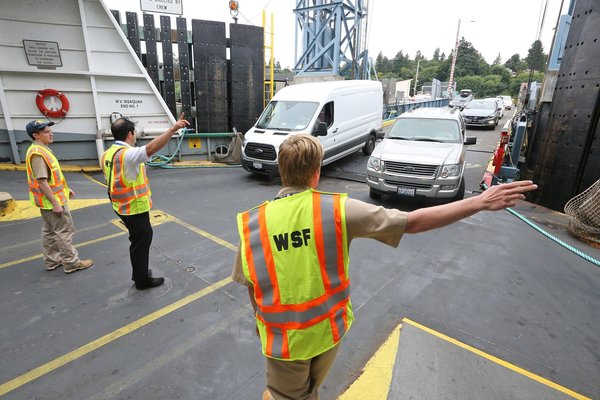
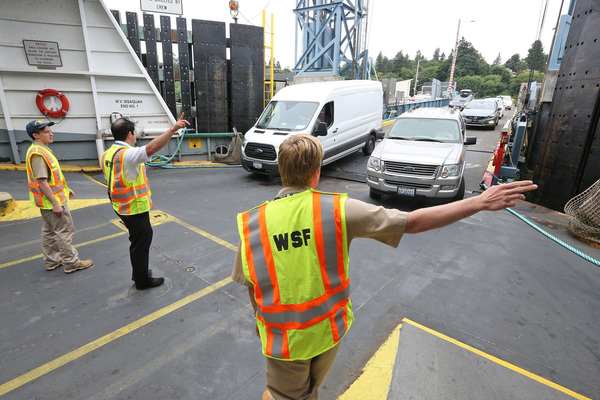
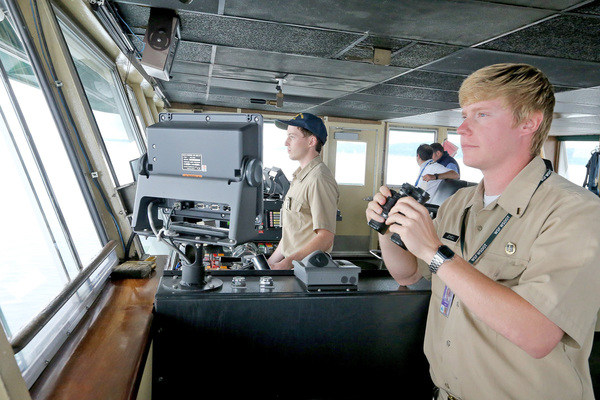
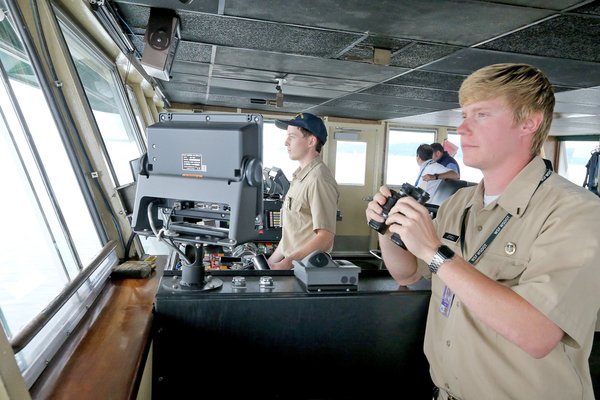
Some sectors are in crisis mode: This problem could keep Washington State Ferries from sailing, according to ferries spokesman Ian Sterling. Approximately 40 percent of the ferry system's vessel employees are eligible for retirement in the next 5 to 10 years, and around 88 percent of the ferries' captains.
"Frankly, we are already too late to address our problem," Sterling said.
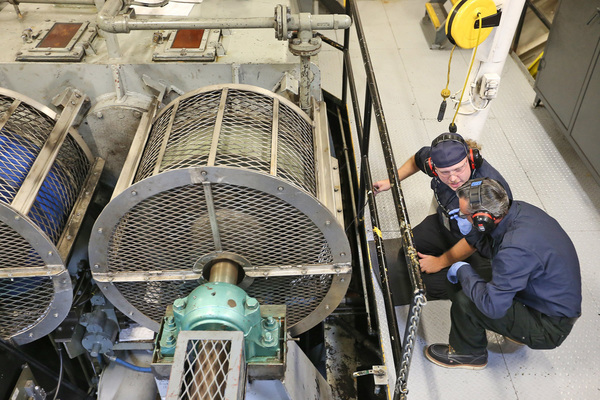
Maritime workers help support a $17 billion industry in Washington. The average maritime laborer in Washington made almost $67,000 a year in May 2016, according to the Bureau of Labor Statistics; a captain, mate or pilot made almost $84,000.
So why aren't young people going down to the docks to get jobs like their parents did? In answers to The Seattle Times' callout to readers, mariners gave a range of reasons: schools steering students toward college and away from blue-collar labor, the training and tests hopeful mariners have to complete, the tough nature of the work, and notions that the industry is "old and dirty."






.jpg?w=600)