The Tokyo metropolitan government has decided to offer a subsidy to bars and other establishments that voluntarily close under the state of emergency declared to combat the spread of the new coronavirus, but three similarly affected neighboring prefectures have so far been reluctant to provide such assistance.
Such businesses in Tokyo, Kanagawa, Chiba and Saitama prefectures have been struggling due to the sharp drop in customers. However, Tokyo businesses will receive so-called cooperation money while those in the three other prefectures, which are also covered by Tuesday's emergency declaration, could go without, sparking cries of "unfair" treatment from some districts packed with bars and restaurants.
The 29-year-old manager of a bar near JR Kawasaki Station in Kawasaki, which is separated from Tokyo by the Tamagawa river, is frustrated that financial assistance might not be available.
"I think bars and restaurants everywhere are struggling, so I don't understand why they are being handled differently just because of their location," the manager said Wednesday evening.
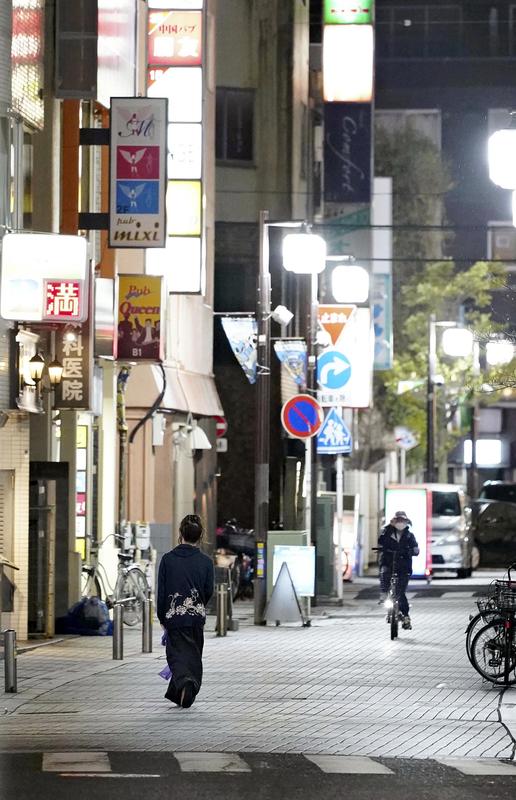
Customer numbers have evaporated since late March, when local authorities urged residents to refrain from nonessential outings. On occasion, the bar has not had a single customer all day, and it is getting harder to keep the company's head above water. A significant number of nearby establishments have temporarily closed.
"I really want to shut down for a while to help prevent the spread of coronavirus, but I would become unable to pay my rent and other expenses," the manager said. "My only option is to stay open."
Similar discontent is brewing in Ichikawa, Chiba Prefecture, which faces Tokyo across a river. A man who runs a bar near JR Ichikawa Station told The Yomiuri Shimbun: "It's so tough right now. Even if I stay partly open, I don't know whether customers will return during this coming month, so ideally I'd like to close. I want the prefectural government to consider financial relief like the Tokyo government is."
On March 25, Tokyo Gov. Yuriko Koike called on residents in the metropolitan area to refrain from leaving their homes. Kanagawa, Chiba and Saitama prefectures soon did the same for their residents. On March 26, the governors of Tokyo and four prefectures held a videoconference and agreed to urge residents to avoid nonessential outings.
Despite these steps, coronavirus infections continued to spread in Tokyo and other areas. On Tuesday, the government issued a state of emergency for seven prefectures. This caused customer numbers at restaurants and other establishments to drop further, leaving many "open but so quiet they might as well be closed."
The approaches taken by prefectural governments in the metropolitan area diverge over the provision of support to financially strapped business operators. While the prefectural governments all accept that some compensation will be necessary when businesses are asked to stay closed, only the Tokyo government has decided to provide "cooperation money" to small shops and other establishments that suspend operations or shorten their business hours to prevent the spread of coronavirus.
"I could end up spreading the virus myself, and my sales are dire at the moment," said Sunao Kumekawa, 52, who manages a shot bar near JR Koiwa Station in Edogawa Ward, Tokyo. "If the metropolitan government will provide money after requesting businesses close, I'd like to receive it."
In contrast to the Tokyo government's approach, the Kanagawa, Chiba and Saitama governments -- which have considerably smaller budgets -- have all adopted a more cautious stance on providing such assistance to businesses that keep their doors closed.
"We don't have any money to spare," a Kanagawa government official said, and a Chiba government representative said, "Specifying certain business types would heighten the sense of inequality." A Saitama government official added, "There aren't many previous examples of compensating for losses incurred by companies that stay closed."
The three prefectures apparently will consider what support they can offer by closely watching the impact of asking residents to stay home as much as possible.
The manager of an izakaya Japanese-style bar near JR Kawaguchi Station in Kawaguchi, Saitama Prefecture, said: "The despair of throwing away leftover cooking and food we had stocked leaves me speechless. I want the central government to make sure every prefectural government offers the same treatment."
Read more from The Japan News at https://japannews.yomiuri.co.jp/