Even for a Saturday in the South Pacific, this was a sleepy morning.
On American Samoa's main island of Tutuila and its neighbor, Ofu, villages were still, beaches empty.
On the west coast of nearby Ta'u, a battered little fishing boat sidled up to the wharf, and a pale stranger stepped off, looking half-queasy and half-euphoric, a bagged octopus in his left hand.
That was me on Day 6 at America's most far-flung national park.
National Park of American Samoa, 2,600 miles southwest of Hawaii, is spread over parts of Tutuila, Ta'u and Ofu. It attracted 13,892 visitors last year, about what Yosemite gets in a summer day.
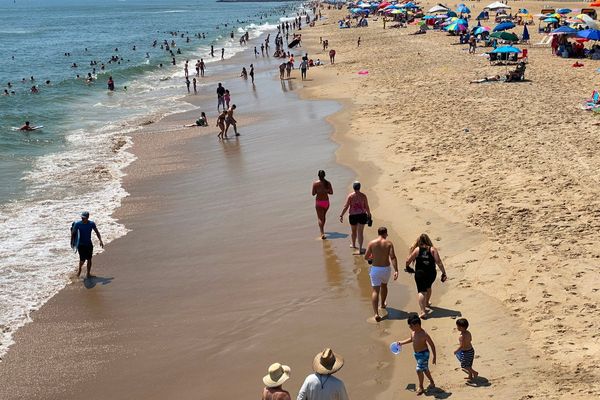
Probably fewer than 300 of them found their way to the park's greatest asset, a beach on Ofu with creamy sands, volcanic boulders, serrated mountain ridges and turquoise shallows _ but I'm getting ahead of myself.
This park gets so few visitors for many reasons, including the 11 hours of flying time from California, the exasperating transportation links among the islands, the territory's scant infrastructure and its mosquitoes, some of which transmit dengue fever and Zika virus.
Although the park does have rangers, trails and a few miles of road, there are no campgrounds or lodgings, no snack bar, no shuttle buses, no entrance gate, no admission fee _ few of the conventions that Americans imagine when they hear the words "national park."
"It's probably the most remote culture you can visit that's still in the U.S.," park superintendent Scott Burch told me on my visit in October 2015. "It's the only paleotropical rain forest in the U.S.
"My first couple of hikes around here _ it was just a wonderland of things I'd never seen."
I found Burch at the park service's modest visitor center in downtown Pago Pago, the center of commerce on Tutuila, population about 55,000.
Once he briefed me about the park's 9,000 or so acres of rain forest and about 4,000 acres of coral reefs, he moved on to the flying foxes (a.k.a. fruit bats) that steal bananas and papayas from his patio; the crown-of-thorns starfish that gobble coral and wear a fearsome exoskeleton of venomous spikes; and the giant coconut crab, which climbs trees, weighs as much as 9 pounds, looks like "the world's largest bug" and is prized as a delicacy.
I was eager to meet them all, especially after it became clear that Pago Pago (pronounced Pango Pango) isn't nearly as pretty as its name.
Although Tutuila gets regular flights from Honolulu and Apia (the capital of independent Samoa, its own country about 75 miles northwest) and one or two cruise ships a month, tourism peaked decades ago.
As you scan the roadside while you rumble along the main drag in a bus, it's tough to know which buildings were scarred by the tsunami of 2009 and which have been fading for decades.
The churches stay busy, and the rain forest is full of breadfruit, taro, bananas, coconuts, mangoes and papayas so nobody goes hungry. But private-sector jobs are rare, and incomes are about $24,000 per household, less than half the U.S. average.
There are fuel shortages, water-quality questions, internet outages, many stray dogs and few hotels or restaurants.
The scent of tuna hangs in the air. (Or it did. In mid-December, one of the island's two tuna-processing plants closed indefinitely.)
But once you're on country roads, hearing the flying foxes shriek in the treetops, things get better.
Outside the park at Tisa's Barefoot Bar on the southern coast of Tutuila, proprietors Tisa Fa'amuli and Candyman joined me on the deck for a drink and snack while stray coconuts tumbled in the tide.
Inside the park on the island's northern coast, ranger Pua Tuaua took me hiking on the Lower Sauma Ridge Trail, grabbed a coconut, split it and reminded me that plants and animals aren't the only reason there's a national park on these islands: Fa'asamoa _ the Samoan way _ may be the oldest culture in Polynesia.
Despite the many changes brought by English missionaries in the 19th century and U.S. government in the 20th, fa'asamoa remains remarkably strong.
It's why village chiefs still wield enormous power, why village men stage annual longboat races, why global brand names are rare, why islanders maintain family graves in their front yards, why 90 percent of families speak Samoan in their homes.
And Samoan discipline and physical toughness might be why the islands send so many recruits to the U.S. Army and the NFL.
The Samoan way has definitely made life more interesting for the park service. Because Samoan custom forbids real estate sales to outsiders, the only way the NPS could set up shop here in 1993, five years after Congress authorized creation of the park, was to negotiate 50-year leases with several local villages.
The deal gives villagers $600,000 a year in revenue, which makes this the only full-fledged national park that's basically a rental. In all, the NPS spends about $2 million a year to run the park.