Greater Manchester’s hospitals have almost run out of intensive care beds at points over the last couple of weeks, the region’s health lead has revealed, as the system has hit its peak of the third wave.
Sir Richard Leese said that at times, critical care occupancy had come ‘very close to the absolute number of beds we’ve currently got available’.
In the last week there has been a dip in admissions, however, and the third wave is now believed to have peaked within the NHS here - but severe pressures are nonetheless expected to remain for three or four weeks to come.
In the week to Monday, there were 288 new Covid admissions and 485 new inpatient diagnoses of the virus, 23pc fewer than the week earlier.
The number of Covid patients in critical care beds was slightly higher on Tuesday than a week earlier, however, up from 165 to 170.
Sir Richard said the ICU position was ‘stable’ overall, but that in the last few weeks capacity had been very tight indeed.

“If you take the total of ICU beds occupied - so Covid and non-Covid - it did reach a peak of 281, which is very close to the absolute number of beds we’ve currently got available,” he said.
‘Surge’ capacity - the total number of intensive care beds available when extra are stood up - has previously been quoted as 298 for Greater Manchester.
“Something I’ve said before - you can’t necessarily occupy all the beds because of the split between Covid wards and non-Covid beds,” he added.
“And that applies to all beds, whether they’re critical care or not.
“But we were getting pretty close to the limit. We’re now on a slightly downward trajectory. The number of people being admitted to ICU is slightly down.”
Nevertheless overall capacity is still ‘in the higher 80s in terms of percentages of beds occupied’, he said.

“We have had hospitals that have needed assistance in managing the number of intensive care patients over the last couple of weeks.”
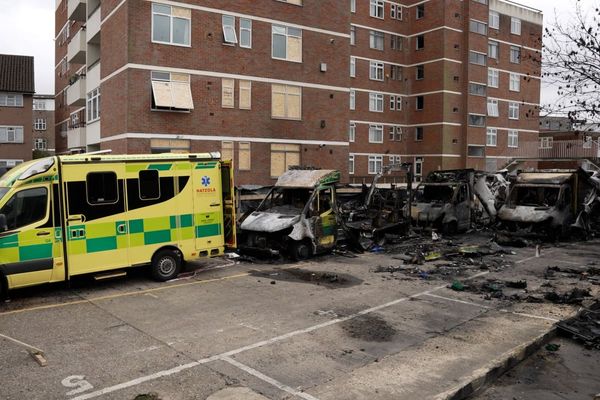
The NHS has been under immense pressure here since the beginning of the year, a fact borne out by the North West Ambulance Service’s decision to request military help in the past week.
Sir Richard said Greater Manchester’s forecasts - which have been ‘remarkably accurate so far’ - suggest the current level of strain is expected for another three to four weeks ‘at least’.
“We’ve reached a peak as far as hospitals are concerned, but it’s not a peak where you go over the top and come down,” he said.
“It’s a peak where you reach the top and you’re going to stay there for a period of time.”
Hospital chiefs are hoping, however, that over time a smaller proportion of patients in intensive care beds will be those with Covid ‘and the number of really difficult decisions about how we deal with other urgent care will become less intense over that period of time’.

Health chiefs are also keeping a close eye on infection rates among the over-60s, which are most likely to translate into hospital admissions.
Infection rates here are still falling, but not as fast as the national average.
Professor Kate Ardern, Wigan’s director of public health and a lead figure in the region’s contact tracing system, said Greater Manchester was following a similar pattern to that earlier in the pandemic.
In some areas, boroughs had been dealing with workplace outbreaks, she said, but ‘in others what we’re starting to see is some of those structural inequalities that we saw post the first national lockdown starting to show’.
“I guess that links to the fact that our rates in Greater Manchester are falling at a slower rates than the national rates are falling. You have to remember places like London and the South East in this third epidemic wave have had a sort of sudden rise, a sudden huge spike, but then fallen very rapidly.
“But that was on the basis of having very low existing prevalence. In the north west - and particularly in Greater Manchester - what we’ve seen is that third spike happen on top of existing high prevalence.
“And that’s why we’re coming down at a much much slower rate, because we had very high levels to start off with.”