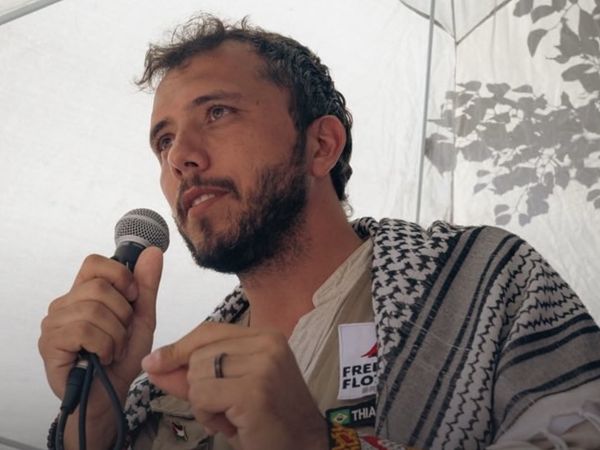
NEW DELHI _ A jubilant Keshav Suri burst out of India's Supreme Court building just after noon Thursday and exclaimed to his French husband: "Marry me again!"
Suri was slightly ahead of himself _ India still doesn't allow same-sex marriage. But the 33-year-old hotelier's excitement was understandable on a day when the country's Supreme Court struck down a colonial-era ban on gay sex, a historic victory for civil rights in the world's largest democracy.
A five-judge panel voted unanimously to overturn Section 377 of the Indian Penal Code, setting off cheers among dozens gathered outside the courthouse and many more across the country who had struggled for decades to end one of the most hated relics of India's colonial past.
In a verdict that invoked ideals of equality, morality, individual choice and even the very nature of love, a five-judge panel delivered a thundering denunciation of the 157-year-old statute introduced by British rulers at the peak of priggish Victorian-era values _ and upheld by the same Indian Supreme Court just five years ago.
The law criminalized intercourse "against the order of nature," which was taken to mean same-sex relations even between consenting adults, and imposed a punishment of up to 10 years in prison. Prosecutions were rare, but many gay and transgender Indians said the law was sometimes used as a tool of intimidation and extortion.
The court's 500-page ruling signaled how far India has come in a short time to become more accepting of its gay and transgender citizens.
"Section 377 is irrational, arbitrary and incomprehensible," Chief Justice Dipak Misra said, adding that India's LGBTQ community possesses the "same equality as other citizens."
Justice Dhananjaya Y. Chandrachud wrote: "What makes life meaningful is love. The right that makes us human is the right to love. To criminalize the expression of that right is profoundly cruel and inhumane."
The decision only decriminalized sexual acts; India still does not permit same-sex couples to marry, adopt or inherit property. Suri, who married his longtime partner last year in Paris and was one of several citizens who filed suit challenging the law, told reporters outside the courthouse that the fight would continue _ but that this was a victory to celebrate.
"I'm illegal no more," he said. "I'm in the shadows no more. I'm in the darkness no more."
The sweeping nature of the verdict appeared to surprise even the law's most ardent opponents, some of whom had wondered whether the judges would strike it down on narrow privacy grounds without affirming the broader rights of LGBTQ Indians.
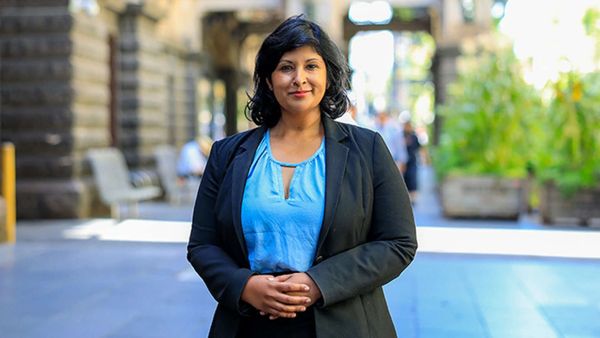
"This is not a narrow, do-what-you-want-in-your-bedroom type of decision," said Menaka Guruswamy, a lawyer for the plaintiffs. "This is so much wider than that, and the fact that many of the justices linked this to the idea of freedom and consent, that it was unanimous, that all of them looked to India as a constitutional democracy ... it's huge."
Similar laws remain in place in some form in dozens of former British colonies such as Malaysia and Singapore, and activists hoped India's ruling could spur changes elsewhere.
The South Asia director for Human Rights Watch, Meenakshi Ganguly, tweeted that India's Supreme Court had "taken a momentous step that will resonate around the world."
Activists have battled to overturn Section 377 in the courts for decades. In 2009, a court in Delhi overturned the law, only to have the Supreme Court reinstate it in a controversial 2013 decision, arguing that the legislature should decide the law's fate.
In February 2016, the high court said it would reexamine its decision, reflecting growing acceptance of LGBTQ Indians.
Top officials from the conservative Bharatiya Janata Party government also signaled support for decriminalizing homosexuality, which some said had marred India's standing in the international community.
This year, the Indian government said it would leave the matter to the Supreme Court.
But in a nod to its hard-line Hindu supporters _ some of whom regard homosexuality as unnatural _ the government said it reserved the right to comment on issues that could come before the court later, including gay marriage and adoption by same-sex couples.
Guruswamy, the lawyer, said the wide-ranging nature of the verdict raised hopes that it could be used to further expand LGBTQ rights.
"The fact that is located so heavily in the larger question of non-discrimination makes me very optimistic about the future," she said.