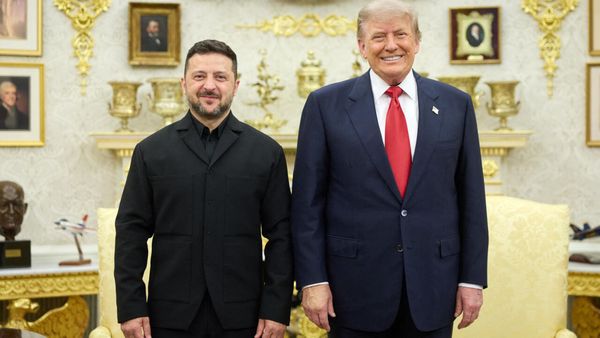

The decision came as a surprise even to senior US defence officials, many of whom were unaware of the final move until Trump made the call. According to reports, Pentagon officials and US forces stationed in the Middle East had been actively preparing for large-scale strikes on Iranian infrastructure in the hours leading up to the announcement. Uncertainty loomed within the administration, with officials unsure of the president’s final stance.
The situation escalated further when Pakistani Prime Minister Shehbaz Sharif publicly shared potential ceasefire terms on social media, urging all sides to accept the proposal. This triggered a wave of urgent communications directed at Trump, influencing the final push toward agreement.
Behind the scenes, intense and often chaotic diplomatic efforts were underway. Reports suggest that even close aides and hawkish allies had expected Trump to reject the deal, given the mounting pressure for military action. Meanwhile, US allies in the region were bracing for a possible Iranian retaliation, and civilians in Iran had already begun fleeing their homes in anticipation of imminent airstrikes.
In a significant development, Iran’s Supreme Leader Ayatollah Ali Khamenei instructed negotiators—just hours before the deadline—to pursue a potential agreement. This marked the first such directive since the conflict began, signaling a shift in Tehran’s approach.
However, initial negotiations faced setbacks. A 10-point counterproposal from Iran was reportedly dismissed by US Middle East envoy Steve Witkoff, who described it as unacceptable. This led to a flurry of backchannel negotiations involving multiple international mediators.
Pakistan played a central role in facilitating communication between Washington and Tehran, while Egypt and Turkey also contributed to the diplomatic efforts. China, too, reportedly advised Iran to move toward a ceasefire.
The breakthrough came after the United States approved a revised proposal late Monday night. The updated terms were subsequently accepted by Iran’s leadership, with Foreign Minister Abbas Araghchi playing a key role in persuading internal stakeholders, including the Revolutionary Guards, to agree.
The agreement ultimately brought a temporary pause to escalating tensions, averting what could have been a large-scale military confrontation in the region.