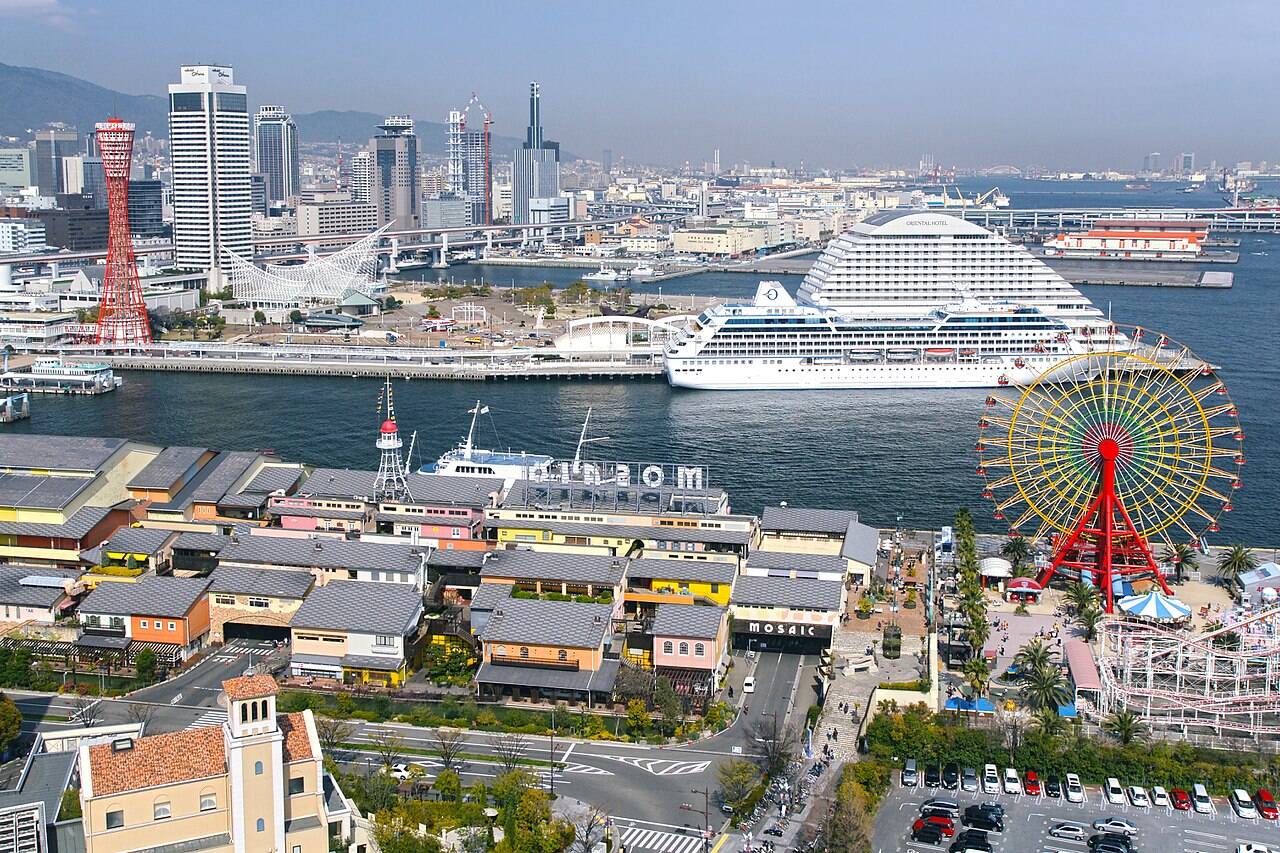
Kobe has long been one of Japan's busiest port cities, set between the Seto Inland Sea and the steep slopes of the Rokko Mountains. While this location gives the city its distinctive landscape, it also leaves very little room for expansion. By the 1960s, Japan's rapid economic growth had made the shortage of developable land a major challenge for a city growing in both population and industry.
Get breaking news anytime, anywhere. Download the TOI app now!
The study Large-scale Landform Transformation Due to the Urban Development in Kobe City, Japan, describes how Kobe responded by reshaping its own landscape . Instead of relying on the limited flat land already available, planners cut down hills around the city and moved the excavated earth to the coast to reclaim land from the sea. Over time, this approach created additional space for homes, industries, transport networks and port facilities, permanently changing both the city's hills and its coastline.
It took place gradually over many years rather than through one building project. It was part of the city's attempt to deal with ongoing urban and industrial growth while constrained geographically by its coastal location.
How Kobe made room in its landscape for more space
Kobe is located on a very narrow strip of land, bordered by water on one side and mountains on the other, offering limited areas for development. Post-war Japan experienced rising economic activity.
According to the research, planners addressed this shortage by reshaping both the hills surrounding the city and parts of its coastline. Hills were excavated to create level areas suitable for development, while the earth removed during these projects was transported to the waterfront and used in land reclamation.
The study says advances in construction equipment and earth-moving technology made large-scale excavation and land reclamation more practical during Japan's period of rapid economic growth. Machinery capable of handling large quantities of soil allowed engineers to carry out excavation and reclamation work far more efficiently than had previously been possible.
As these projects progressed, parts of Kobe's landscape changed. Areas that had once consisted of sloping hillsides were converted into land suitable for housing, public facilities and transport infrastructure. At the same time, reclaimed coastal areas created new space for future urban and industrial development.
The study takes into account the broader setting of the postwar Japanese economic boom. There was rapid development in many cities at that time, but because of Kobe's geography, it meant that any increase in available land had to be accomplished differently.
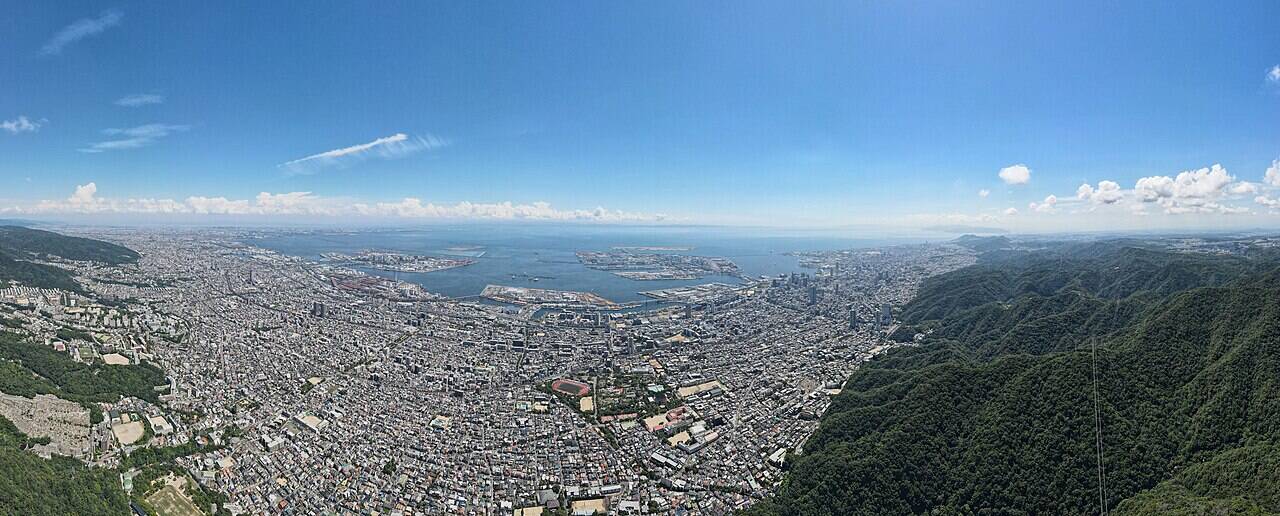
A landscape shaped through engineering
The creation of new land allowed new spaces to be created for the city's port, industries, and residents. This not only enabled the city to continue to develop but also helped reinforce its status as a major port.
Excavation projects also made it possible to develop neighbourhoods in areas that had previously been difficult to build on because of the steep terrain. Levelling sections of the hills created land that could accommodate homes, roads, schools and other public infrastructure.
The study treats excavation and reclamation as part of the same development strategy. Earth removed from the hills became the material used to create new land along the coast, linking the two engineering projects into a single process.
Hills, valleys and coastal areas were reshaped to meet the city's growing need for land. The transformation reflected practical planning decisions aimed at supporting urban expansion within the limits imposed by the surrounding geography.
Rather than framing the work as an attempt to conquer nature, the research presents it as a response to limited space and rising demand for land. Geography, population growth and economic development all influenced the decisions that shaped the city during this period.
Today, the areas reshaped through excavation and land reclamation remain part of Kobe's urban landscape, reflecting the long-term impact of the development projects described in the study.
Almost 50 years later, the change can still be observed around Kobe. The recovered areas around the coasts have continued to serve their commercial, industrial, and port purposes, while what were once the slopes are now well-developed urban neighbourhoods. It is evident from the study that such engineering projects helped create more land for the growing urban and industrial development in the city.