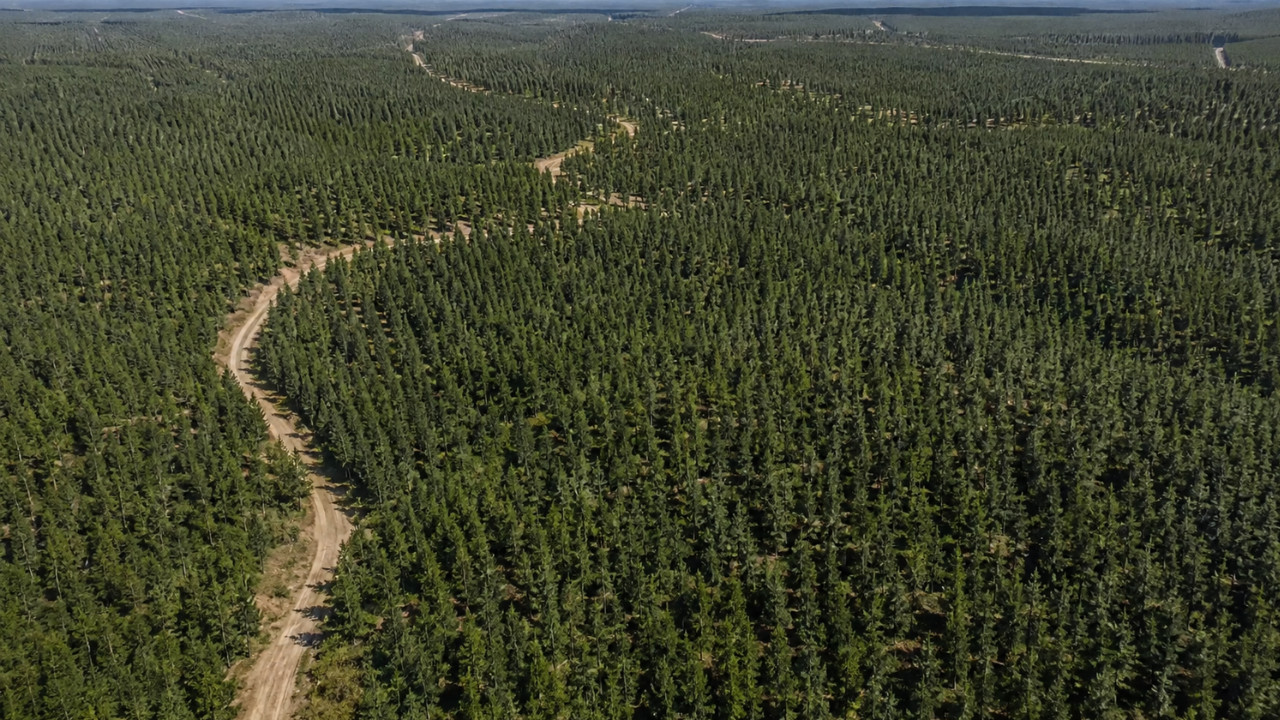
Imagine a barren stretch of land in the middle of New Zealand's North Island. Very little grows there. Farmers tried for decades and failed, since a mineral deficiency in the soil kept killing their cattle. To make the land productive, the government tried something unusual: it sent prisoners, and later thousands of unemployed men, to plant trees there. As Michael Roche, a historical geographer, explained in the study, ‘ The New Zealand timber economy, 1840–1935 ,’ this unusual experiment eventually produced Kaingaroa Forest, which is now the largest planted forest in New Zealand and the second largest in the Southern Hemisphere.
Get breaking news anytime, anywhere. Download the TOI app now!
A plain that farmers could not tame
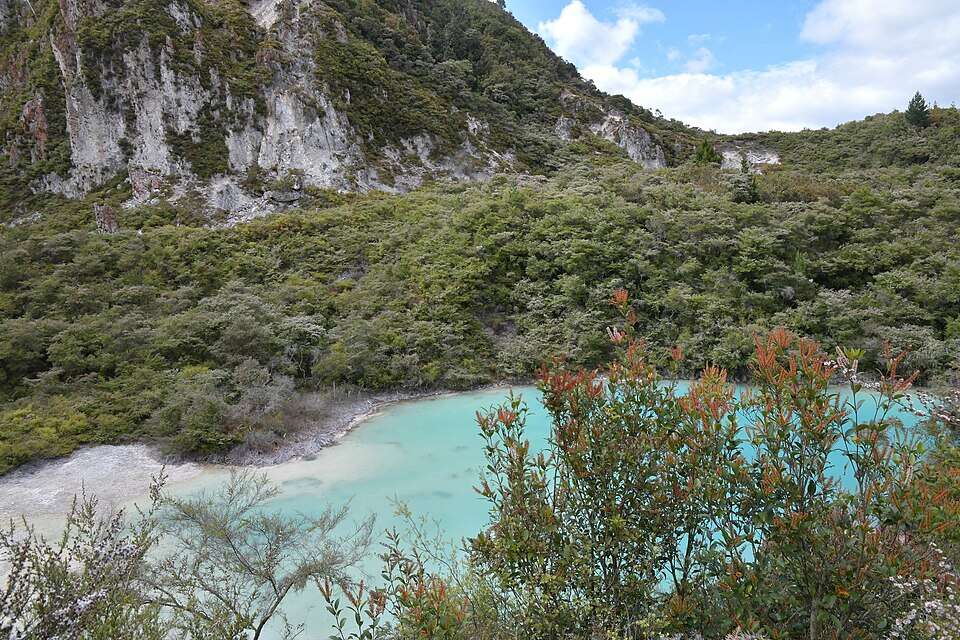
The Kaingaroa Forest sits in the Bay of Plenty region, located between Taupo and Rotorua. The area is covered with pumice, a light volcanic rock formed after a massive eruption about 1,800 years ago. Even though it looked like fertile ground, the soil was not suitable for healthy cattle grazing. For many years, no one knew why the livestock kept falling ill and dying. It was later discovered that the soil lacked cobalt, a trace element essential for survival. The Te Ara Encyclopedia of New Zealand notes that the government eventually gave up on farming these plains and turned to forestry instead, hoping trees would succeed where sheep and cattle had failed.
Prisoners plant the first pines
The first trees at Kaingaroa were not planted by paid workers, but by prisoners. From the early 1900s, New Zealand ran special "tree-planting prisons," and men from the nearby Waiotapu prison dug holes and set seedlings across the pumice plain. In his research on 1920s plantation forestry titled ‘(Re)Interpreting Exotic Plantation Forestry in 1920s New Zealand ,’ Roche explains that these early prison plantations acted as a large-scale trial, proving that exotic trees could survive on land everyone had written off. It was hard, thankless work, but it laid the groundwork for everything that followed.
A Californian tree finds an unlikely home
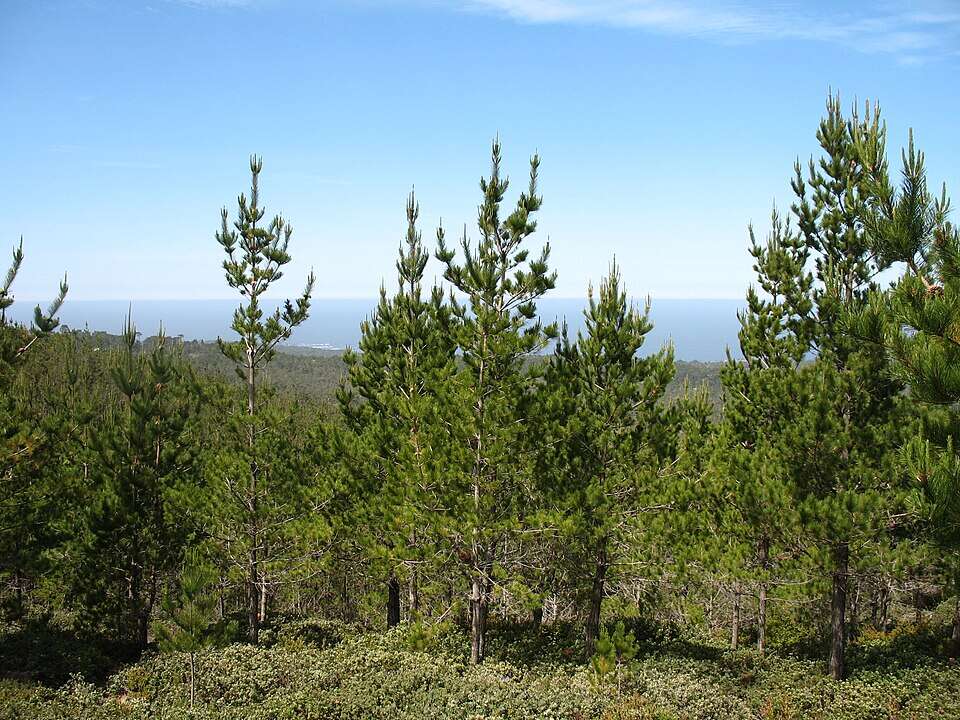
The tree that made the whole project a success was not even a native of New Zealand. Pinus radiata, also called the Monterey pine, comes from a small stretch of the California coast. It had been introduced into New Zealand since the 1850s but was not valued for its timber properties. It turned out to be the right tree for the job: it grew fast, produced abundant seed, and tolerated poor soils such as pumice. With no enemies in New Zealand, it grew faster than in California.
When the Great Depression created an army of planters
New Zealand set up a proper Forestry Department in 1919, and planting increased rapidly shortly thereafter. In 1926, the government began sending unemployed men to Kaingaroa for paid work. However, the Great Depression came along, and the scheme became far larger than before. The Te Ara Encyclopedia records that more than 1,500 men were, at times, working on these unemployment relief schemes through the early 1930s, many with no forestry experience, in tough, muddy, freezing conditions.
From tussock to soaring pines, within one decade
The results were dramatic. By 1935, according to the encyclopedia, Kaingaroa State Forest alone had grown to roughly 104,873 hectares, planted almost entirely by hand. A plain that had defeated previous generations of farmers was eventually lined with pine trees.
A forest that keeps on giving
The afforestation spree never really stopped. Today, Kaingaroa Forest covers 205,000 hectares, and some of its sections are in the middle of their fourth tree planting cycle. In 2009, the land was ceded to the indigenous Māori tribes as part of a Treaty of Waitangi settlement, but the trees continue to be managed by Kaingaroa Timberlands. Kaingaroa Forest supplies over 4.5 million cubic meters of logs annually. More than 65 per cent of the harvest is used locally for construction timber, posts, poles and packaging, while the lower-quality logs are exported through the Port of Tauranga.
Why this story is relevant
In an era marked by climate change anxiety and curiosity about how environmental restoration on a large scale might occur, Kaingaroa offers a good example. It indicates that severely damaged land can be restored through patience and persistence in the right conditions. It also carries an uncomfortable side, built partly on prison labour and land taken from Māori communities. Kaingaroa remains a reminder of a century shaped by unemployed workers, prisoners, and one adaptable Californian tree.