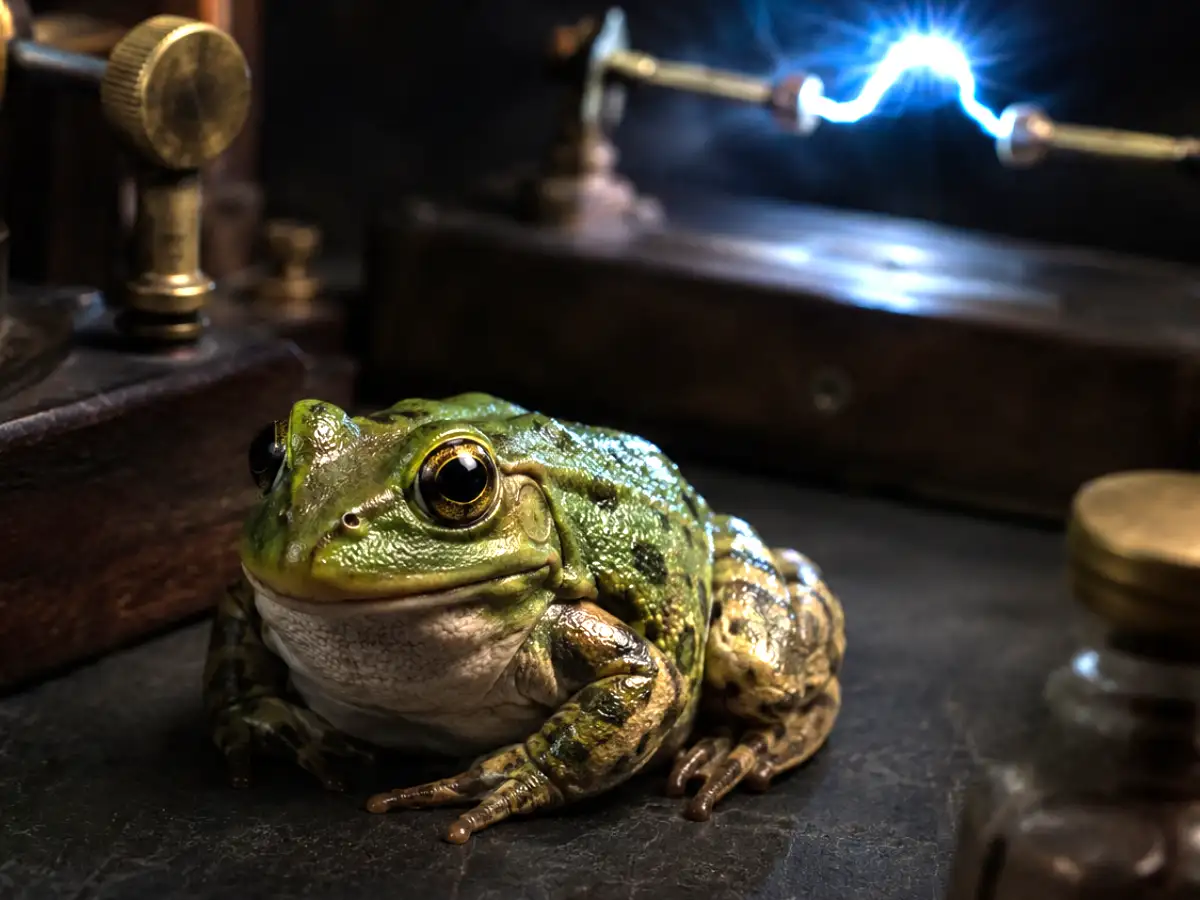
Imagine a lab in Bologna, Italy, in the early 1780s. On the table, a professor is dissecting a frog; there is also a generator of static electricity, the rage in laboratories of the day. His metal scalpel touches a nerve. A spark flies nearby. The frog's leg kicks, even though the frog is already dead.
According to a landmark history of the discovery titled ‘Animal electricity and the birth of electrophysiology: the legacy of Luigi Galvani,’ published in Brain Research Bulletin, that odd moment kicked off one of science’s most consequential accidents and reshaped how we think about the electrical wiring inside our bodies.
Meet the anatomy professor who stumbled into physics
Luigi Galvani was born in Bologna, Italy, on 9 September 1737 and died there on 4 December 1798. He studied medicine at the University of Bologna, and after the death of his mentor and father-in-law, Domenico Gusmano Galeazzi, in 1775, succeeded Galeazzi as professor of anatomy at the Bologna Academy of Sciences, according to a biography profile published in the journal Resuscitation. Galvani was not looking for electricity.
He was an anatomist who worked on kidneys, ears, and noses and who was particularly interested in muscles and what made them move, which is what attracted him to frogs in the first place.