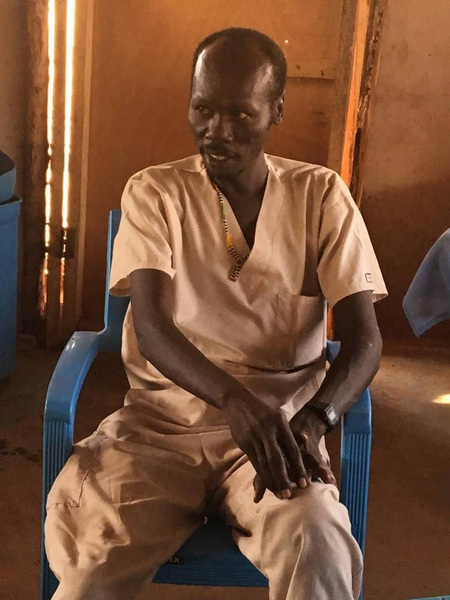
IN THE NUBA MOUNTAINS, Sudan _ It took Ahmed Zacharia, the only native-born doctor of the four who serve the 1.5 million people who live in this forsaken corner of the planet, a full 11 years to complete his six years of medical study. Too little time in the library wasn't the problem, but too much time in jail, where he was tortured for opposing the Islamist government.
In a sense, it's a political act just staying here in a land targeted by the war criminals who run Sudan because Nuba's Muslims are more liberal, its people have darker skin, and its land is more fertile. Zacharia later turned down a scholarship to study abroad: "If I run, who will come?"
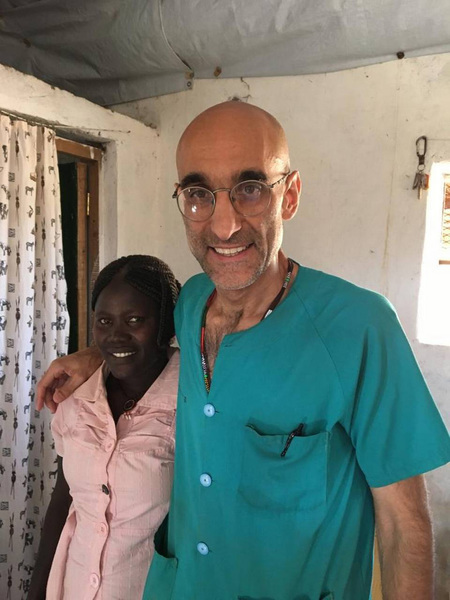
He and his American colleague, Tom Catena, the only trained surgeon in an area the size of Scotland, clearly provide so much more than medical care in a place where women still often die during childbirth and children of dehydration from untreated diarrhea. Their decision to stay on and work in hospitals that have repeatedly been bombed by government forces inspires the kind of gratitude that you can really only call love.
But recently, both of their personal lives have taken turns that gave the Nuba people a reason to celebrate: Zacharia, who is 40, married not long ago, and in the ultimate expression of hope in an uncertain future, he and his wife are expecting their first child. "Maybe she will be a doctor, too," he says, patting his wife's stomach at their mud-and-thatch home, where pigs and goats sleep nearby.
Catena is also a newlywed whose wife is a Nuba-born nurse, Nasima Mohammed Bashir. "Dr. Tom is Nubian now!" a local friend says.
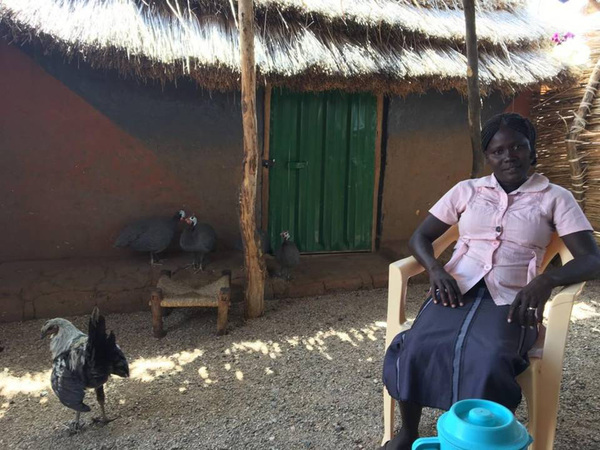
Another thing that the doctors have in common is that they only sleep a couple of hours a night. Zacharia stays up smoking and thinking about this land he loves: "I stayed until now, helping them, sharing their pain, and even if I die with them, I'll be happy."
He has given up on religion: "I used to be a Muslim, but now, no one can have me." But he says he's learned from the example of Christian civil rights leaders in the United States that "despite the darkness you face and the darkness you live in, the light is coming ... The sun will rise one day."
In a world of shifting alliances, he loves that medicine is so morally unambiguous: "Even those injured on the front lines" while fighting against his people "come to us, and there are medical laws and you treat them; it's straightforward."
Catena is motivated by his Catholic faith and does seem to have settled here now, particularly since his wedding attended by 2,000, for which they slaughtered seven cows and poured 400 liters of local wine.
Nasima has childhood memories that include the day 15 students died in a bombing. Many others she grew up with have had limbs blown off, including one young man who was out grazing his cows when he saw a plane coming, "so he laid down with his arms out, and now he's writing with his mouth."
The American doctor's wife says she's a pretty typical Nuban in one way: Her father is Muslim, her mother is Christian, and no one makes a fuss _ except the government that wants to impose sharia.
Nasima's own marriage, of course, is not at all typical: "I'm the first person to marry a white man," she says, which people being people, "some criticize and some appreciate."
On the day I met Catena in his hospital, where there are foxholes, and later in his home with Nasima, he spoke of a recent surgery on a 9-year-old who'd been injured five years ago in a bombing, and had ever since been leaking urine through her skin.
The day before my visit, he'd treated an 18-year-old who'd been in labor for three days. Her baby was dead by the time she arrived _ with no paved roads, few cars and gasoline no one can afford, too many patients die on their way to see him _ but he was able to save her.
There's only one way he'd leave this life, he says: if things got so much better that his patients here didn't need him anymore. That will not be happening any time soon.