GREENVILLE, S.C. _ For a few weeks in August, South Carolina Democrats had that battleground state smell.
It was likely the happiest the beleaguered party had been since 1998, when it won the governor's office and protected a U.S. Senate seat.
But a series of polls that birthed a purple bloom over the state gave way to Labor Day and a swift return to reality: Donald Trump is likely to keep alive South Carolina's streak of voting Republican for president in every election since 1976.
"South Carolina is not in play," Jason Zacher said. "I don't care what poll comes out."
Zacher is vice president of business advocacy for the Greenville Chamber of Commerce and previously handled communications for the Republican caucus in the state House. While he's nonpartisan now, he said despite a sense of unease on the right, his former party is in no way threatened here.
At least some Democrats know it, too.
"This is a red state," Quodoesha Allgood said.
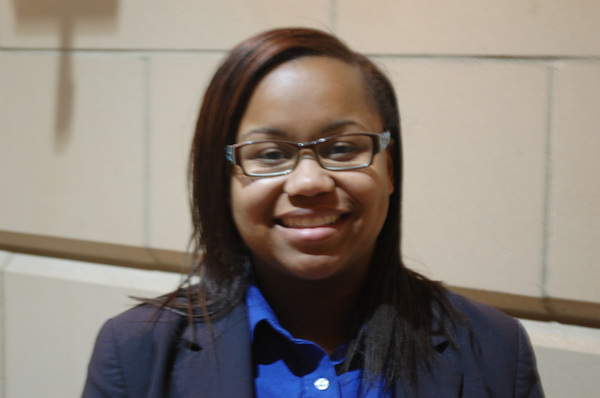
Allgood is 20 and lives in Greenville, the hub of the Upstate, the rapidly growing region that is home to BMW, Fuji, General Electric and Michelin. Greenville itself is a top 10 city nationally in terms of growth. Allgood works in the hospitality industry and will vote for Hillary Clinton in November. Her acknowledgement that Trump will likely win here does not make her happy.
"Stupid Trump," she said, referring to the Republican's belligerent tone on foreign policy and immigration.
Back in August, a pair of polls showed the race between Trump and Clinton essentially tied in South Carolina. Democrats were ecstatic; Republicans skeptical. But in a state where political norms go to die, the idea of this state joining the battleground map seemed feasible.
After all, South Carolina was ahead of the curve when it came to the Republican takeover of the region as the GOP gained control of the state House back in 1994. It would be a decade before Georgia followed suit. The South Carolina Senate flipped to the GOP in late 2000, two years before Republicans gained control of Georgia's upper chamber.
South Carolina is also a state that elected an African-American, Tim Scott, to the U.S. Senate. Scott, a Republican, is one of nine African-Americans ever to serve in that chamber. Scott was first appointed to the Senate by Gov. Nikki Haley, a fellow Republican and the first Indian-American woman elected governor of any state.
And it was Haley who made the first move to remove the Confederate flag from the Statehouse lawn after the 2015 massacre of nine black worshippers at Emanuel AME Church in Charleston. In so doing, South Carolina showed a spirit of bipartisanship that is increasingly rare anywhere.
The state's famous independent streak is still alive, said Kate Franch, the chairwoman of the Greenville County Democratic Party.
"It doesn't really matter what the rest of the country is doing," she said. "We're South Carolina, and you don't tell us what to do."
So it made sense _ to some _ that South Carolinians might not follow the expected pattern and vote for Trump because of the "R" next to his name. Especially this year.
"Most of the Republicans I know, and a lot of the Democrats I know who don't like Hillary, are looking at (Libertarian nominee) Gary Johnson saying, 'Hey, you know, he's rational,'" said Zacher, of the county chamber of commerce.
Count Nick Pasternak among the Republicans who are at least a little concerned by the prospect of a Trump presidency. As the head of the College Republicans at the University of South Carolina in Columbia, however, Pasternak is careful to say the organization supports the GOP nominee.
"Some people are super enthused about Donald Trump. I'm not going to deny that," said Pasternak, who worked for U.S. Sen. Marco Rubio of Florida in the primaries. "But I think in terms of college students, and my generation, we were drawn more to people like Rubio, (Ohio Gov. John) Kasich and, on the left, Bernie (Sanders). You could hear them talking and it felt more real."
Both Clinton and Trump remain so unpopular that at times the two appear symbiotic. Without the other, neither could possibly win the election.
"Honestly, the best thing to happen to Hillary Clinton is Donald Trump, and the best thing to happen to Donald Trump is Hillary Clinton," Pasternak said.
Chris Fedalei is counting on at least half of that to be true.
Fedalei is running as a Democrat in South Carolina's 4th Congressional District, a seat now held by Republican U.S. Rep. Trey Gowdy, he of the special Benghazi committee.
"We're never going to have a more favorable top of the ticket," Fedalei said. "There's never going to be a worse candidate running on the Republican side."
South Carolina's 4th District has been Republican since 1992. But Fedalei is counting on Trump's unpopularity depressing Republican turnout and said he'll need to reverse what he called "Democratic underperformance" in key precincts.
A Clinton victory would require at least two scenarios to play out, said Donald Fowler of Columbia, who was co-chairman of the Democratic National Committee in 1996, the year President Bill Clinton won re-election.
"It would take not only the negative effects of Trump's campaign but strong directed campaigning (by Hillary Clinton) to get out the Democratic base: African-Americans and white college-educated women," Fowler said.
Thus far, neither has come to pass.
Democrats shouldn't count on Republicans passing on Trump, said Elizabeth Murray, 19, of Columbia. While she didn't support him in the primary, she'll vote for him in November.
"It honestly came down to the long term," she said. "Knowing my vote is not just influencing who the president will be, but up to four Supreme Court justices is what led me to vote for my party rather than the candidate."
There are many Republicans in this state, too, who fully support Trump. Robbie Anderson is from Conway, prime tea party country and prime Trump country.
"He means what he says when it comes to immigration," said Anderson, 20. "I've noticed we have a problem when it comes to immigration. People are coming in and our politicians have no idea how to stop it. He has the answer and he has the business know-how to get the economy back in order."
Sheryl Johnson, 57, of Fountain Inn works at Tommy's Country Ham House in Greenville. The meat-and-three restaurant is a favorite stop for statewide and national politicians. (Trump ate breakfast there in February. Owner Thomas Stevenson said Trump ordered the breakfast sausage and then ordered it again. He liked it so much, Stevenson said, that he took an order of five sausages to go.)
Johnson has no problem declaring her support for Trump.
"We have a businessman instead of someone who has already been in office," she said. "He does need to tone it down, but he's not someone who says only things they think we want to hear."
Like Georgia, however, South Carolina Republicans face the march of time and progress. More minorities are moving to the state every day, and younger South Carolinians are not as concerned about the social issues that have driven Trump's support.
"People are moving here from the North," said Frank Halloran, 18, a Republican from the Columbia suburb of Lexington. "Older people are retiring here and bring activist positions and ideals. Northern Democrats are coming. College students coming here from the North bring Democratic ideals, Democratic Northern ideals.
"God help us," he said, "I think we're still red."