SAN JUAN, Puerto Rico _ Washboards, candles and cash are the new must-have items on this powerless island.
Almost four weeks after Hurricane Maria battered Puerto Rico, 85 percent of the population is still without electricity, forcing people to get creative _ and go old school _ as they face an extended period of life in the new dark ages.
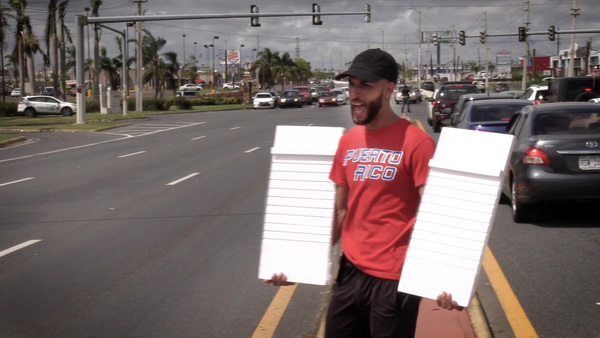
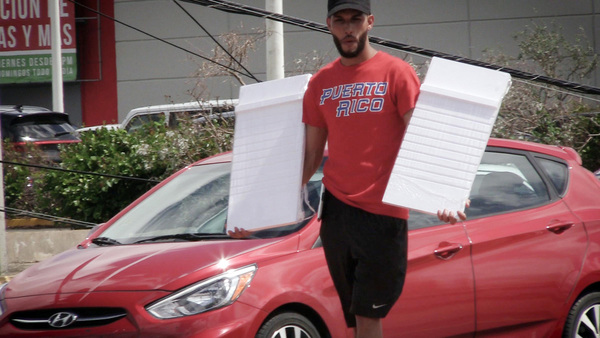
After Maria obliterated the body shop where he worked, Eddri Serrano started making old-style laundry washboards out of modern-day plastic.
On Saturday, he and his cousin were sprinting along the freeway hawking them for $15 each,
"I had to do something," said Serrano, who claims they've sold as many as 70 in a day. "It was either this or steal, and I would rather be broke than steal."
One grateful customer, Cruzdelia Cardona, 72, said she hadn't used a washboard since her teens. "This makes me remember my youth," she said.
Puerto Rican authorities are scrambling to bring the island's utilities back into the 21st century, as they face mounting criticism about the slow pace of the recovery.
On Saturday, Gov. Ricardo Rossell said the Federal Emergency Management Agency was giving Puerto Rick $128 million disbursement to quadruple the number of electrical crews over the next three weeks. He also pledged to restore electricity to 50 percent of the island by Nov. 15, and 95 percent of the island by December _ far sooner than previous estimates.
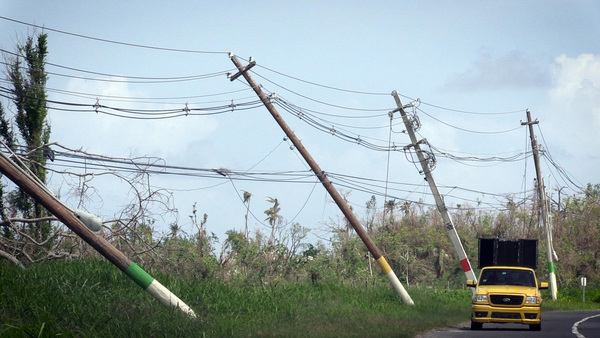
Puerto Rico's electrical grid was on life support even before the storm hit, a victim of a decade-long recession. But it's hard to fathom the scope and scale of Maria's destruction.
The administration says about 50,000 utility poles and 6,500 miles of power lines will be needed to restore power.
In at least one case, the power crisis has become a matter of life or death. On Saturday, the government said the direct and indirect death toll from Maria had risen from 45 to 48 and included one person whose supplemental oxygen failed because of the lack of electricity.
But for most of Puerto Rico's 3.4 million inhabitants, the prolonged blackout is a grinding nuisance that seeps into every aspect of life.
Elia Baquer, from the town of Laguna, hasn't had power since Sept 6, when Hurricane Irma _ the one that came before Maria _ sideswiped the island. Since then, she says she's spent hours waiting for ice, water and food.
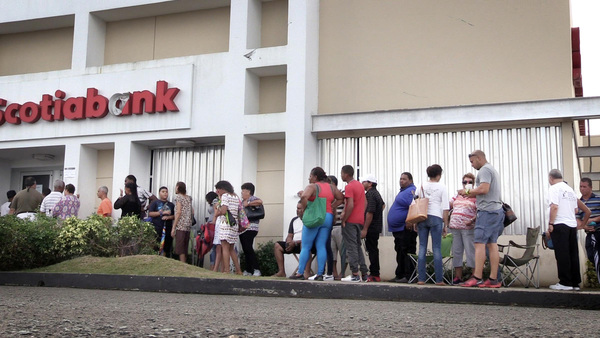
On Saturday, she had spent almost two hours in line to withdraw money from an ATM. Without municipal power, many businesses won't accept credit cards, making cash king again _ and hard to find.
Baquer said she misses her television and air conditioner _ in that order. But she's also found some upsides to the crisis. She's discovered she likes cooking with wood and spending more time with her family.
"We get together to play dominoes, cards or whatever," she said about her powerless evenings. "We talk and kill mosquitoes."
Kenneth Lopez, an airport worker, said he's grown used to his unplugged life.
"I really don't miss it," he said of his television. "I spend my time in the backyard looking at the stars and talking to neighbors, who I barely talked to anymore."
But the merely powerless are some of the lucky ones. Almost half of Puerto Ricans on the island don't have running water either.
In the hard-hit town of Toa Baja, Angel Rivera said the lack of all public utilities had put things in perspective.
"What we need is water," he said, as he shoveled mud from his house. "I can live without electricity. Candles are expensive, but what can you do?"
The storm and enduring power crisis will likely reshape the country's fragile economy. Many businesses are still closed, and those running on generators complain that their operating costs are rising. Unemployment, which was already running over 10 percent _ more than twice the rate on the mainland _ will undoubtedly get worse.
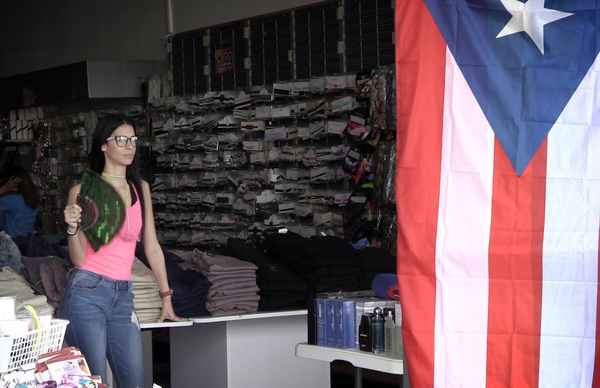
But the crisis is also creating niche opportunities. At a 99-cent store in the suburb of Carolina, the clerk said she was selling about 20 hand fans every two hours.
As Lourdes Cancel, a social worker, picked up some fans and hairnets to keep sweaty locks off her neck, she also grabbed two miniature Puerto Rican flags.
The items were Maria-related purchases, she said.
"It's when times are toughest that you understand patriotism," she said. "It makes you love your country even more."