
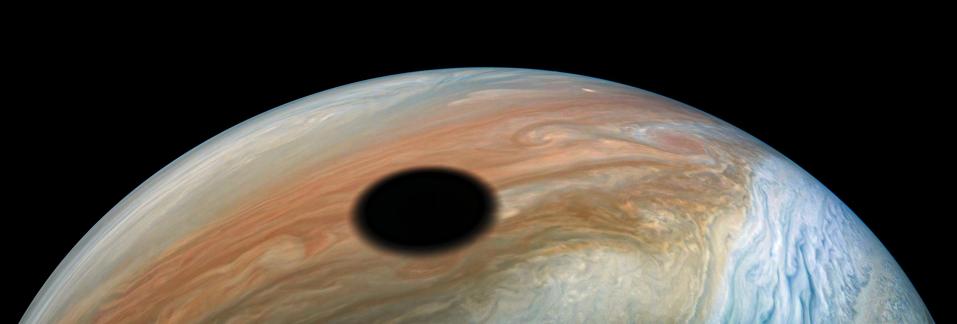
What’s your favorite NASA space exploration mission? The Perseverance rover on Mars? The Voyager probes from the 1970s? Or perhaps it’s Juno, humanity’s furthest solar-powered spacecraft at Jupiter, which today marks a decade since its launch.
In that time it has revealed much about not only Jupiter, but also its moons and even the nature of some of the most delicate light visible from Earth.
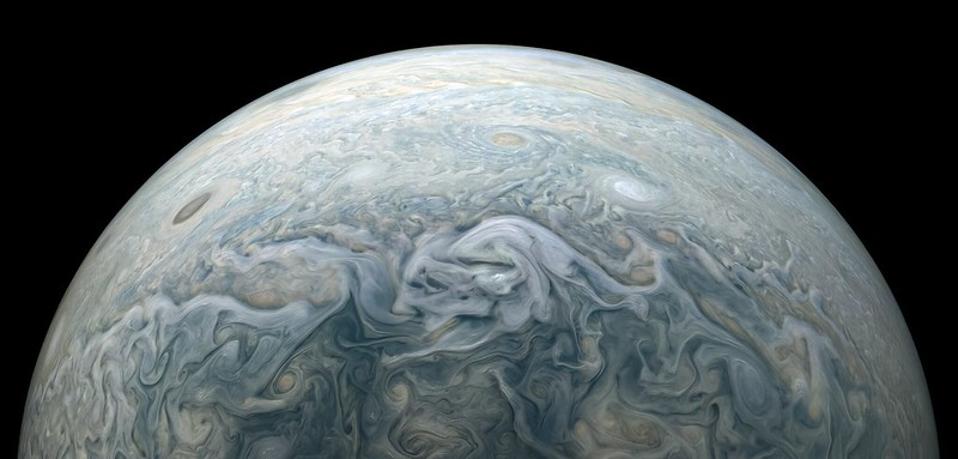
After its launch from Florida on August 5, 2011, the three-pronged satellite traveled 994 million miles but initially got nowhere, diving back around Earth two years later for an all-important “gravity assist” to get it to Jupiter.
It arrived at the “King of Planets” on July 4, 2016 and has since conducted 35 orbits.
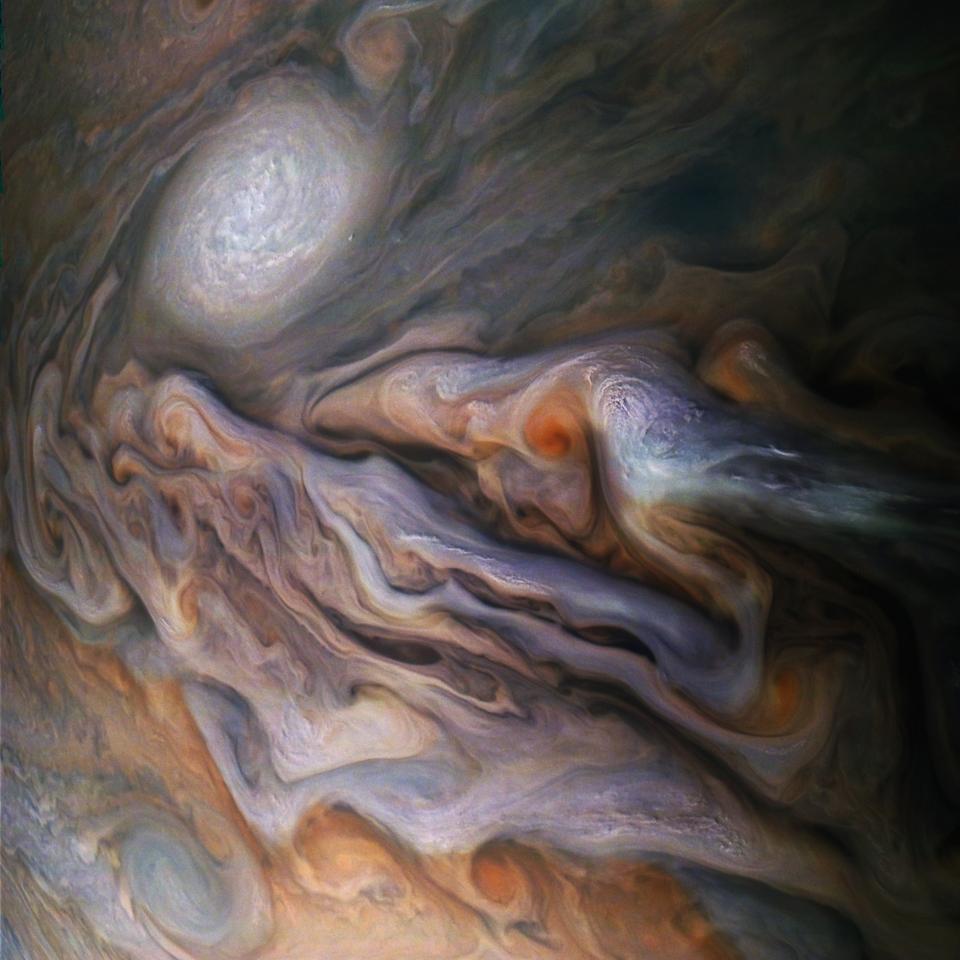
What has made Juno so different to the other probes that have photographed it—including Pioneer 10 and Pioneer 11, Voyager 1 and Voyager 2, the Galileo Orbiter and Galileo Probe, Ulysses and Cassini—isn’t just that it’s the first space mission to operate a solar-powered spacecraft at Jupiter.
It also has a peculiar elliptical orbit that takes it far from Jupiter only to swing in just 2,600 miles from its cloud tops at the planet’s poles. It’s thus also the first space mission to orbit an outer planet from pole to pole.
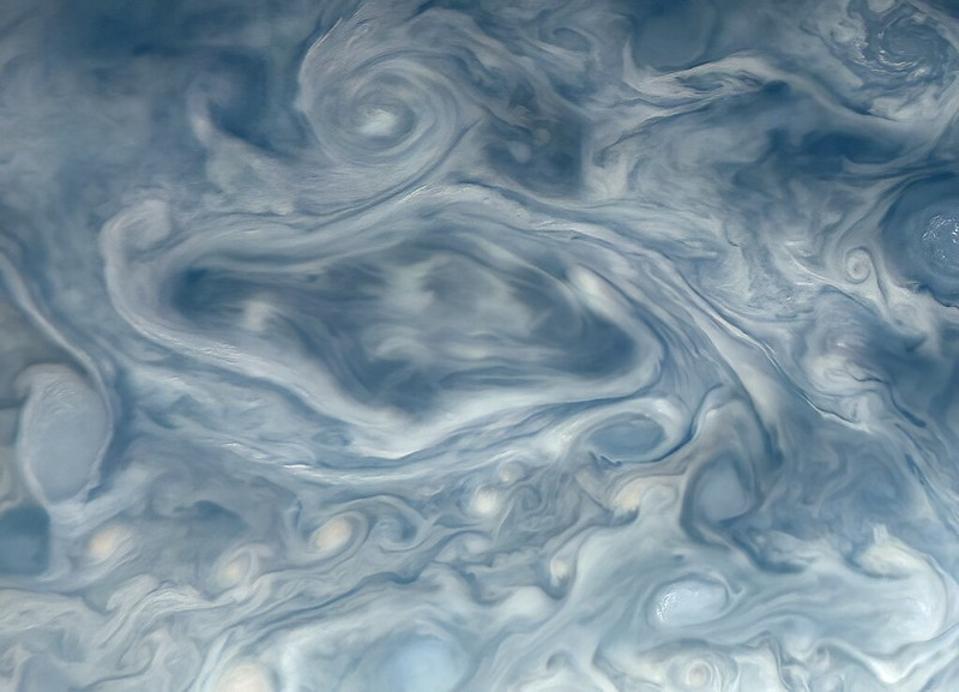
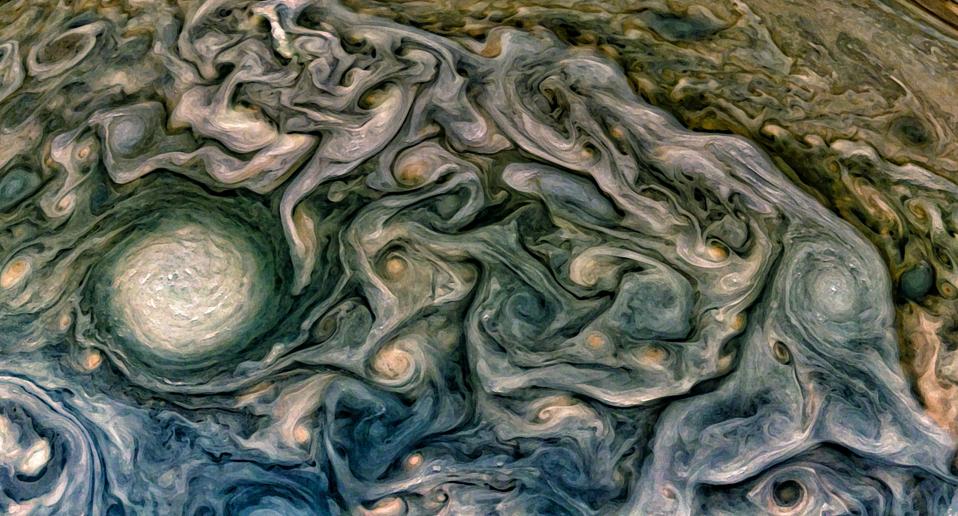
Juno’s science instruments are designed to examine Jupiter’s magnetic field, and JunoCam imager was only put on the mission as an afterthought. However, thanks to an army of volunteer citizen scientists its incredible images have arguably been the mission’s highlight.
The 1600 x 1200 pixel two-megapixel color images it sends back to Earth via the NASA Deep Space Network in the hours and days after each perijove (polar flyby) are the highest-resolution images of Jupiter in history.
Operating in the heart of Jupiter’s intense radiation belts, Juno has on board a titanium radiation vault to protect the spacecraft’s most sensitive science instruments.
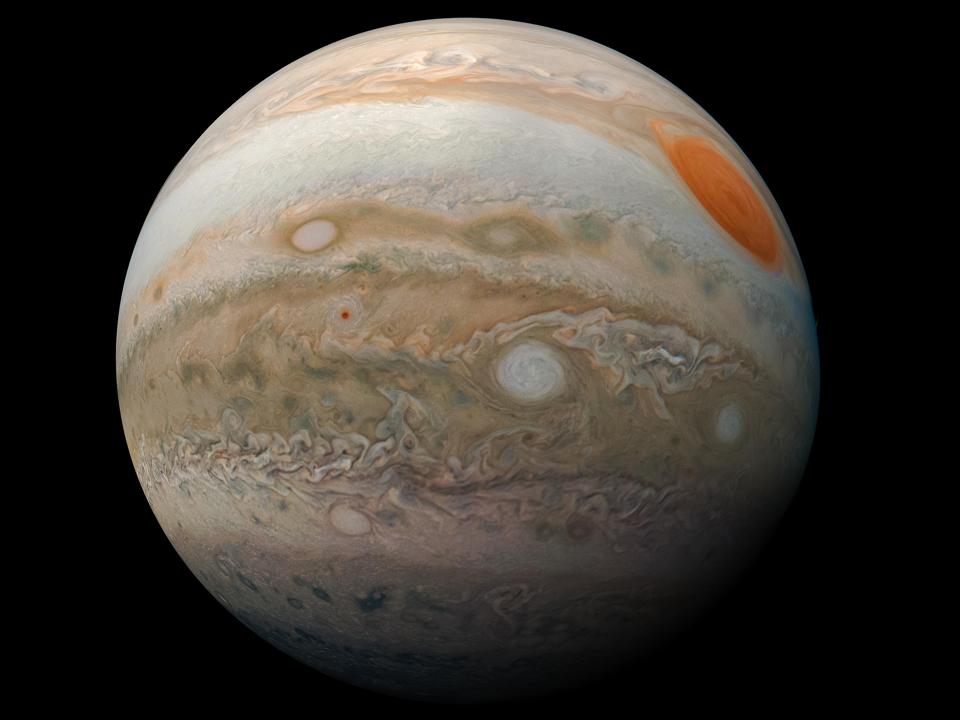
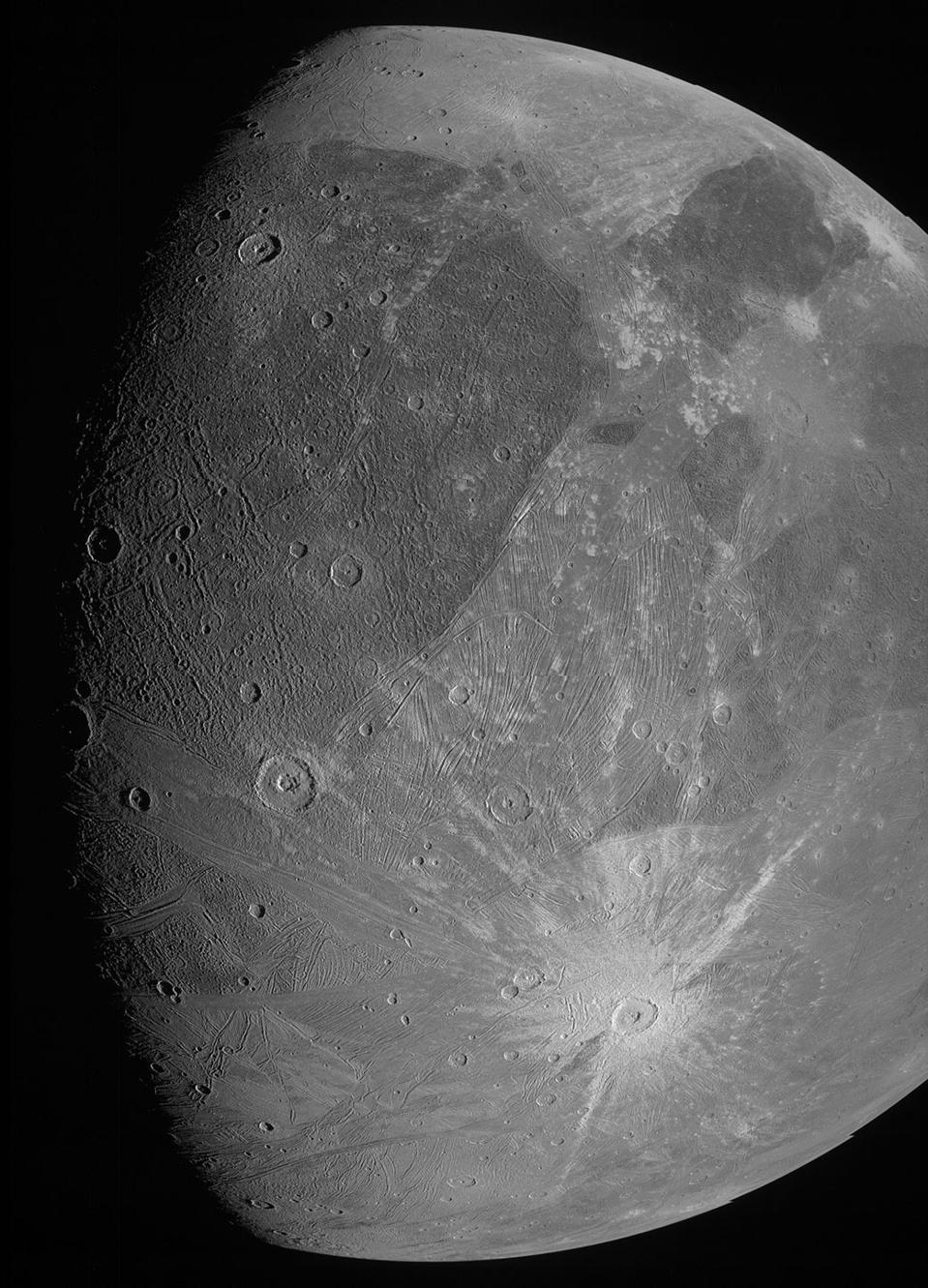
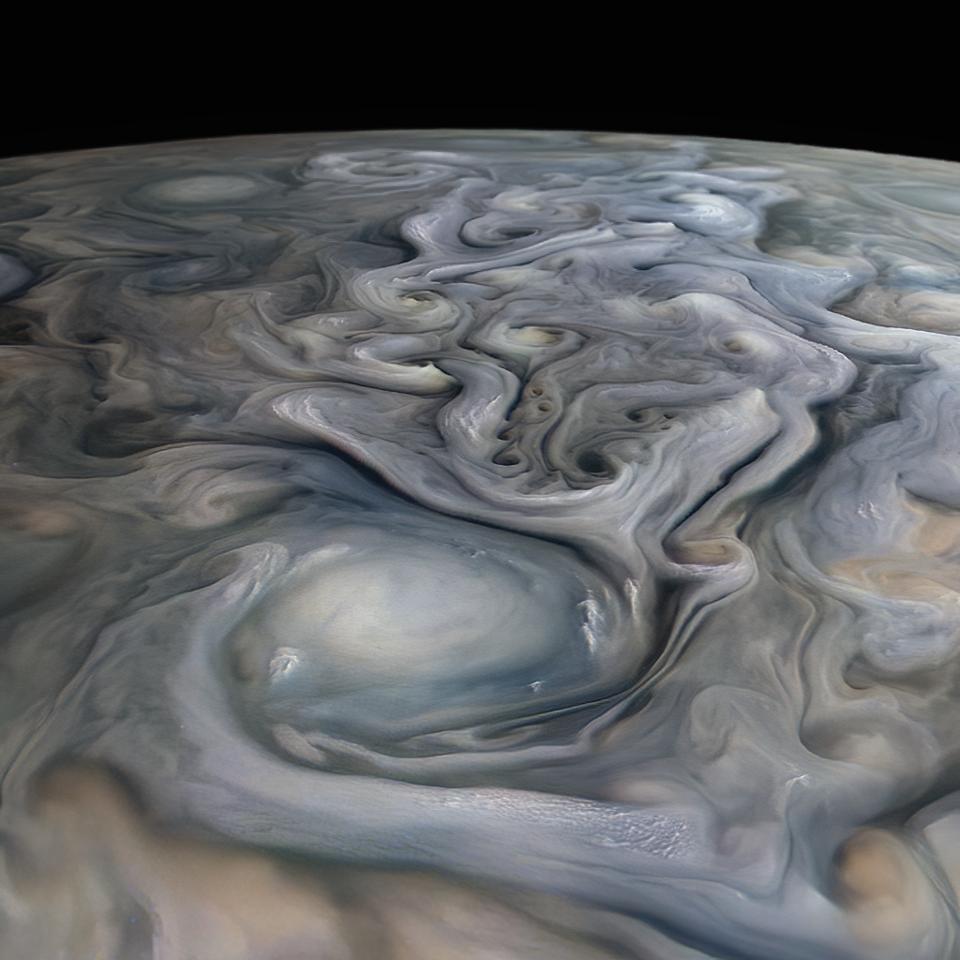
Its images have included the famous “Great Red Spot,” clusters of swirling, Earth-size storms and cyclones, detail of its North Pole, its clouds, some of its moons and even its delicate aurorae.
Its science findings have been incredible, with its greatest hits including detecting lightning in Jupiter’s clouds, finding abundant water near the planet’s equator and the cause of Jupiter's x-ray aurorae.
Juno has now completed its core five-year mission surveying the giant planet, but it’s recently been granted an extension of 42 orbits that will take it at least until September 2025.
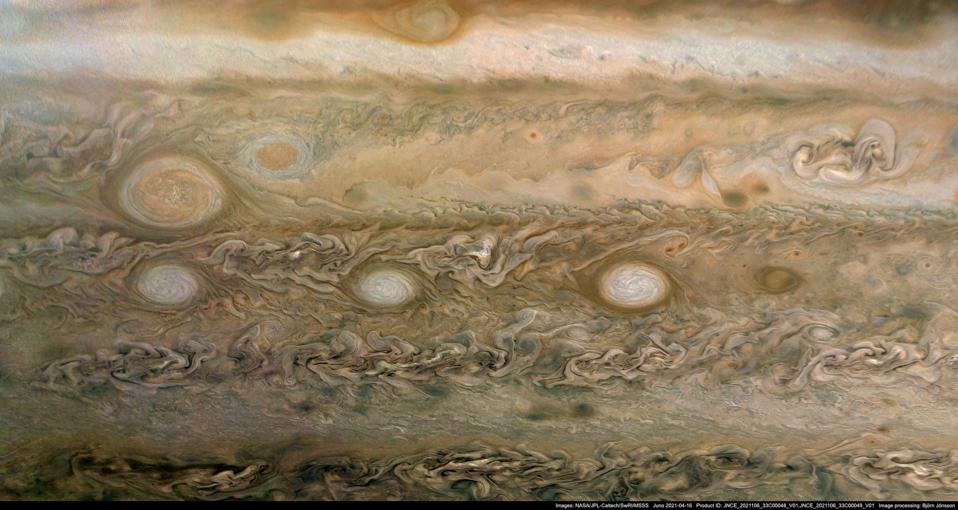
One of the first “extras” of its extended mission was to tweak its orbit to flyby Ganymede in June 2021, Jupiter’s largest moon that’s bigger than the planet Mercury.
It flew closer to Ganymede than any other spacecraft in over 20 years, revealing dark and light regions, and its Tros crater.
The flyby has since been turned into a captivating “starship captain” video.
Ganymede’s gravitational pull affected Juno’s orbit, which will now reduce from 53 days to 43 days. It will now visit Europa in 2022 and Io in 2023 and 2024 as well as explore the faint rings around Jupiter.
“Since its first orbit in 2016, Juno has delivered one revelation after another about the inner workings of this massive gas giant,” said principal investigator Scott Bolton of the Southwest Research Institute in San Antonio.
“With the extended mission, we will answer fundamental questions that arose during Juno’s prime mission while reaching beyond the planet to explore Jupiter’s ring system and Galilean satellites.”
Wishing you clear skies and wide eyes.