ICONONZO, Colombia _ This compound in the mountains southwest of Bogota was supposed to be abandoned by now, its white prefab houses and water treatment plant dismantled, its residents packed up and gone.
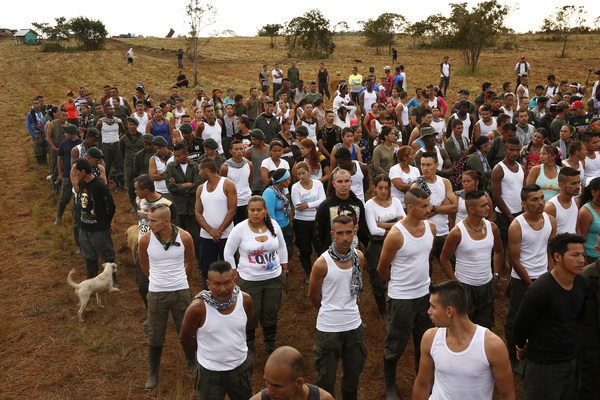
It was hastily erected by the government as part of the November 2016 agreement that ended a five-decade conflict _ one of 28 "training and normalization camps" across the country where rebels of the Revolutionary Armed Forces of Colombia would disarm, receive identity cards, sign up for job training and other benefits, and live with their families for no longer than six months.
But here at the Icononzo camp, there is little sign that the 250 residents are going anywhere. Government officials and former rebel leaders say the camp and others like it will probably become permanent. Residents recently started an avocado export business, planting seedlings that take at least three years to produce a crop.
As Colombia lurches into peace, the continued existence of the camps reflects the difficulties faced by former rebels as they join society, and suggests that the country's wounds will take a long time to heal.
Since the peace deal was signed, at least 36 former guerrillas and 15 family members have been killed, usually with revenge as the motive. An estimated 500 have joined another rebel group called the National Liberation Army or drug trafficking gangs.
Of the 7,400 fighters who reported to the camps starting in January 2017, about half remain.
"The initial concept was that these zones would be spaces of transition from military to civilian life," said Carlos Eduardo Villaraga, who once commanded a rebel unit and now lives at the Icononzo camp with his wife and newborn daughter and is on its seven-member governing committee. "But last summer we started thinking about them in a collective, permanent and self-sufficient way."
The former rebel group, best known as the FARC, envisions the camps growing over the next five years into self-sufficient towns with populations of as many as 1,000 ex-fighters and their families and sympathizers, leaders said.
Carlos Cordoba, a senior official in the Office of the High Commissioner for Peace, the government entity that oversees the camps, said the shift in thinking is recognition that many former rebels aren't prepared for modern life and need more time to assimilate.
"Many are unsuited for society at large or don't have a place to go," he said. "It would have been irresponsible to just throw them out."
Having spent most of their lives in rebel camps in the jungle, many had never handled money or used an ATM before they began receiving monthly stipends of $230.
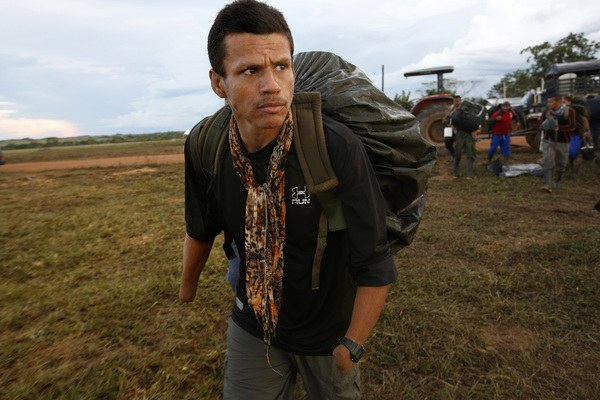
Maria Victoria Llorente, executive director of the Ideas for Peace Foundation think tank in Bogota, the nation's capital, said it's better for Colombian society in general that former combatants stay together "at least for the time being."
"In some areas around camps that are slowly disbanding, we're seeing more violence because the demobilized fighters are having trouble starting new lives," she said.
The possibility the camps would become permanent settlements _ allowing large numbers of former guerrillas to remain tightly organized _ has long worried some of the country's top security officials.
In March, a group of 28 former admirals and generals of the armed forces and police sent a letter to President Juan Manuel Santos warning that the camps would "pose grave threats" and become "destabilizing." They compared the camps to the "independent republics" formed in central Colombia in the 1950s by leftist peasant leaders, some of whom went on to found the FARC and launch its armed revolt.
But former rebels say they are the ones who face the most danger.
In the late 1980s, after an earlier peace deal, more than 1,000 rebel sympathizers and left-leaning politicians were systematically killed by right-wing death squads. The prime suspects in most of the recent killings of demobilized rebels are paramilitary fighters or others seeking revenge for killings or kidnappings committed during the long war.
In a Jan. 31 attack in the southwestern province of Narino, two former rebels were kidnapped, tortured and killed. They had been living in the Tumaco reintegration camp and working at a neighboring farm.
Seeking to prevent such violence, the government has assigned hundreds of its soldiers to guard the camps.
Reaching the Icononzo camp, about 45 miles from the capital in the shadows of Andean peaks, requires passing through three army checkpoints.
Residents take classes in graphic design, social media or other areas or work at a small apparel factory making T-shirts or sandals.
They take turns cleaning common areas, cooking for their comrades or working on the communal farm. Junior Montanas, 32, who spent half his life with the rebels, mans the camp's 125-kilowatt power plant.
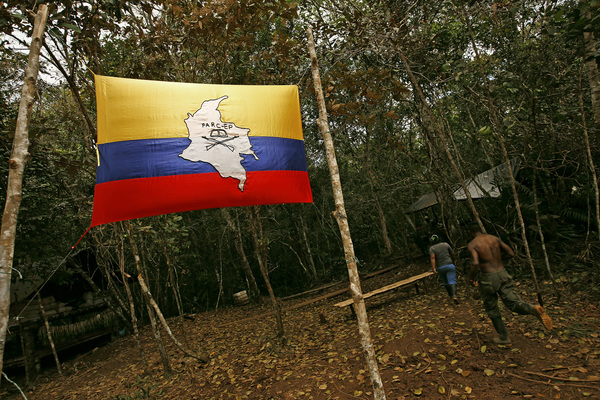
"It's a very different dynamic from the jungle, where we were always moving and under threat," he said.
Villaraga, the camp official and former rebel, said the plan is to make Icononzo a "citadel" of social and economic change _ a place where like-minded comrades can live in harmony.
That will eventually require it to become self-sufficient. Currently, the government supplies the camps with food and enough diesel fuel to keep the power plants running. But the food and fuel subsidies will end April 1, and the monthly stipends will stop in August 2019.
In addition to the fledgling avocado business, the Icononzo camp also has eight acres of row crops of string beans and peas. And by pooling $2,500 payments that are available to each demobilized rebel for approved entrepreneurial projects, residents plan to plant a fruit orchard and possibly launch a tourism business.
Icononzo has some advantage over other camps in that it's far from illegal coca farms or cocaine production centers, illicit gold mining and criminal band activity, meaning there are fewer illegal temptations for the former fighters.
And unlike some camps that have faced growing resentment from nearby farmers envious of the government support for ex-rebels, it also has a good relationship with La Fila and other surrounding villages in the Icononzo township, according to camp residents and Marcel Giraldo, a government peace commission official who visits several times a week.
Camp leaders here have persuaded neighboring villages to work together on joint economic and public works projects, including the possible purchase of a heavy truck to transport crops to Bogota's central market to avoid paying middlemen.
"What I like is now we can go into town, buy things and freely express ourselves with the people," said Adrian Reyes, 60, who spent more than half his life in the FARC. "Before the peace, that was impossible. We had to stay undercover or out of sight."
Former rebels and army soldiers, once mortal enemies, meet regularly down the hill from the settlement under a large blue tarp to share coffee and discuss current events and security issues. In December, soldiers brought Christmas gifts to the camp children.
����
(Kraul is a special correspondent.)